Trump’s tariff moves threaten America’s struggling beef industry, rancher says
John Boyd Jr., a fourth-generation cattleman, says imported beef is a threat to ranchers and consumers.

Type at least 2 characters to search.
President Trump’s tariffs have raised the prices for imported food items, passing on higher costs directly to consumers.

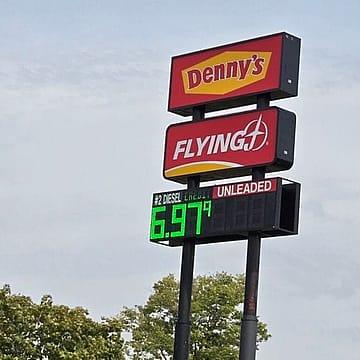
President Donald Trump promised in June and July that gasoline prices would soon drop significantly.

Trump administration policies are sending prices higher for parents this year.

Critics call the forced-labor justification predetermined, as Yale researchers estimate the new tariffs could cost households about $1,100 a year.

Trump invoked a dormant 1930 tariff law never before enforced, after his prior Canada tariffs were struck down by the Supreme Court and $166 billion had to be refunded.

Retailers told the Cleveland Fed that low-income shoppers are cutting spending while auto dealers report softer sales tied to high vehicle prices and interest rates.

Climate scientists say warming, not arson, is driving Canada's bigger fires, while Moreno's own record includes fossil fuel advocacy that fuels that warming.

Sens. Wyden and Markey say only $20.6B of $166B in court-ordered refunds has been paid, with $60B not even in process, and demand answers by June 24.

Trump’s tariff refunds are going to corporations — not the consumers in Ohio and beyond who got stuck with the higher prices.

Eight Democratic state fiscal leaders want public disclosure of which firms get $166 billion in tariff refunds, fearing consumers won't see the money back.

The Cleveland Fed's latest Beige Book finds Ohio businesses grappling with skyrocketing fuel and fertilizer costs tied to the Middle East conflict and Trump's tariffs, while low-income residents face growing financial strain.

The federal government launched a refund system Monday for the $166 billion in emergency tariffs the Supreme Court struck down in February. Small business advocates say the process is complex, though refunds are expected within 60 to 90 days for the estimated 330,000 importers who paid the duties.

One year after Trump's "Liberation Day" tariffs were struck down by the Supreme Court, the president signed executive orders imposing a 100% tariff on pharmaceuticals from companies that won't manufacture in the U.S. and adjusting duties on steel, aluminum, and copper.

After the Supreme Court voided Trump-era tariffs, small businesses are still waiting on refunds, with $166 billion in duties and rising interest at stake.

Senate Democrats urge Treasury to refund over $130 billion in tariffs after the Supreme Court ruled the Trump administration lacked authority under federal law.