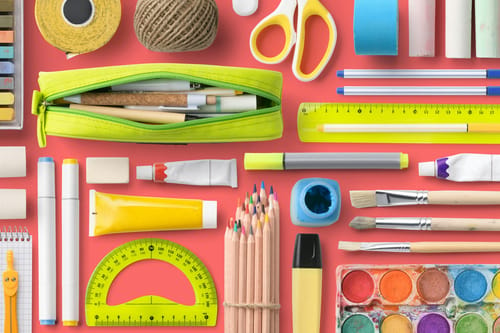

As parents across the nation begin to send their kids back to school, Americans are facing much higher prices for everyday school supplies than they have in years past.
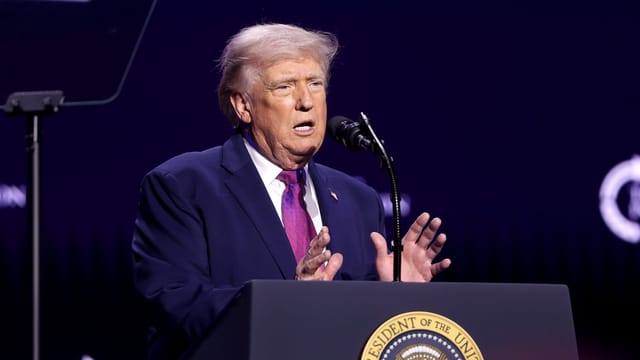
Experts say President Donald Trump’s elaborate regime of tariffs on imported products from much of the world are keeping those prices high.
“A good chunk of the school supplies — all the paper items, pens, glue sticks, computers — tend to be imported,” Tibor Besedes, an economics professor at the Georgia Institute of Technology, told the American Independent. “Just about everything will be more expensive than it was before the tariffs.”
Tariffs Trump instituted on what he called “Liberation Day” in April 2025, which targeted various countries and ranged from 10% to as high as 145% for some Chinese products, were struck down by the Supreme Court in February. The Trump administration, however, quickly implemented new tariffs.
Trump’s original tariffs had been instituted under the 1977 International Emergency Economic Powers Act, or IEEPA. With that route no longer available, he announced new import taxes of 10% on most countries, with the exception of certain specified goods as well as products from Canada and Mexico compliant with a 2020 free trade agreement, under Section 122 of the Trade Act of 1974. But Trump’s powers under the 1974 law only allowed him to put those new tariffs into place for up to 150 days, and they expired at the end of July.
Just ahead of the expiration of the Section 122 tariffs, the administration announced a fresh round of import taxes of 10%-12.5% on products from 59 countries and the European Union under Section 301 of the Trade Act, which covers countries that engage in forced labor. A coalition of 25 U.S. states is now suing the Trump administration over these new tariffs, demanding they be canceled and refunded. The new tariffs, according to the lawsuit, affect more than 99% of imports to the U.S.
Besedes said it’s clear that after more than a year of tariffs, they’re keeping prices high.
“One way to think about what has happened in the last couple years, inflation has come down a little bit, but if those prices haven’t come down, it’s because of the tariffs,” he said, “because tariffs have been put into place and essentially kept prices higher than they otherwise would have been.”
On some items, prices increased before tariffs were implemented but remained elevated after. According to the Bureau of Labor Statistics, for example, the price of educational books and supplies jumped 9% year over year between May 2024 and May 2025 and have remained high.
While the federal government doesn’t closely track the prices of specific school-related items, data compiled by private organizations paints an even starker picture. Groundwork Collaborative, an economic policy think tank, published research in July showing that everyday back-to-school items are costing parents 8% more in 2026 than they did in 2025, or an average of an additional $175 per family. That’s a time frame entirely within Trump’s tariffs regime.
Groundwork’s data shows lunchboxes cost, on average, nearly $19 this year, a more than 26% increase over the $14.91 average last year. Notebooks, according to the think tank, are running parents $5 these days, a significant increase over the $4 average price Groundwork recorded in 2025.
The federal BLS data also show prices for sports equipment — a common concern for parents of athletic kids — spiked more than 4% between December 2025 and June 2026.
Rudi Leuschner, a professor of supply chain management at Rutgers University in New Jersey, told the American Independent, “The whole last year with tariffs going up and down and trade being uncertain I would say has become the new normal.”
Leuschner had at least one bit of good news for American consumers, though: The prices are not likely to go much higher for this year’s back-to-school shopping.
“Everything that came in went through the new tariff regime,” said Leuschner. “So there’s also no surprises at this point because retailers, to the extent that they could raise prices, they’ve done that.”