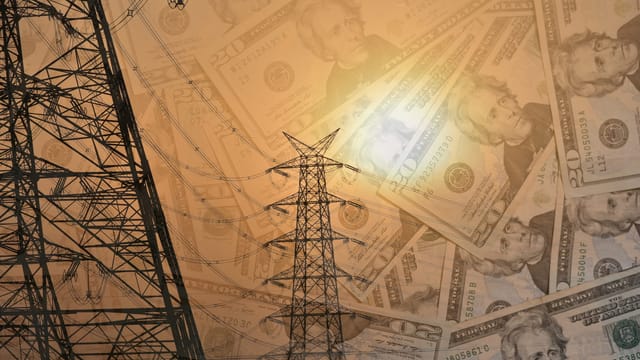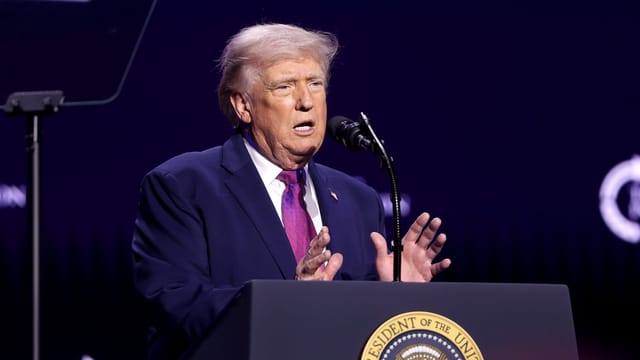

WASHINGTON — President Donald Trump ordered 50% tariffs on several Canadian products Monday in response to what his administration describes as retaliatory restrictions on imports of American goods, including alcohol, dairy and automotives.
Trump’s three separate proclamations to impose steep tariffs on items like hockey sticks, wine and cement, came just days after he threatened to slap more tariffs on Canada as smoke from raging wildfires in Ontario blanketed much of the northeastern U.S. through the weekend. But a senior administration official denied the new tariffs were in response to the smoke.
“These are not the so-called wildfire tariffs. The president has asked for options on that, and options are being shared with him. These tariffs are in response to discriminatory treatment by Canada against U.S. products,” the senior administration official said on a call with reporters Monday afternoon.
The tariffs will go into effect Aug. 19.
Trump appeared alongside Canadian Prime Minister Mark Carney Sunday at the FIFA World Cup trophy ceremony in East Rutherford, New Jersey, but the two leaders did not discuss White House plans for the new tariffs, according to the senior administration official.
Trump triggered the new tariffs under Section 338 of the Tariff Act of 1930, a Depression-era provision that authorizes the president to impose duties up to 50% of a product’s value in response to discrimination against U.S. commerce. The provision has been long forgotten since the 1940s and has never been enforced, experts say.
“To our knowledge, Section 338 has not been used for this purpose before,” the senior administration official told reporters. “It’s been on the books for a long time. In our view, the terms are clear: It gives the president this authority in situations where a country discriminates against the United States relative to the treatment given (to) a third country.”
Trump’s unprecedented sweeping tariffs on global goods, including from Canada, imposed in April 2025 under the 1977 International Economic Emergency Powers Act, or IEEPA, were found illegal and overturned by the U.S. Supreme Court in February.
The administration was ordered by the U.S. Court of International Trade to refund roughly $166 billion in duties paid by importers under the IEEPA tariffs.
Since the Supreme Court’s major blow to Trump’s trade agenda, the White House has sought other routes to impose tariffs. Almost immediately after the court’s decision, Trump announced a temporary base 10% tariff on all imports under section 122 of the Trade Act of 1974. Those tariffs are now being litigated in trade court.
This story is republished from the Ohio Capital Journal under a Creative Commons license. View the original article.