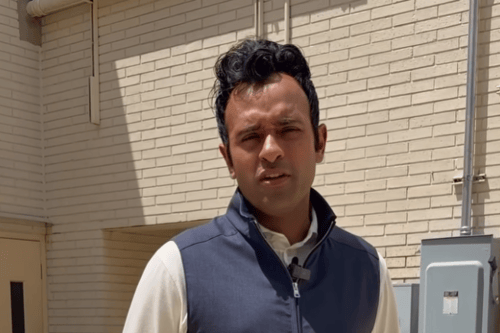

Vivek Ramaswamy sided with President Donald Trump’s push for reciprocal tariffs as Trump’s broader tariff policies were inflicting millions of dollars in costs on Ohio manufacturers and helping shut farmers out of one of the state’s most important agricultural export markets.
Ramaswamy, the Republican nominee for Ohio governor, publicly endorsed the principle behind Trump’s reciprocal tariff policy before the president unveiled his sweeping tariff agenda in 2025.
During a January 2025 interview with The Breakfast Club, Ramaswamy laid out three approaches to tariffs and rejected the idea that the United States should leave its markets open when foreign countries imposed barriers on American goods.
Instead, he advocated reciprocity.
“If you’re another country and you’re applying tariffs to us … then we’re going to level the playing field,” Ramaswamy said.
“I think that is totally legitimate,” he added. “In fact, I think in most cases that makes sense.”
Asked later in the interview whether the United States should impose the same tariff when another country levies one against American goods, Ramaswamy answered affirmatively.
“Yeah, I think yes,” he said. “So it’s that simple.”
That position closely tracked the reciprocal trade policy Trump was preparing to pursue. In February 2025, Trump signed a memorandum directing his administration to develop reciprocal tariffs, saying the United States would respond to tariffs and other trade barriers imposed by other countries.
Ramaswamy continued supporting reciprocity after launching his campaign for governor. The Washington Post reported in April 2025 that Ramaswamy had indicated before Trump’s tariff announcement that he would support reciprocal tariffs — taxing imports in response to tariffs imposed on American goods.
There was a distinction between Ramaswamy’s position and every tariff Trump ultimately imposed. Ramaswamy argued for matching foreign trade barriers and had criticized imposing tariffs higher than those imposed on the United States. Trump’s eventual tariff program went considerably further in some cases.
But Ramaswamy had sided with Trump on the underlying use of retaliatory tariffs as an instrument of trade policy.
And as Trump’s tariff agenda played out, businesses and farmers across Ohio began reporting the cost.
Ohio manufacturer loses more than $4 million
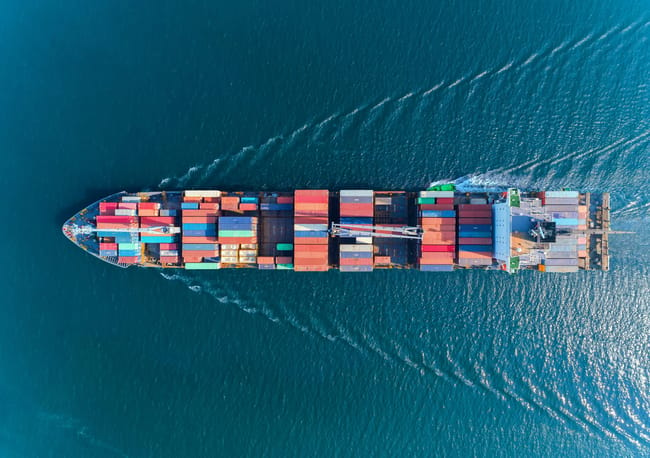
At Tosoh SMD Inc. in Grove City, the bill climbed into the millions.
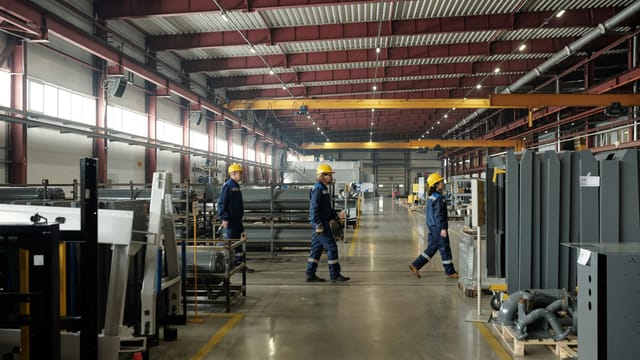
The central Ohio manufacturer, which employed 221 workers and makes specialized materials used in semiconductor and solar-panel manufacturing, lost more than $4 million in just six months because of tariffs imposed under Trump, according to reporting by The Columbus Dispatch.
The losses amounted to approximately 5% of the company’s annual revenue, Tosoh President and Chief Operating Officer Joe Buckfeller told the newspaper.
Tosoh produces sputtering targets and other high-purity materials used by companies including Samsung, Texas Instruments and Intel. The Ohio operation depends on specialized imported materials, including aluminum from Japan and France and copper from China.
Those imports became substantially more expensive under Trump’s tariffs.
The company attempted to pass some of the additional costs on to customers, but Buckfeller said customers resisted paying them. Tosoh also could not simply replace all of the imported materials with American alternatives because domestic suppliers did not produce some of what the company required at the necessary specifications.
In other words, tariffs promoted as a way to bolster American manufacturing were costing an Ohio manufacturer millions of dollars to continue making products in Ohio.
Ohio soybean farmers lose their Chinese market
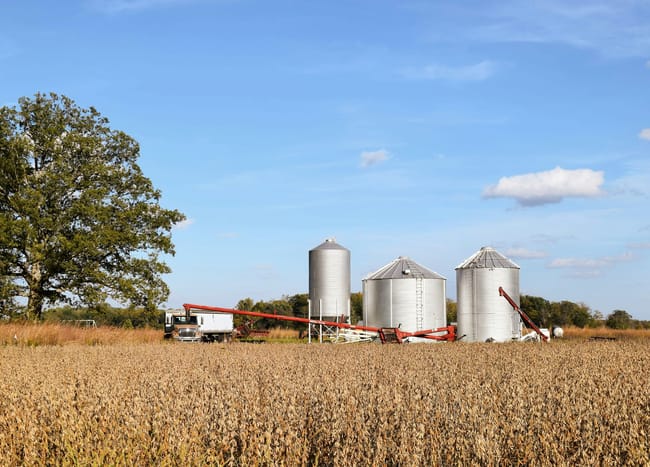
The consequences were also spreading across Ohio farm country.
China had long been the largest overseas customer for American soybeans. But amid Trump’s renewed trade war with Beijing, China retaliated against U.S. tariffs and turned increasingly toward producers in countries such as Brazil.
For Ohio soybean growers, the collapse was dramatic.
By the end of 2025, Ohio agricultural exports to China had fallen nearly $76 million compared with the previous year — a decline of about 74% — according to federal trade data reported by the Ohio Capital Journal.
Ohio soybean exports to China fell even further: 85%.
The decline was not attributable exclusively to tariffs. Brazil’s growing dominance in the Chinese soybean market and other economic forces also contributed. But the renewed U.S.-China trade confrontation was a major factor, with China halting purchases of American soybeans during the dispute in retaliation for Trump’s tariff policies.
Ohio farmers had been warning about the damage for months.
As TiffinOhio.net previously reported, soybean producers were being squeezed simultaneously by rising input costs, low commodity prices and disappearing overseas sales.
Clark County farmer Brian Harbage, whose operation is roughly half soybeans, said China had gone so long without purchasing American soybeans that recovering the lost business during the remainder of the year was mathematically impossible.
“We’re not going to catch up for this year because they haven’t bought any up to this date,” Harbage told TiffinOhio.net. “They can’t physically buy enough between now and the end of the year to make up for the losses.”
Shelby County farmer Chris Gibbs was even more direct about the condition of Ohio agriculture.
The tariffs, he said, had helped put farmers in a “hell of a mess.”
Farmers were also absorbing tariff-related increases on some of the equipment and materials they needed to operate while selling crops into a market weakened by retaliation.
Estimates at the time put losses for soybean producers at roughly $100 per acre in 2025.
Ramaswamy’s campaign said it was time to ‘hit back’
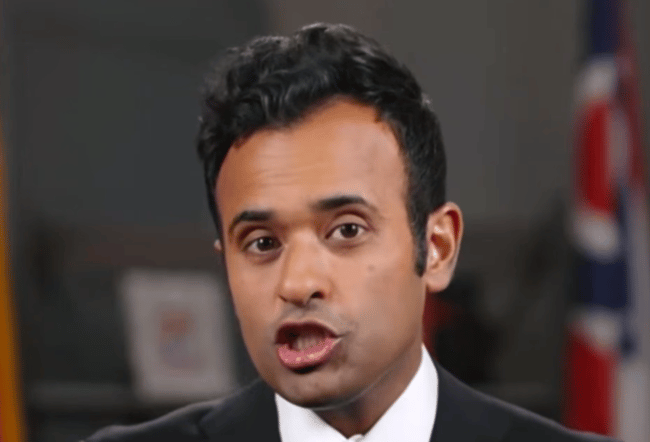
As concern about Trump’s tariffs mounted in April 2025, the Ohio Capital Journal asked Ramaswamy’s campaign whether he supported the tariffs and what he would tell Ohioans experiencing economic pain from the policy.
His campaign did not directly answer whether Ramaswamy supported each of the specific tariffs Trump had announced.
Instead, campaign manager Jonathan Ewing defended the broader economic argument behind Trump’s approach.
“For decades, Ohio workers have been hit hard by America’s manufacturing exodus, and it’s time to hit back,” Ewing said.
The response came after Ramaswamy had already publicly endorsed reciprocal tariffs.
The Washington Post noted at the time that Ramaswamy had said relatively little about Trump’s tariffs in the days following their announcement, despite having previously indicated support for reciprocal tariffs.
Trump’s full tariff program was not identical to the policy Ramaswamy had advocated. Ramaswamy favored reciprocity and had cautioned against tariffs that went beyond leveling what he considered an unfair playing field.
But as a candidate seeking to govern one of the nation’s major manufacturing and agricultural states, Ramaswamy had endorsed tariffs as a legitimate way to retaliate against foreign trade barriers, defended Trump’s hardball approach to trade negotiations and said reciprocal tariffs “in most cases” made sense.
Trump then put tariffs at the center of his economic agenda.
In Ohio, a Grove City manufacturer reported losing more than $4 million. Agricultural exports to China plunged. Soybean exports to the country collapsed by 85%. Farmers described losing money on every acre they planted and warned that one of their largest overseas markets could not simply be recovered overnight.
Ramaswamy sided with Trump on reciprocal tariffs.
Ohio farmers and manufacturers were left dealing with the consequences of the tariff fight that followed.