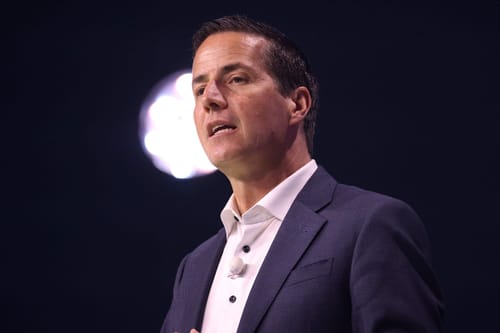

As smoke from Canadian wildfires pushed Ohio’s air quality into “hazardous” territory this week, U.S. Sen. Bernie Moreno announced how he would respond — with sanctions against Canada.
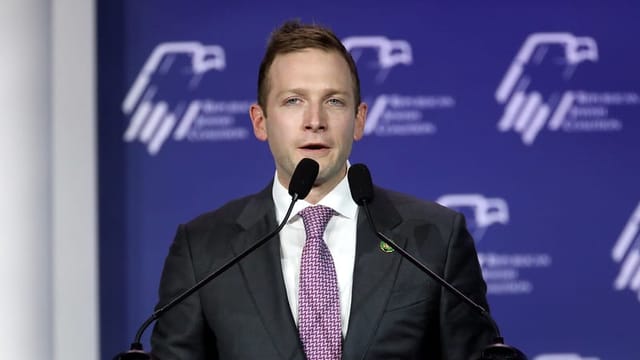
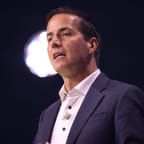
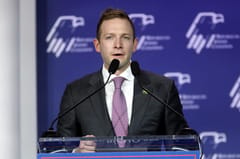
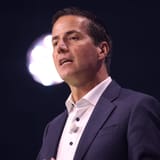
Moreno, a Westlake Republican, said Thursday he plans to introduce legislation targeting the Canadian government and the officials he blames for smoke that has repeatedly fouled the air across Ohio and the Great Lakes. “I’ll be introducing a bill next week to sanction Canada and the responsible Canadian government officials for this atrocity,” he wrote on X, quote-posting a Cleveland journalist’s image of a haze-shrouded downtown.
His office released the bill text Friday. Formally titled the “Countering Atmospheric Nuisances Arising from Drifting Airborne Foreign Incendiary Residual Emissions Act” — the CANADA FIRE Act — the measure is set for introduction July 20. It would require the president to determine whether Canadian wildfires harmed U.S. air quality and, if so, sanction Canadian officials deemed responsible, block their assets and revoke their visas. It also declares Canada’s ambassador “persona non grata” until the smoke clears and directs a study of a victims compensation fund financed by new tariffs.
“Thanks to Canada’s failed leadership, Ohio’s skies are seeing the worst pollution on record and Ohioans across the state are being subjected to hazardous conditions – we will not tolerate this incompetence,” Moreno said in a statement. His office faulted Canada for failing to invest in “forest thinning, fuel reduction, prescribed burns, and stronger enforcement against arson.”
The air was, by any measure, dangerous. The Ohio EPA issued a statewide air-quality advisory Wednesday, effective early Thursday, warning that pollution could reach the “very unhealthy” to “hazardous” range. In Cleveland, federal monitors rated the air “hazardous,” with the Air Quality Index climbing past 500 Thursday afternoon — a scale that tops out at 500. David Margolius, director of the Cleveland Department of Public Health, said conditions were worse than the 2023 smoke events that first turned Ohio’s skies orange.
What Moreno’s bill does not address is what scientists say is driving these increasingly frequent smoke events: a warming climate.
Peer-reviewed attribution research has found that human-caused climate change significantly increased the likelihood of the record wildfire seasons now sending smoke south. One study of Canada’s catastrophic 2023 season concluded warming more than doubled the odds of that scale of burning in eastern and southwestern Canada and made the extended fire season more than five times as likely. The Canadian Climate Institute notes that while the number of fires isn’t rising, the large, fast-moving blazes are — and it cautions that the “arson” framing Moreno’s office invoked distorts the science. In wildfire terminology, “human-caused” describes any ignition not sparked by lightning; it is not a synonym for arson, and it is not what is making the fires bigger.
Fire scientists have been blunt. Jen Beverly, a wildland fire professor at the University of Alberta, told the BBC that Canada’s boreal forests produce fires that are especially hard to control and that “we’re seeing more of those because of climate change.” Mike Flannigan of Thompson Rivers University has warned that until governments address the root cause, the smoke will keep coming.
Canadian Prime Minister Mark Carney answered the wave of Republican criticism by turning it back on Washington. “Climate change is everyone’s responsibility — truly everyone’s — including the United States,” he said, contrasting Canada’s investments in clean energy with U.S. moves to obstruct it, including the Trump administration’s campaign against offshore wind.
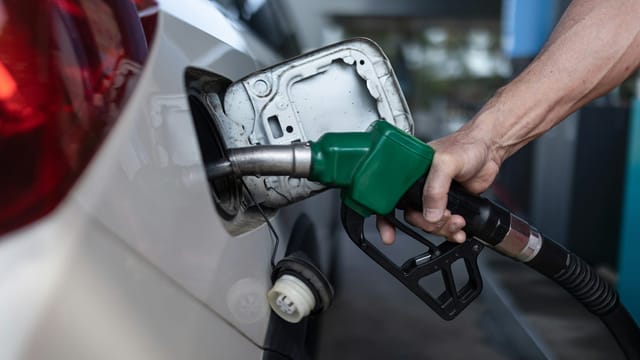
That contrast lands close to Moreno’s own record. During his 2024 campaign, Moreno made expanded oil and gas production a centerpiece and, as Inside Climate News reported, argued that America needs more fossil fuels. The League of Conservation Voters named him to its “Dirty Dozen” list of candidates it considers the worst on the environment. The emissions from burning those fuels are the same greenhouse gases that scientists say are heating the atmosphere, drying out forests and lengthening the fire seasons whose smoke now settles over Ohio — a warming climate that researchers have also tied to more frequent extreme weather and rising costs for basic services.
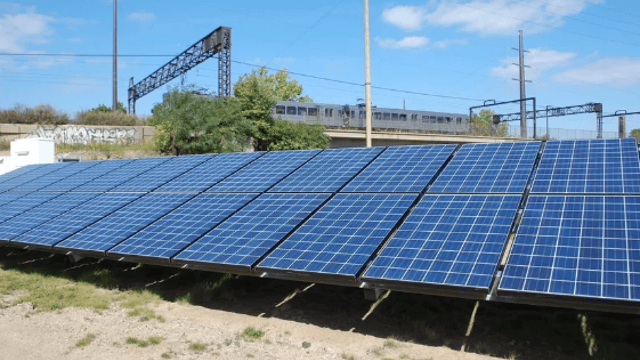
Ohio, meanwhile, has moved in the opposite direction from Carney’s clean-energy pitch, expanding fracking onto public lands while renewable projects face steep permitting hurdles that fossil fuel operations largely avoid.
Moreno is not alone in aiming at Ottawa. Four Michigan House Republicans sent a letter this week urging Canada to do more on wildfire management, and Moreno’s office echoed its language. Their case is that Canada’s forest management has fallen short and that the consequences are real: the smoke has closed schools, canceled outdoor events and battered Michigan’s summer tourism economy during its peak. As of Friday, the Canadian Interagency Forest Fire Centre counted roughly 895 active wildfires nationwide.
Whether a sanctions bill aimed at a close U.S. ally advances is another question. It would need to clear a Senate where such a measure faces long odds, and it does nothing to change the atmospheric conditions carrying the smoke across the border. For Ohioans watching the haze return summer after summer, the more consequential debate may be the one Moreno’s bill sidesteps: what, if anything, Washington intends to do about the warming that keeps the fires burning.