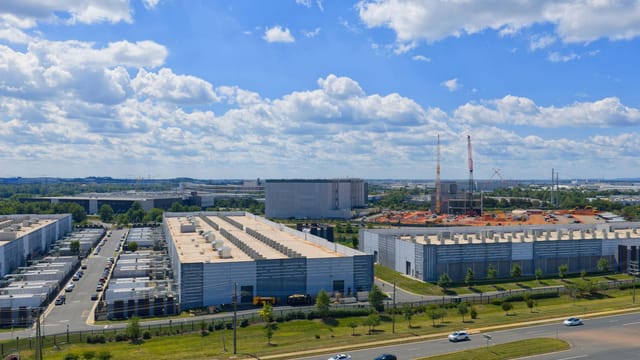


With data center construction fueling demand for some manufactured goods, overall business activity increased moderately over the past month and a half, the Federal Reserve Bank of Cleveland reported on Wednesday.
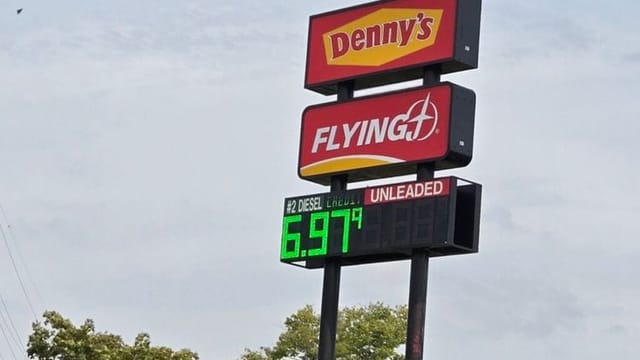
But with prices of fuel and other petroleum products remaining high, costs are continuing to rise and consumers find themselves with less money to spend, it reported.
The Cleveland Fed on Wednesday published one of its eight annual installments of the Beige Book. It seeks to assess economic conditions through online surveys and interviews with businesses, community leaders, economists and others.
The bank’s region includes all of Ohio and parts of Pennsylvania, West Virginia and Kentucky. There was a consensus throughout that costs were rising.
“Nonlabor input cost growth remained robust in recent weeks,” the report said. “Contacts across industries continued to cite higher fuel costs as the primary driver of input cost pressures. Firms reported direct impacts as costs rose for transportation and petroleum-based products and indirect impacts as higher fuel costs filtered through to items sensitive to shipping costs, including metals and construction materials.”
It added that the expense of things such as electricity, insurance, software, and food is also continuing to rise, but at a slower pace than it had.
Some of the Cleveland Fed’s contacts said that with fuel prices falling in recent weeks, they’d see other prices fall. But several developments put that in doubt.
The United States and Iran are again attacking each other, and energy flows through the Strait of Hormuz are again being throttled. Meanwhile, global oil reserves are at their lowest point in decades.
Some of those surveyed by the Cleveland Fed said they were passing only part of their increased cost to customers, while others said they were passing all of it along. And the increased cost is having an accelerating effect on consumer demand — especially among those who are already strapped.
“Consumer spending declined modestly after a slight decrease in the prior reporting period,” the report said. “Retailers across industry segments attributed the declines to the ongoing impact of high fuel prices.”
It added, “One non-auto retailer said spending by low-income households fell while that of high-income households was unchanged, and another noted that price increases pushed revenue higher even as unit sales fell. Auto dealers generally reported flat or softer sales due to high vehicle prices and interest rates, and one dealer added that demand for service and parts rose as consumers held onto vehicles longer.”
Economists watch consumer spending closely because it makes up nearly 70% of gross domestic product.
Meanwhile, demand in the real-estate and construction sectors grew robustly since early June, with demand for luxury homes staying strong and that for affordable housing growing, the report said.
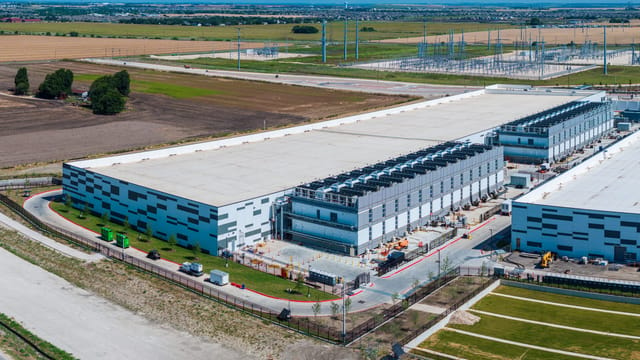
It added that demand for manufactured goods grew moderately, powered in part by data center construction and in part by the Trump administration’s tariffs.
“Data center development continued to drive demand for metal products and electrical components,” it said. “In addition, several metal producers reported stronger orders as customers depleted their imported inventories and shifted to domestic sources to avoid tariffs.”
This story is republished from the Ohio Capital Journal under a Creative Commons license. View the original article.