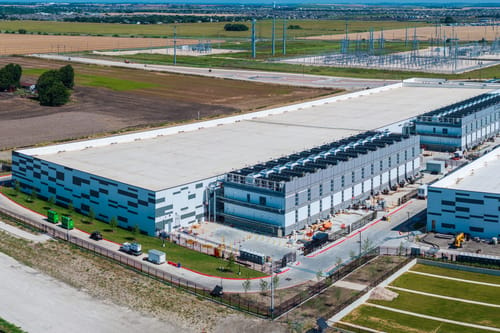

Given the amount of data center construction already in Ohio, the best economic deal going forward would be to require all new ones to use 90% renewable energy, a new cost-benefit analysis has found. The next-best deal would be to ban new construction altogether, it said.
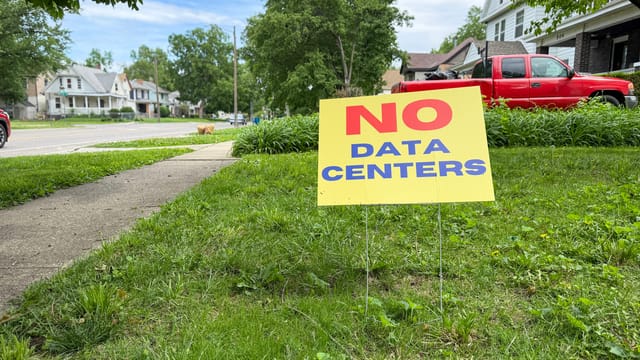
Ohio has the fourth-most data centers of any state, and after being forced to provide $2.3 billion in subsidies via tax breaks, taxpayers are questioning whether they’re really a good thing.
The centers have more than doubled the state’s electricity consumption, they generate noise and air pollution, the AI they generate is causing serious social harms, leaders of the big AI companies warn of possible calamities, and they’ve predicted that their machines will take millions of Americans’ jobs.
With these concerns in the background, the Columbus firm Scioto Analysis undertook a straight dollars-and-cents look at future data center development in Ohio.
The Buckeye State ranks only behind Virginia, Texas and California in the number of data centers. And the gargantuan facilities are poised to move into rural parts of Ohio and other Midwestern states in a big way.
“About 87% of current data centers in the United States are in urban areas, while 67% of planned data centers across the country are in rural areas, driven by the land and power requirements of modern hyperscale facilities,” the Scioto Analysis report said.
“Data centers in the Midwest are expected to grow by the highest percentage: a projected 64% increase compared to current data centers. As of 2026, 38% of Americans live within five miles of at least one operational data center.”
One criticism of data center economics is that while they create initial construction jobs, once completed they only require a skeleton staff to make sure the machines keep running.
The Scioto Analysis study credits data center development with 96,000 new jobs and $62 billion in social benefits to Ohio since 2013, but it also asks what new benefits they’ll create going forward.
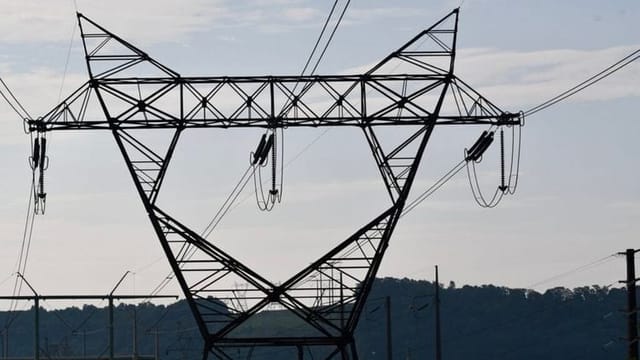
A big factor in that is the huge electricity drain they’ll create and the social cost of all the pollution it will generate, the study notes.
“If every planned project comes online by 2028, the number of data centers in Ohio will increase by half, their annual energy draw will more than triple, and their annual carbon emissions will more than triple,” the cost-benefit analysis says.
“In 2026, Ohio data centers use enough electricity to power 5.7 million homes, which is more than the 5.4 million homes in Ohio. By 2028, we predict they will use enough electricity to power about 3.5 times as many homes as there are in Ohio.”
Rob Moore, the principal of Scioto Analysis, said it’s important not to forget about the cost a business enterprise imposes on third parties — such as that which pollution imposes on the public.
“While data centers present a new category of high-intensity energy use in the state, they still present the same problems as transportation, manufacturing or power generation in general: emissions that are not priced will lead to local air-quality issues, lung and heart conditions and higher levels of carbon emissions,” Moore said in a text message.
He and his team looked at five scenarios and ran 10,000 simulations of what would happen between 2027 and 2034 with different variables.
The values the analysis arrived at are expressed in terms of “benefit-cost ratio.” Maintaining the status quo scored 1.04, meaning benefits only slightly outweighed costs.
Benefit-cost ratios for the other scenarios, in descending order of public benefit:
-
Data center generates its own power, 10% gas, 90% renewable — 2.9
-
Ban on new data center construction — 2.7
-
Data center generates its own power, 50% gas, 50% renewable — 2.5
-
Data center generates its own power, 90% natural gas, 10% renewable — 2.2
In other words, according to the analysis, forcing renewables to be used to generate power and an outright ban on new data center constructions would be the biggest improvement over what we’re doing now.
“A ban on construction produces a higher net present value and benefit-cost ratio than the status quo,” the report said. “This is because most employment benefits from existing data centers remain, while the cost of higher electricity prices to ratepayers falls.
“A behind-the-meter requirement with 90% natural gas produces about the same net present value, but a lower benefit-cost ratio. A behind-the-meter requirement with 90% renewables produces both the highest net present value and the highest benefit-cost ratio.”
The analysis came with an important caveat, however. If data centers produce more jobs than expected, a ban or a heavy renewable requirement won’t look so good.
“Our results depend heavily on our employment assumptions,” it said. “If we are overestimating how much data centers raise employment and earnings, even a ban or a 90% renewables requirement could have a negative net present value. If we are underestimating these effects, every alternative looks much better. Across our other tests, the status quo is the alternative most likely to have costs that exceed its benefits.”
This story is republished from the Ohio Capital Journal under a Creative Commons license. View the original article.