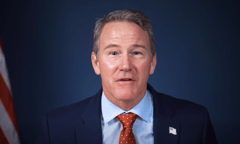

TOLEDO, Ohio — Republican congressional candidate Derek Merrin told northwest Ohio voters on Labor Day that progress was being made on one of the issues weighing most heavily on household budgets.
“The cost of living, we have work to do, but it is coming down,” Merrin said during a Sept. 7 interview with 13abc.
For Ohio families paying for groceries, electricity, housing and gasoline, however, prices remain higher than they were a year ago.
The latest federal inflation figures available when Merrin spoke showed consumer prices across the Midwest were 3.5% higher in July than in July 2025, according to the U.S. Bureau of Labor Statistics.
Groceries were up 2.2%. Shelter was up 4.5%. Electricity was up 8.1%. Gasoline was up 23.1%. Medical-care services were up 3.3%.
Every major grocery category tracked by BLS was more expensive than it had been a year earlier. Fruits and vegetables were up 3%, cereals and bakery products 2.5%, and nonalcoholic beverages 4.1%.
And the pressure at the gas pump has intensified since those July inflation figures were collected.
As of Wednesday, Sept. 9, AAA reported Ohio regular gasoline averaging $4.07 a gallon, compared with $3.00 a year ago.
Diesel in Ohio was averaging $5.89, up from $3.63 a year earlier. Nationally, diesel reached $5.94 Wednesday, the highest average AAA has recorded.
The current fuel spike has been driven largely by disruptions to global oil supplies amid the U.S.-Iran war and sharply reduced traffic through the Strait of Hormuz. Oil climbed back above $100 a barrel Wednesday, adding fresh pressure to gasoline, diesel and transportation costs.
Merrin’s comments also came on a holiday weekend when Americans were already confronting record fuel prices. AAA reported regular gasoline at $4.14 nationally heading into Labor Day, nearly $1 more than a year earlier and above the previous Labor Day record of $3.82 set in 2012.
Ohio had just finished its most expensive August for gasoline in federal records dating to 2003.
Merrin is the Republican nominee in Ohio’s 9th Congressional District, where he is again trying to unseat Democratic U.S. Rep. Marcy Kaptur.
Inflation slowed for a month. Prices did not broadly fall over the year.
The Midwest consumer price index fell 0.2% from June to July. Gasoline prices dropped 3.2% during that month and the broader energy index fell 1.9%, helping pull the regional index lower.
But that short-term decline did not erase the increases that had already occurred.
Compared with the same month one year earlier, Midwest prices were still 3.5% higher.
The distinction matters because falling inflation and falling prices are not the same thing. A lower inflation rate means prices are rising more slowly. For the overall cost of living to actually decline, the price level itself has to fall.
That has not happened on a year-over-year basis.
Nationally, consumer prices were 3.4% higher in July than a year earlier. Grocery prices were up 2.7%, electricity 4.2% and gasoline 24.6%.
The August inflation report is scheduled for release Friday, Sept. 11.
Merrin praised Trump, who promised to bring prices down ‘starting on day one’
Merrin tied his assessment of the economy directly to President Donald Trump during the same Labor Day interview.
“President Trump is doing everything he can to bring our economy back,” Merrin said.
Trump made lowering the actual price of everyday goods — not simply slowing the rate of inflation — a central promise of his 2024 presidential campaign.
“When I win, I will immediately bring prices down starting on day one,” Trump said during an August 2024 campaign event in New Jersey.
Trump said increased domestic energy production would drive down the cost of other goods and promised to reduce energy and electricity prices by “at least half” within 12 months.
“That’s going to bring down prices of everything,” Trump said.
More than a year and a half into Trump’s second term, overall consumer prices have continued to rise.
Presidents do not directly set the price of gasoline, groceries or electricity, and individual price movements are influenced by everything from wars and weather to commodity markets, corporate decisions, supply shortages and interest rates.
But Trump explicitly campaigned on bringing those prices down, and Merrin invoked Trump while telling northwest Ohio voters that the cost of living was now moving in that direction.
The latest available federal data show the overall price level remains higher than it was a year ago.
Kaptur has pushed legislation aimed at utility and prescription costs
The issue is also emerging as a dividing line in the race between Merrin and Kaptur.
Kaptur, the ranking Democrat on the House Appropriations Subcommittee on Energy and Water Development, has made rising utility bills a focus of her work in Congress.
In July, she introduced the Ratepayer Justice and Commercial Power Accountability Act, legislation that would create a federal fund to reimburse residential customers and businesses when utility corruption or misconduct causes them to pay higher rates.
The proposal grew out of the FirstEnergy bribery scandal in Ohio. Under Kaptur’s bill, money obtained through penalties and recoveries from utilities and executives could be returned to affected ratepayers, while additional funding could be directed toward electric-grid improvements in communities harmed by utility misconduct.
The bill, H.R. 9700, has been referred to several House committees and has not yet become law.
Kaptur has also pushed for increased federal investment in the electric grid and energy-efficiency programs, arguing that expanding supply and modernizing infrastructure are necessary to keep household power bills from climbing further.
During consideration of the fiscal year 2027 Energy and Water spending bill in May, Kaptur opposed proposed cuts to Department of Energy efficiency, innovation and grid programs, saying reduced investment would ultimately mean higher costs for consumers.
She has raised similar concerns about the enormous amount of electricity being demanded by new data centers. Ohio households were projected this summer to pay about 17% more for residential electricity than the previous summer, according to an analysis cited by the Ohio Capital Journal.
Kaptur has also backed legislation aimed at another major household expense: prescription drugs.
In 2025, she joined Democratic Rep. Ro Khanna of California and Republican Reps. Anna Paulina Luna of Florida and Andy Biggs of Arizona in introducing the Global Fairness in Drug Pricing Act.
The bipartisan bill would direct federal regulators to establish international price benchmarks for prescription medications in an effort to prevent Americans from paying substantially more for the same drugs than consumers in other developed countries.
That proposal also remains pending in Congress.
Kaptur voted in January for a bipartisan federal spending package that included billions of dollars for housing assistance, energy and water infrastructure programs and more than $3.2 million in projects she secured for northwest Ohio, including water infrastructure in Defiance and Erie County. Kaptur said those investments were intended in part to reduce pressure on local utility bills.
“Affordability isn’t an abstract concept, it’s real dollars and cents,” Kaptur said at the time.
Merrin also misstated the jobs report
Merrin made another economic claim during his Labor Day interview that does not match the federal government’s figures.
“This last jobs report, over 160,000 new private sector jobs added,” Merrin said.
The United States did add 162,000 jobs in August.
But those were not all private-sector jobs.
According to the Bureau of Labor Statistics’ Sept. 4 employment report, total nonfarm payroll employment rose by 162,000.
Private employers added 127,000 jobs.
Government employment accounted for another 35,000.
The 162,000 figure Merrin described as private-sector job growth was the total increase across both private and government employment.
The report was otherwise stronger than economists had expected. The unemployment rate remained at 4.1%, and previous estimates for June and July were revised upward by a combined 55,000 jobs.
But wage growth continued to run close to the pace of inflation. Average hourly earnings were up 3.1% from a year earlier in August, according to BLS, while the most recent national inflation reading showed consumer prices up 3.4% from a year earlier.
For northwest Ohio voters deciding between Merrin and Kaptur this fall, the cost of living is likely to remain difficult to separate from the numbers people encounter outside a campaign event: the grocery receipt, the electric bill and the price displayed at the gas station.
And for now, all three remain higher than they were a year ago.