
Ohio has spent more than a decade paying some of the largest corporations on earth to build here. Since 2017 alone, the state’s data center industry has collected an estimated $2.5 billion in state and local tax breaks. The sales-tax exemption that drives most of it cost Ohio an estimated $1.6 billion in 2025.
The companies at the top of that industry are also the largest importers of foreign white-collar labor in the United States. In fiscal year 2025, Amazon, Meta, Microsoft and Google held the top four spots for new H-1B approvals — the first time American technology firms swept all four, according to a National Foundation for American Policy analysis of federal data reported by Forbes. Counting renewals, Newsweek’s review of the same federal data put Amazon at 10,044 approvals in 2025 and Microsoft at 5,189.
Amazon has held a 100% Ohio sales-tax exemption since the Tax Credit Authority approved it in 2014. Intel, whose New Albany semiconductor campus anchors Ramaswamy’s pitch for Ohio’s future, took $150 million in JobsOhio grants on top of federal money.
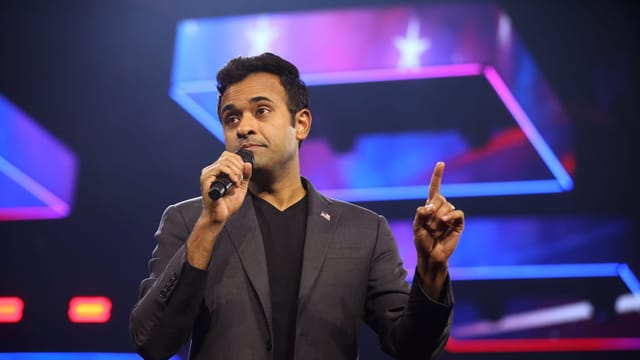
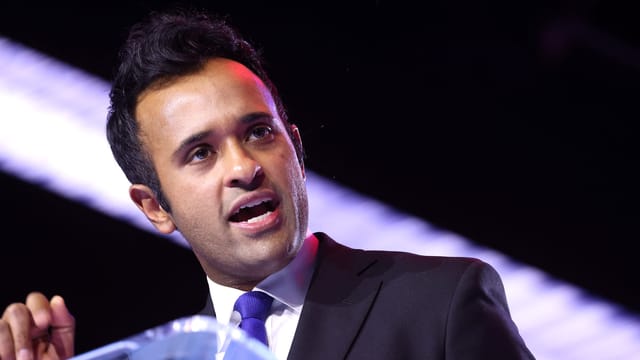
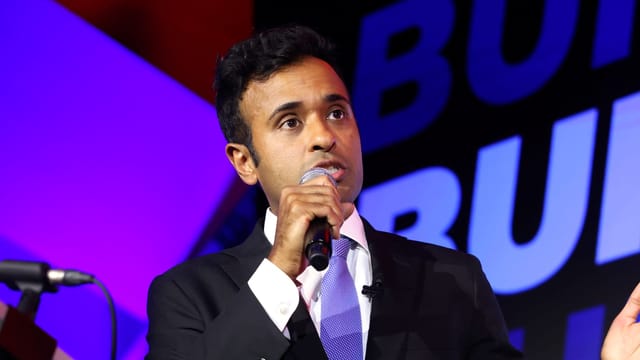
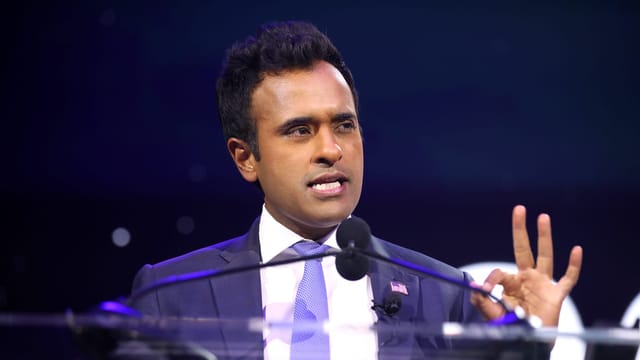
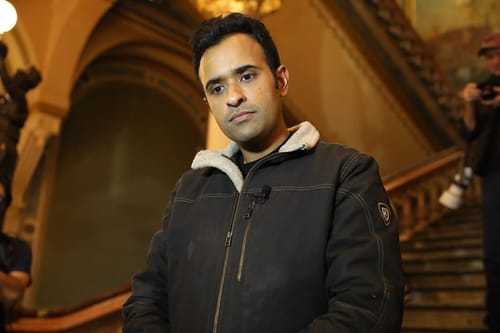
Vivek Ramaswamy wants to expand that program. And in December 2024 he told the country that when American engineers lose out to foreign-born ones, the explanation is American culture.
What he said
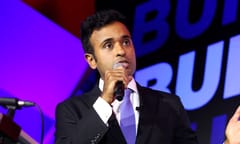
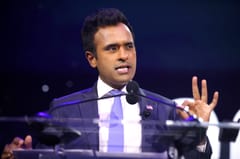
On Dec. 26, 2024, while co-chairing the federal Department of Government Efficiency with Elon Musk, Ramaswamy posted a long defense of technology companies that hire foreign-born engineers over Americans. The cause was not intelligence, he wrote, but culture. American culture “has venerated mediocrity over excellence for way too long,” and a country that celebrates “the prom queen over the math Olympiad champ” would not produce the best engineers, CNN reported at the time.
He wrote it down deliberately, at length, while holding federal office. It was aimed at the whole country, which includes Ohio.
Federal records show the pharmaceutical company Ramaswamy founded, Roivant Sciences, had 29 H-1B applications approved between 2018 and 2023, Politico reported during his presidential campaign.
Nikki Haley, his rival at the time, answered publicly that there was nothing wrong with American workers or American culture. Ramaswamy was out of DOGE by Inauguration Day.
He has not withdrawn the premise. In October 2025, weeks after President Donald Trump imposed a $100,000 fee on new H-1B petitions, Ramaswamy posted that 75% of American eighth graders were not proficient in math and that the average Chinese student was four years ahead, according to The American Bazaar. The lesson he drew was about American schools, not about the employers doing the hiring.
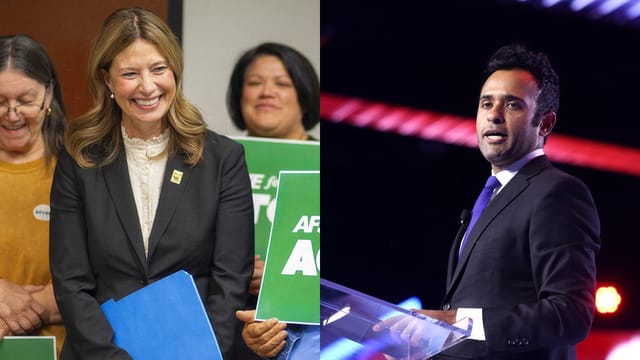
Amy Acton has made certain Ohio voters have heard the December post. She has featured it extensively in ads and speeches, ABC News reported.
The boards he would appoint
A governor does not issue visas. A governor does decide which employers the state pays to come here, and on what conditions.
As governor, Ramaswamy would appoint all nine members of the JobsOhio board, the private development arm that assembles incentive packages; control appointments to the five-member Ohio Tax Credit Authority, which grants the industry’s sales-tax exemptions; and oversee the Ohio Power Siting Board and the Public Utilities Commission of Ohio, which decide where large energy projects go and how grid-upgrade costs are split among ratepayers, as TiffinOhio.net has reported. JobsOhio also runs a Talent Acquisition Services program whose stated purpose is helping companies find workers.
Those exemptions are not one-time awards. Policy Matters Ohio found that the largest operators can keep extending the break as they expand without returning for further public scrutiny — Amazon, on its existing and announced investments, qualifies through 2055 under a 2014 agreement originally estimated to cost $77 million.
Ramaswamy’s platform promises to “attract the industries of the future with low-cost, dependable energy,” and he has been specific about which industries: data centers, artificial intelligence and chip manufacturing. He has not proposed attaching Ohio-hiring conditions to any of it.
Acton has taken the opposite position, backing a moratorium and conditions requiring data centers to cover their own infrastructure costs and use union labor. Ramaswamy opposes those conditions. Union leaders and former Ohio Democratic Party chairman David Pepper have criticized his jobs and cost-of-living record in Lima.
What Ohio has riding on the federal fight
The program is in the most unstable moment of its 36-year history, and Ohio institutions are exposed either way it breaks.
Trump signed a proclamation on Sept. 19, 2025 imposing a $100,000 payment on certain new H-1B petitions, where employers had been paying roughly $2,000 to $5,000. On June 8, 2026, a federal judge in Massachusetts vacated it as an unconstitutional tax. The administration appealed three days later, and the fee is still being collected while the case moves.
All 20 states that brought that challenge had Democratic attorneys general. Ohio, whose attorney general is Republican Dave Yost, did not join. Their argument was that the fee falls hardest on public employers — universities, hospitals, school systems — that Congress deliberately exempted from the visa cap.
Ohio has those. KFF’s analysis of federal data found Cleveland Clinic among the three largest H-1B employers in health care in the country in fiscal 2025, and Ohio responsible for roughly 5% of all such approvals nationally. Physicians account for nearly half of H-1B approvals in medical occupations, and the sponsored workforce skews toward higher-poverty and rural counties — the parts of Ohio with the fewest doctors to begin with.
So the state is positioned to keep subsidizing the corporations that use the program most, while staying out of the fight over the fee that hits its own hospitals. Ramaswamy has not said whether he would change either half of that.
What the campaign says
Ramaswamy has answers, and on the visa question they are more substantial than his critics usually allow.
The first is jurisdictional. Visas are federal. No governor issues one, denies one, or sets the cap, and nothing in the office would give him authority over the H-1B program.
The second is that he is not a defender of the program. He has attacked it, repeatedly, from the right. During his presidential campaign he told Politico the lottery needed to be replaced by “actual meritocratic admission,” called the program “a form of indentured servitude” that benefits only the sponsoring company, and said, “I’ll gut it.” He has held that position since, arguing a merit-based system is what American competitiveness against China requires.
The third is that his platform does contain a workforce answer, and it is domestic. His published plan promises to raise academic standards, pay the best teachers more, and “expand career-technical education and apprenticeships to create real pathways to good-paying jobs.”
Taken together, those answers describe a coherent position: fewer visas by lottery, more by merit, and Ohio schools eventually producing the workers themselves.
They also leave the December post standing. Nothing in the jurisdictional argument, the reform proposal or the education plank retracts the claim that when American firms pass over American engineers, the fault lies with the culture the Americans grew up in. And the plan, which runs to four pillars and several dozen bullet points, contains neither the word “visa” nor the word “immigration.” The generation of Ohio students it promises to prepare will not graduate before the incentive packages are signed.
Four questions he has not answered
Each is within a governor’s power to act on.
Would he attach Ohio-resident hiring conditions to JobsOhio awards and Tax Credit Authority exemptions? Does he support the $100,000 fee now that it is before a federal appeals court, and would he want Ohio to take a position? Should the state advocate for its own cap-exempt universities and hospitals, whose costs rise sharply if that fee survives? And does he stand by the December 2024 post as a description of Ohio workers, or only of a national culture he says the schools can repair?
He has answered none of them since winning the May 5 primary. Ohio votes Nov. 3.