
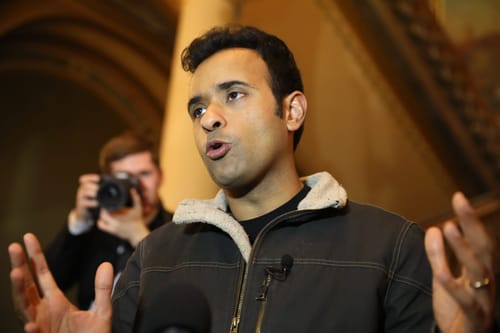

Whoever wins Ohio’s governorship on November 3 will inherit a data center buildout that is already one of the fastest in the country — and the levers to either accelerate it or rein it in. Republican nominee Vivek Ramaswamy has made clear which direction he intends to push.
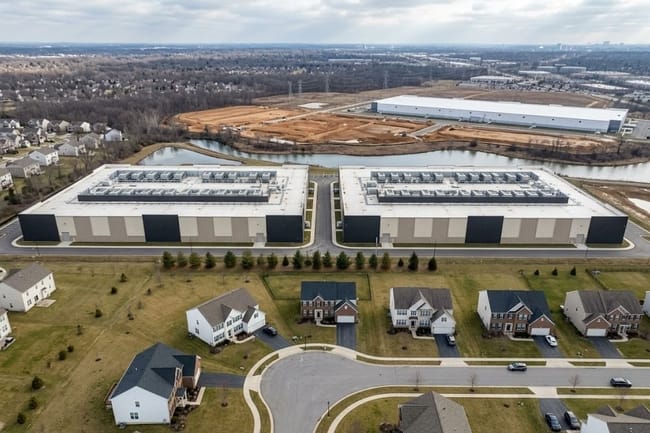
Ohio is home to more than 200 data centers, making it about the fifth-highest state in the country by count. Virginia remains the national leader, with Northern Virginia widely described as the world’s largest data center market. But the gap that matters most is in what has not been built yet. A University of Virginia analysis projects Ohio will add 77 data centers by 2030 — roughly the span of the next governor’s four-year term. A single proposed campus near Piketon, in Pike County, has been pitched as a potentially historic project: the U.S. Department of Energy says SB Energy, a SoftBank Group company, plans to build what it described as the world’s largest artificial intelligence data center on leased land at the Portsmouth Site, and WOUB reported the Pike County project could become one of the largest data center campuses in the nation.
What a governor actually controls
A governor does not personally approve data centers. But the office controls nearly every state body that decides where they go, what they cost, and how they are powered. As governor, Ramaswamy would appoint the nine-member board of JobsOhio, the state’s private development arm that hands developers their incentive packages; the Ohio Power Siting Board, which signs off on where large energy projects and their power sources are built; the Public Utilities Commission of Ohio, which sets the rules utilities operate under; and the Ohio Tax Credit Authority, which grants the industry’s tax exemptions. As one analysis of his portfolio and the agencies he would oversee put it, the boards that subsidize, site and regulate the industry would all report to him.
The siting process already tilts toward approval. Under House Bill 15, the energy law enacted in 2025, certain power-project permit applications are automatically approved after 60 days unless the Power Siting Board affirmatively denies them, according to Policy Matters Ohio. Since June 2025, the board has approved more than 2,000 megawatts of behind-the-meter natural gas generation — power plants built to serve a single large customer — including, in October 2025, a 73-megawatt fuel cell facility within 800 feet of a Franklin County neighborhood.
What Ramaswamy has promised
Ramaswamy has not been subtle about his intentions. “It takes two years to build an AI data center or Bitcoin mining firm or whatever — all of which I want in the state, by the way,” he told a Republican dinner in Wintersville in March 2025, according to The Times Leader. On his verified X account that same month, he wrote: “We’re seeing an AI data center boom (which is good), right at the time when we face supply constraints on baseload power generation,” adding, “I’ll unshackle energy production in Ohio, from fossil fuels to nuclear energy, without apology.” His campaign website promises to “streamline energy project permits and remove unnecessary regulations so projects get built on time and on budget.”
In May, Ramaswamy keynoted Utah’s Operation Gigawatt Summit, an industry event built around accelerating energy production, infrastructure and deployment. The summit website says it focused on energy production at scale, grid modernization, infrastructure for growing demands, and policy that enables building. After winning the May 5 primary, he pledged that Ohioans would “wake up to lower utility bills because the state is producing more energy” under his administration.
The bottleneck — and the bill
The promise of lower bills runs into a problem Ramaswamy has not resolved publicly: how new electricity generation would offset the enormous demand the facilities he wants would create. The Ohio Consumers’ Counsel says a single hyperscale data center can draw as much electricity as 100,000 homes. New baseload generation, whether gas or nuclear, takes years to bring online.
The grid bottleneck is real, but the status has changed. AEP Ohio had paused new data center service commitments while regulators considered a data center-specific tariff. In July 2025, the Public Utilities Commission of Ohio ordered AEP Ohio to file new tariffs and lift its moratorium on connecting new data centers. AEP later said data center customers had previously estimated needing more than 30,000 megawatts of electricity; after the tariff process began, 13,022.7 megawatts paid for formal studies and 5,642 megawatts signed binding contracts under the tariff, in addition to 12,219 megawatts of contracts signed before the tariff went into effect.
Meanwhile, the costs are landing on households and the state budget. Ohio’s data center industry collected an estimated $2.5 billion in state and local tax breaks between 2017 and 2024, and the state’s data center sales tax exemption alone cost about $1.6 billion in 2025 — roughly 11 times an earlier Department of Taxation estimate, according to figures reported by Signal Ohio. The Public Utilities Commission has since approved an AEP tariff requiring large new data centers to pay for at least 85 percent of the electricity capacity they reserve for 12 years, an effort AEP says is designed to keep infrastructure costs off other customers. The Ohio Consumers’ Counsel notes that data centers create relatively few permanent jobs once they are built, and a Democratic congressman has introduced federal legislation aimed at making the facilities pay their own way.
Industry and business groups counter that the economic return is real. The Ohio Chamber of Commerce Research Foundation credits data centers with supporting about 95,217 jobs and contributing $11.8 billion to Ohio’s gross domestic product in 2024. At a recent legislative hearing on the industry, company representatives told lawmakers they would pay for the grid upgrades their operations require.
What could slow it down
The buildout is not guaranteed, and the resistance has come from a notable place: the rural, conservative parts of the state that make up much of Ramaswamy’s base. The Ohio Newsroom reported earlier this year that around 18 municipalities were considering or had already enacted moratoriums that pause construction and approval of data centers. Tiffin’s city council approved a 12-month moratorium of its own. An all-volunteer group organized as Ohio Residents for Responsible Development cleared the Ohio Ballot Board in April and gathered signatures for a constitutional amendment to ban data centers drawing more than 25 megawatts. The effort came up short of the signatures needed for this November’s ballot and is now targeting 2027.
Outgoing Gov. Mike DeWine has also used the office as a brake, vetoing a 2025 attempt to repeal the sales tax exemption and later pausing new exemptions after the cost overruns came to light. The Associated Press reported that DeWine’s office cited the rising cost of the tax break and the Legislature’s review of the industry in declaring a pause on granting the incentive to new applicants. Whoever succeeds him inherits that same veto pen.
The contrast on the ballot
Ramaswamy’s Democratic opponent, former state health director Amy Acton, has staked out the opposite approach. Her “ActOn Lowering Costs” agenda calls for lowering household costs, and the Statehouse News Bureau reported that Acton wants more guardrails for data centers, including requiring them to cover added utility and environmental costs, using union labor, and restoring energy-efficiency programs rolled back under House Bill 6.
Ramaswamy’s enthusiasm has also drawn scrutiny over his finances. A May 2026 report from the progressive group Innovation Ohio, titled Vivek Ramaswamy’s Data Center Portfolio: Divided Loyalties, concluded that his personal holdings span chip makers, cloud and data center operators, industrial real estate trusts, and cryptocurrency — every tier of the industry he would regulate. “Ramaswamy is far too entangled with this industry to make sure it does right by our communities,” Innovation Ohio President Michael McGovern said in releasing the report. Ramaswamy has framed the buildout as an economic opportunity for the state and rejected new limits in favor of producing more energy.
The general election is November 3, 2026.