

Vivek Ramaswamy wants to fill Ohio with data centers, and he is not subtle about it. The Republican nominee for governor has built his economic pitch around an aggressive, statewide buildout of artificial intelligence facilities and Bitcoin mining operations, casting the Ohio River Valley as the next Silicon Valley. What his stump speech leaves out is that he is personally invested across nearly every tier of the industry he is promising to expand — and that the agencies which subsidize, site and regulate it would all report to him as governor.
At a March 2025 Republican dinner in Wintersville, Ramaswamy put the ambition plainly: “It takes two years to build an AI data center or Bitcoin mining firm or whatever — all of which I want in the state, by the way.” He has repeatedly called Ohio’s data center boom good, including on his verified account on X, and has argued that rising electricity prices should be answered by producing more energy rather than slowing the facilities driving the demand.
A portfolio that spans the supply chain
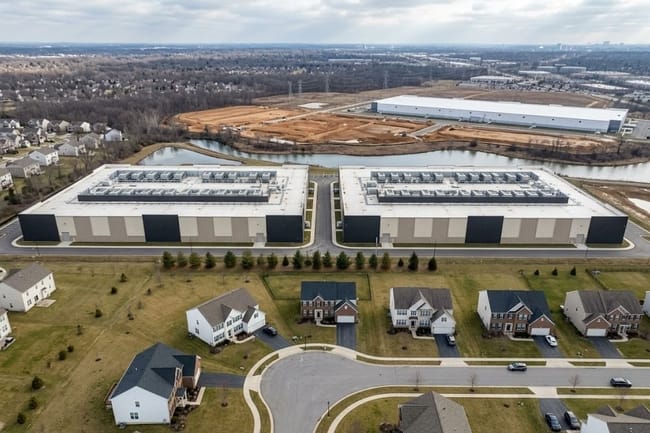
A May 2026 report from the progressive group Innovation Ohio, titled Vivek Ramaswamy’s Data Center Portfolio: Divided Loyalties, examined Ramaswamy’s financial disclosure filed with the Ohio Ethics Commission in April and concluded that his holdings touch every part of the data center supply chain — chip manufacturers, hardware suppliers, real estate developers, the companies that operate the facilities, and the artificial intelligence and cryptocurrency firms that depend on them. Each of those sectors stands to benefit from the expansion Ramaswamy is selling.
The report’s central argument is about leverage. As governor, Ramaswamy would appoint the boards of JobsOhio, the state’s private development arm that hands data centers their incentives; the Ohio Power Siting Board, which approves where they are built; the Public Utilities Commission of Ohio, which sets the rules they operate under; and the Tax Credit Authority, which grants their tax exemptions. “Ramaswamy is far too entangled with this industry to make sure it does right by our communities,” Innovation Ohio President Michael McGovern said in releasing the report, which contends his policy decisions and his personal balance sheet would point in the same direction.
The cryptocurrency thread runs deeper than the portfolio. Bitcoin mining depends on the same energy-hungry infrastructure Ramaswamy wants to expand, his company holds a substantial Bitcoin position, and crypto-industry figures have poured money into his campaign — including a cluster of maximum donations from the founders of a venture under U.S. Senate scrutiny. Ramaswamy has continued to headline data center industry events while campaigning.
Ramaswamy’s campaign has not publicly responded to the Innovation Ohio report, and he has not addressed Gov. Mike DeWine’s recent decision to pause new data center tax breaks. His broader argument has been consistent: he frames the buildout as a generational economic opportunity for Ohio and contends the state’s energy strain is a reason to deregulate and expand power production, not to restrict the industry.
The pushback is loudest in his own base
The most striking part of the story is where the resistance is coming from. The organized opposition to Ohio’s data centers is rooted in the rural, conservative parts of the state that form much of Ramaswamy’s political base. A group of residents from Adams and Brown counties in southwest Ohio cleared the Ohio Ballot Board in April and began gathering signatures for a constitutional amendment to ban data centers that draw more than 25 megawatts of power a month. By Innovation Ohio’s count, 15 Ohio communities have already enacted local moratoriums on new construction.
That backlash is being driven by cost. The state’s data center sales tax exemption cost Ohio about $1.6 billion in 2025 — roughly 11 times the Department of Taxation’s $136 million estimate, according to figures reported by Signal Ohio. Between 2017 and 2024, the industry collected an estimated $2.5 billion in state and local breaks while creating relatively few permanent jobs. A single large data center can use as much electricity as 100,000 homes, the Office of the Ohio Consumers’ Counsel reports, and many Ohioans saw their electric supply prices climb sharply in 2025.
The grassroots route may not reach voters this year. As of mid-May, the amendment’s backers had collected roughly 27,000 of the more than 413,000 valid signatures required by the July 1 deadline, making the November ballot unlikely. But the sentiment behind it is not confined to Ohio: a Gallup poll released May 13 found that 71% of Americans oppose construction of an AI data center in their local area.
The brakes — and who would hold them
For now, the industry’s growth is being checked by the same officials a governor influences. On May 27, DeWine paused new data center tax exemptions while a legislative committee studies the industry, though he stressed the move was not a ban and noted that exemption recipients reported $27.2 billion in capital investment in 2025. That review is itself shadowed by conflict-of-interest questions: the co-chair of the legislature’s Joint Data Center Committee, Sen. Brian Chavez, leads the panel despite an unresolved ethics complaint over energy-sector stakes. An effort to send a broader regulatory package to DeWine’s desk — House Bill 646, which would have created a separate electric rate class for data centers, halved their local tax abatements and regulated their water use — collapsed in the legislature on June 10 and is unlikely to move before November.
Whoever wins in November inherits those levers — the pause, the appointments, the veto pen DeWine used in 2025 to block a repeal of the exemption — and the two candidates point in opposite directions. Ramaswamy has signaled he would press the accelerator, casting expansion as an economic opportunity and favoring energy deregulation over new limits on the facilities. His Democratic opponent, Amy Acton, has staked out the opposite approach in her “ActOn Lowering Costs” agenda, calling for more guardrails on data centers — including requiring them to pay added utility and environmental costs and to be built with union labor — alongside a push for cleaner, lower-cost energy and a restoration of efficiency programs cut under House Bill 6.
The choice arrives as the buildout is projected to accelerate. A University of Virginia analysis projects Ohio will add 77 data centers by 2030, roughly the span of the next governor’s term. The race is essentially tied; the general election is Tuesday, November 3.