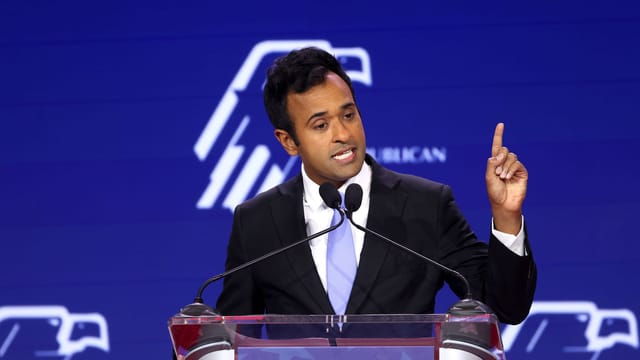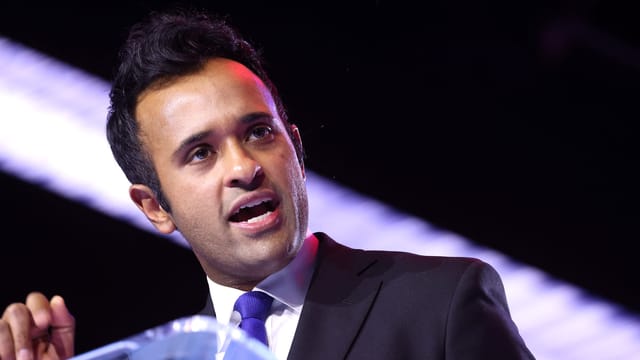
Vivek Ramaswamy has built his campaign for Ohio governor around a single promise: lower taxes will unleash growth that lifts the whole state. But when his three signature tax proposals — phasing out the income tax, repealing the capital gains tax, and rolling back property taxes — are examined alongside the independent fiscal analyses they have generated, a consistent pattern emerges. The biggest benefits flow to the wealthiest Ohioans and to large corporations, while the cost of replacing lost revenue would land most heavily on working and low-income families.
That conclusion does not rest on a single study. It is the through-line connecting separate analyses by the nonpartisan Ohio Legislative Service Commission, the Institute on Taxation and Economic Policy, Policy Matters Ohio, and the progressive group Innovation Ohio — each examining a different piece of Ramaswamy’s agenda and each reaching a version of the same finding.
A $10 billion question with no answer
The centerpiece is Ramaswamy’s pledge to eliminate Ohio’s personal income tax. He has said he would phase it out over an eight- to 10-year period beginning with his first budget. The tax raises roughly $10 billion a year — about a quarter of the state’s operating budget — and pays for K–12 schools, Medicaid, public universities, prisons, and services for seniors, veterans, and people with disabilities.
Ramaswamy maintains the gap can be closed through growth and spending discipline rather than service cuts. “It’s going to be a combination of growth and cutting unnecessary expenditures,” he told the Statehouse News Bureau. “It’s not going to be immediate. I haven’t promised that it’s going to be immediate, but what I’ve said is we’re going to bring it down and put us on a path, on a clear, credible, pro-growth path to zero income tax.” He has not specified which programs he would reduce to cover the difference.
A February 2026 Innovation Ohio report put the shortfall at about $9.8 billion a year — roughly 21% of the state’s General Revenue Fund. The group concluded that absent deep cuts, replacing that money would require either a 65% increase in the state sales tax or a 20% increase in property taxes. Both are regressive: a family that spends most of its income on necessities pays a far larger share of that income in sales tax than a household that can save or invest, and renters and fixed-income homeowners feel property tax increases acutely. In other words, the math of “zero income tax” does not erase the bill. It moves it down the income ladder.
Capital gains: a cut that skips most Ohioans
The clearest illustration of who benefits is the proposal to exempt capital gains from Ohio taxes — an idea Ramaswamy has promoted and that Rep. Tom Young (R-Washington Twp.) has introduced as House Bill 617, the Capital Gains Tax Repeal Act. Capital gains are profits from selling assets such as stocks, bonds, and real estate; they are income from owning things, not from working.
The Legislative Service Commission estimated the repeal would cost the state between $615 million and $645.6 million in tax year 2027, growing in later years. A separate LSC memo obtained by the Statehouse News Bureau found that 81.6% of the benefit would go to Ohioans earning more than $200,000 a year. Those making under $100,000 — the large majority of the state — would receive 7.3%.
An Institute on Taxation and Economic Policy analysis cited by Policy Matters Ohio sharpened the picture: on average, the lowest-income 20% of Ohioans would see no change at all, while the top 1% — with an average annual income above $1.8 million — would see an average tax cut of $6,424. About 60% of net capital gains in Ohio go to that top 1%.
Young argues the static estimates understate the upside, contending that “dynamic” growth would offset much of the loss, as he says past income tax cuts did. “We cut the income tax. What did we see? Increase in revenue,” he told reporters. Policy Matters Ohio counters that two decades of such cuts since 2005 have drained an estimated $17 billion a year from state coffers while Ohio’s economy and employment rankings lagged.
Property taxes: relief on paper, cuts in practice
Ramaswamy has also proposed rolling property taxes back to where they stood “before the end of the Covid pandemic,” a plan he rolled out in late March. Ohio property taxes climbed from $18.3 billion collected in 2020 to nearly $24 billion in 2024, and the relief pitch is politically potent. His campaign has not specified an exact baseline, pointing instead to the number of local taxing bodies. “Taxpayers can’t afford the path we’re on, and most Ohioans believe our government can do better as a steward of their hard-earned tax dollars,” spokesperson Evan Machan said, noting that Ohio has 88 counties but more than 2,000 taxing jurisdictions.
Because property taxes are local, the consequences would be too. Innovation Ohio estimated the rollback would cut about $6.6 billion a year from local budgets by the time a new governor could implement it, with no replacement revenue identified. Roughly 60% of Ohio property tax dollars fund schools; the group projected a school funding cut of about $4 billion, alongside reductions for fire departments, libraries, and public health agencies. As the report framed it, rolling back the tax base “would mean deep, immediate cuts to schools, fire stations, and services in every county.”
Data centers: corporate breaks, rising bills
The corporate side of Ramaswamy’s agenda runs through his pledge to make the Ohio River Valley “the next Silicon Valley” by aggressively expanding artificial intelligence data centers. Ohio already hosts about 200 such facilities — among the most of any state — and the industry has claimed an estimated $2.5 billion in state and local tax breaks since 2017, including sales tax exemptions and property tax abatements of up to 75% lasting 15 to 30 years. The state’s data center sales tax exemption alone cost about $1.6 billion in 2025.
Those incentives carry costs for residents. A single hyperscale data center can consume as much electricity as 80,000 to 100,000 homes, and Ohio residential electric bills have risen roughly $663 a year since 2019, a trend analysts tie in significant part to data center demand. At an August 2025 Ohio Chamber forum, Ramaswamy himself acknowledged electricity costs were about 50% higher and projected to climb another 50% — then argued the answer was to build still more data centers and more fossil fuel generation to power them. The strain has prompted bipartisan scrutiny: the state recently suspended a key data center tax break after Gov. Mike DeWine paused new exemptions, and a citizen-led drive is gathering signatures to restrict large facilities. A Gallup poll found 71% of Americans oppose building data centers locally.
A personal stake in the outcome
The tax agenda also intersects with Ramaswamy’s own finances. His financial disclosure, filed April 6 with the Ohio Ethics Commission, reported more than $1.1 million in dividends and capital gains in 2025, including $768,968 from the sale of BlackBerry stock — the precise category of income his capital gains proposal would exempt. The filing lists holdings across chip makers, cloud operators, industrial real estate trusts, and cryptocurrency, sectors that stand to gain from the data center expansion he champions and that he would help regulate as governor through appointments to JobsOhio, the Tax Credit Authority, the Ohio Power Siting Board, and the Public Utilities Commission of Ohio.
Innovation Ohio has been blunt about what it sees. “It shows exactly who benefits from his agenda: himself,” said Research Director Terra Goodnight, who argued Ramaswamy’s “policies will use our tax dollars to line his own pockets.” The group’s president, Michael McGovern, said running for governor “is just another way for Ramaswamy to cash in on the backs of working people.” A Case Western Reserve University law professor who studies professional ethics, Cassandra Burke Robertson, has offered a more measured read, noting that conflicts of interest depend on context and that broad market holdings differ from a stake in a single company.
The pattern
Taken individually, each proposal can be defended as a growth measure. Taken together, they describe a tax structure that asks less of the Ohioans best positioned to pay and more of those least able to absorb it — through higher sales taxes, higher property taxes, thinner public services, and rising utility bills. Ramaswamy’s wager is that growth will eventually make everyone whole. The independent analyses produced so far suggest that, in the meantime, the wealthy and large corporations would collect the gains while working families covered the difference.