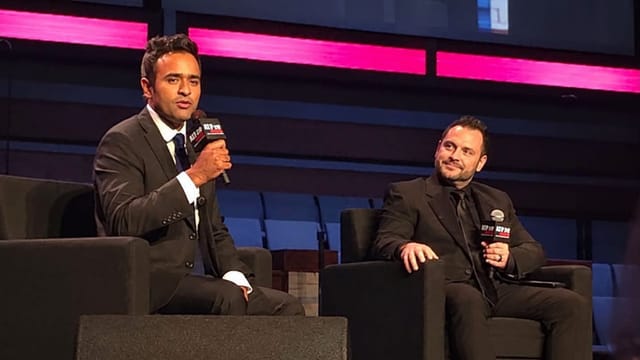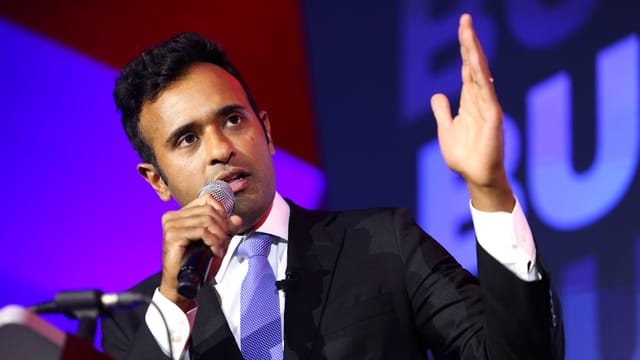
Ohio Republican gubernatorial nominee Vivek Ramaswamy is in Park City, Utah, on Friday as the scheduled lunch keynote at the Operation Gigawatt Summit — an industry-sponsored, day-long working session built around accelerating the AI data center buildout, nuclear deployment, and grid expansion that Utah Gov. Spencer Cox has made his signature energy initiative.
The summit, held at the Grand Hyatt Deer Valley and co-hosted by Cox and the Washington, D.C.-based Abundance Institute, has drawn an attendee list heavy with Trump-administration officials, congressional Republicans, energy executives, and AI and crypto investors. According to the published agenda, Energy Secretary Chris Wright, Environmental Protection Agency Administrator Lee Zeldin, White House Office of Science and Technology Policy Director Michael Kratsios, and Nuclear Regulatory Commission Chairman Ho Nieh are all on the program alongside Ramaswamy. Tickets are sold out.
Ramaswamy, a Cincinnati businessman who won the May 5 Republican primary, faces former state health director Dr. Amy Acton in the Nov. 3 general election. Recent polling shows the race within the margin of error: a Bowling Green State University/YouGov survey in April had Ramaswamy at 48% and Acton at 47%, and the RealClearPolling average puts him ahead by a single point.
What the summit is
Cox unveiled Operation Gigawatt in October 2024 with a goal of doubling Utah’s electrical generating capacity to roughly 20 gigawatts by 2035. State officials have pointed to AI data centers, broader electrification, and the retirement of baseload generation as the primary drivers of rising demand.
The summit lands as Utah’s Military Installation Development Authority, the state land-use agency that approved both the state’s largest proposed AI data center and a planned uranium enrichment equipment site at Camp Williams, is drawing scrutiny over expanded authority to issue bonds and redirect tax revenue with limited public oversight, according to reporting by TownLift, a Park City news outlet.
The summit’s sponsors include NVIDIA, Chevron, NextEra Energy Resources, Holtec International, CoreWeave, Trust Ventures, Valar Atomics, Excelsior Energy Capital, Cholla, EnergySolutions, Oracle, and the Lehi-based battery company Torus, listed as one of two top-billed “Executive Partners.”
At least nine of those sponsors have together routed more than $407,000 into the campaign accounts and political action committees of Cox and other top Utah Republicans since 2022, according to a Utah Political Watch analysis of campaign finance disclosures published earlier this week. Torus alone cut Cox three $50,000 checks across 2022, 2024, and 2025. Cox personally received $226,041 of the $407,000 total.
Ramaswamy’s data center position
Ramaswamy has made data center and crypto infrastructure expansion a recurring theme of his gubernatorial campaign. At a March 2025 Lincoln Day Dinner appearance in Jefferson County, he told the audience: “It takes two years to build an AI data center or Bitcoin mining firm or whatever — all of which I want in the state, by the way.”
On his verified X account, Ramaswamy has called Ohio’s data center boom “good” on multiple occasions, consistently framing it as an economic opportunity while attributing rising electricity costs to insufficient fossil fuel production rather than the facilities themselves. “We’re seeing an AI data center boom (which is good), right at the time when we face supply constraints on baseload power generation,” he posted on March 27, 2025. “I’ll unshackle energy production in Ohio, from fossil fuels to nuclear energy, without apology.”
In his post-primary victory speech earlier this month, Ramaswamy pledged that Ohioans would “wake up to lower utility bills because the state is producing more energy” under his administration. He has not detailed how expanded electricity generation would offset the additional demand created by the data centers he says he wants to bring to Ohio.
The Strive connection
Ramaswamy founded the asset management firm Strive in 2022 as an anti-ESG investment shop. The company relocated from Columbus to Dallas in November 2024, according to Ohio Capital Journal, and has since pivoted aggressively into Bitcoin.
In a May 19 disclosure, Strive said it now holds 15,391 Bitcoin valued at roughly $1.1 billion, making it the ninth-largest public corporate Bitcoin treasury. Bitcoin Treasuries data places Strive’s holdings just behind Coinbase and Riot Platforms.
The company’s accumulation has not been profitable. Strive’s average cost basis is approximately $104,073 per Bitcoin, well above current market prices in the $76,000–$79,000 range. As of April, the firm was sitting on more than $500 million in unrealized losses on the position. Bitcoin mining and the data centers that house mining operations are among the most energy-intensive commercial activities in the world.
The two largest donors to Ramaswamy’s gubernatorial super PAC have similarly heavy crypto exposure. Ross Stevens, who contributed $14 million, is actively involved in Bitcoin and crypto ventures. Jeff Yass, who contributed $10 million, holds more than $2 billion in Strategy and Coinbase through Susquehanna International Group, according to a joint investigation by The American Prospect and the Center for Media and Democracy.
The Ohio context
The Ohio backdrop for Ramaswamy’s Utah appearance is one of mounting ratepayer pressure. Since House Bill 6 — the law at the center of the FirstEnergy bribery scandal — took effect in October 2019, the average Ohio household’s annual electricity bill has risen by $663, from $1,070 to $1,733, according to the Public Utilities Commission of Ohio. From 2020 to 2025, Ohio ratepayers paid roughly $527 million in utility subsidies tied directly to HB 6.
Ohio data centers have meanwhile collected approximately $2.5 billion in state tax breaks since 2017, according to a report covered by Signal Ohio, while individual facilities have created as few as 10 to 50 permanent jobs. Rural Ohioans have begun gathering signatures for a proposed constitutional amendment to ban large data centers, citing rising electric bills, water strain, and limited long-term employment.
Casey Putsch, the Republican who challenged Ramaswamy in the May 5 primary, identified data centers as a defining political issue in a January Ohio Capital Journal interview. “We’re being sold out to billionaire interests,” Putsch said. “The data centers, massive concerns, OK? They have tax abatements for 10 to 15 years, nothing coming in. We’re subsidizing the costs through the electricity because they suck the same amount of power as small towns.”
The campaign calendar
Ramaswamy entered the general election with a substantial cash advantage. His campaign reported more than $30 million on hand after the primary, including a $25 million personal loan, against Acton’s $5 million. Cook Political Report and Sabato’s Crystal Ball both rate the race “Leans Republican,” a shift from earlier “Likely Republican” classifications.
Acton, who has framed her campaign around lowering costs for Ohio families, has questioned her opponent’s focus. In remarks following her primary win, she described Ramaswamy as someone who treats Ohio as “a flyover state” and is “out for himself.”
The Operation Gigawatt Summit closes Friday afternoon with a 3:00 p.m. reception. The Ohio general election is on Nov. 3.
TiffinOhio.net reached out to the Ramaswamy campaign for comment on Friday’s Utah appearance. No response was received prior to publication.