

The Democratic nominee for Ohio attorney general has asked the state’s inspector general to examine the chairman of JobsOhio, alleging a conflict of interest that ties a new $100 million state energy fund to the chairman’s private lobbying business.
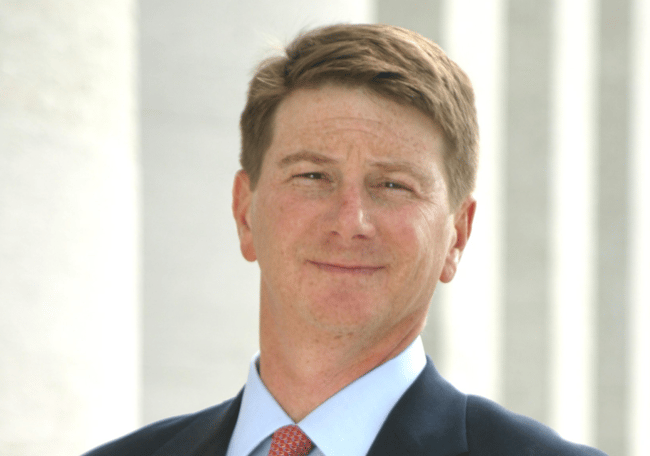
John Kulewicz, a Columbus-area attorney and Upper Arlington city councilman who won the May Democratic primary, filed a complaint with Ohio Inspector General Randy Meyer over JobsOhio board chairman Josh Rubin. Rubin is the founder and chief executive of The CJR Group, a Columbus lobbying firm whose clients include American Electric Power — the Columbus-based utility that, so far, is the only Ohio electric company to publicly express interest in the small modular nuclear reactors the new fund is meant to support.
JobsOhio defended its process. A spokesperson told WFMJ-TV that the agency does not discuss the companies it is in conversations with, and that anyone with a conflict of interest must disclose it and recuse themselves from discussions on such proposals. The spokesperson described the effort as one “focused on leveraging Ohio’s abundant supply of natural gas to increase electric generation and natural gas to sites, attracting small modular reactor companies in the future and developing a nuclear workforce that will be required to lead the nation.”
JobsOhio is a private nonprofit economic-development corporation created by the state and funded with profits from Ohio’s liquor enterprise. Its records are largely exempt from public-records law. The agency recently established a $100 million fund to support small modular reactors, or SMRs — including site preparation, workforce training, and incentives for manufacturing and production. The compact reactors are widely promoted as a way to power the data centers driving Ohio’s surging electricity demand. AEP signaled its interest in small nuclear projects on a May earnings call and could be positioned to receive grants or low-interest loans from the fund.
Kulewicz’s complaint centers on Rubin’s dual role: as JobsOhio’s board chairman, he helps lead the agency that created the fund; as head of CJR Group, he runs a firm that lobbies for AEP.
“Common sense and transparency would prevent the head of a secretive quasi-governmental organization from giving a $100 million grant to what appears to be a client of his private company,” Kulewicz said.
He added: “In effect, JobsOhio, using Ohio liquor profits, is paying AEP to develop mini-nuclear reactors that will have little to no local oversight and be owned by the utility company itself. And the CEO of the firm that lobbies for AEP is the Chairman of the state agency that is granting the $100 million to develop the technology.”
No grant to AEP has been awarded, and the inspector general has not determined whether Rubin’s role violated any standard. Kulewicz asked the office to review it.
Kulewicz linked the fund to a broader push at the Statehouse. “It is clear with the Ohio General Assembly’s push to require all data centers to have 50% of their electric output come from on-site generators that Ohioans will see many of these nuclear reactors in their neighborhoods,” he said.
Lawmakers are weighing several measures that would change how large electricity users power their operations. A heavily amended version of House Bill 646, advanced by the Ohio Senate in June, would require the largest data centers — those drawing more than 250 megawatts from the grid — to generate or procure their own electricity rather than draw from the standard service available to other customers. And House Bill 15, the sweeping 2025 utility overhaul, already expanded “behind-the-meter” self-generation and gave the Ohio Power Siting Board expedited authority to approve on-site power plants — approvals that can move forward without local zoning review. In Tiffin, city council this spring enacted a 12-month moratorium on data center development while it weighs whether to allow the facilities at all.
That framework has direct Seneca County roots. The Senate companion to House Bill 15, Senate Bill 2, was sponsored by state Sen. Bill Reineke, R-Tiffin, who represents the 26th Senate District covering Seneca County and serves as Senate president pro tempore. Reineke voted for House Bill 6 in 2019, the FirstEnergy-backed nuclear and coal subsidy law at the center of the largest bribery scandal in Ohio history.
A separate bill would go further. House Bill 862, introduced this spring by Rep. Adam Mathews, R-Lebanon — a lawyer and licensed nuclear engineer — with co-sponsor Rep. Bob Peterson, would allow electric distribution utilities such as AEP to build, own, and operate nuclear plants and recover costs from customers, reversing a roughly 25-year-old ban on Ohio utilities owning power generation. The Ohio Manufacturers’ Association has urged lawmakers to reject it.
“This bill is not a nuclear development strategy. It is a utility ownership strategy,” OMA President Ryan Augsburger said, drawing a comparison to House Bill 6.
Kulewicz, who has previously sought investigations into JobsOhio, framed the complaint around accountability. “Ohio needs an Attorney General who will put a stop to self-dealing and backroom deals by enforcing transparency and accountability of public officials,” he said. “Most importantly, mini-nuclear reactor technology in local communities deserves transparency, scrutiny, and local involvement in the decision-making process. As Ohio Attorney General, I will fight for transparency, honesty, and local government inclusion.”
Kulewicz, a longtime attorney with the Columbus firm Vorys, Sater, Seymour and Pease, won the Democratic primary in May over former state Rep. Elliot Forhan. He will face Republican Keith Faber, the state auditor, in the Nov. 3 general election for the seat being vacated by term-limited Attorney General Dave Yost.
Kulewicz is scheduled to bring his statewide “Transparency Tour” to Tiffin on Sunday, July 12, with a 4 p.m. stop at the Tiffin Historic Trust.