Tiffin mayor says developer turned to annexation after Hopewell Township refused to rezone 149 acres
A 1999 sewer agreement, not zoning plans the mayor calls preliminary, is why the annexation process bars neighbors from any hearing or appeal.
/
Share
AI Overview
Summary is AI-generated, newsroom-reviewed.
Tiffin Mayor Lee Wilkinson said developer Leonard Clouse pursued annexation of roughly 149 acres after Hopewell Township refused to rezone the farmland out of agricultural use. Three residents challenged the annexation at Monday's City Council meeting, including Anna Flechtner, who said her family was told it could lose sewer service if it didn't sign the petition.
Read the full article for more on:
How the 1999 Cooperative Development Agreement ties sewer service to annexation obligations
Why the expedited Type 1 annexation process leaves neighboring residents no appeal
Resident Cory Showman's account of three companies leaving Tiffin after tax abatements
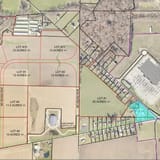
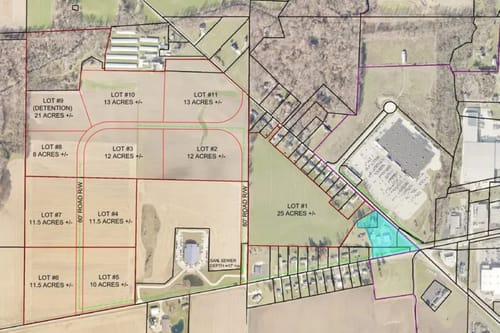
A City of Tiffin Engineering Department concept plan splits roughly 149 acres of Hopewell Township into 11 industrial lots. The document is undated. The mayor calls it "a drawing, a sketch, nothing official." (Photo: City of Tiffin Engineering Department)
Tiffin Mayor Lee Wilkinson said developer Leonard Clouse pursued annexation of roughly 149 acres after Hopewell Township refused to rezone the farmland out of agricultural use. Three residents challenged the annexation at Monday's City Council meeting, including Anna Flechtner, who said her family was told it could lose sewer service if it didn't sign the petition.
Key points
How the 1999 Cooperative Development Agreement ties sewer service to annexation obligations
Why the expedited Type 1 annexation process leaves neighboring residents no appeal
Resident Cory Showman's account of three companies leaving Tiffin after tax abatements
By TiffinOhio.net Staff
TIFFIN, Ohio — A developer sought to annex roughly 149 acres of Hopewell Township into Tiffin after the township refused to rezone the farmland out of agricultural use, Mayor Lee Wilkinson said in an interview Friday.
“So he approached the city to see if it was possible to annex that property so that he could get the zoning change to something that would allow him to develop,” Wilkinson said, describing the sequence as he understood it from the developer, Leonard “Lenny” Clouse, whom the mayor identified as the owner of the ground.
The account is the city’s fullest public explanation of an annexation that three residents challenged at Monday’s City Council meeting. It places a township zoning decision at the origin of a process that leaves the township’s residents no way to object.
A sewer agreement, and a knock on the door
Anna Flechtner lives with her husband, Tom, and their two young children at the intersection of West State Route 18 and U.S. Route 224. The home has been in her family more than 40 years, she told council, and her children are the third generation to live there. They attend Hopewell-Loudon Schools.
“We have never sought to become residents of the city of Tiffin,” she said.
The family became part of the annexation because of a sewer service agreement its parents signed roughly two decades ago. Wilkinson said that agreement obligates a new owner to annex if asked once the property transfers, and that the city needed at least one owner at that corner to sign so the territory would connect to the city.
Flechtner told council the family was warned they could lose sewer service if they did not sign. The family signed, she said, believing they had no choice.
Asked whether losing service was ever a real possibility, the mayor said he did not know.
“I’m not really sure what those consequences are,” Wilkinson said, adding that he would have to review the legalities and take advice from the law director. He said he knew only that the agreement had been signed and that the property had transferred.
Wilkinson said his visit to the Flechtner home came out of the city’s project coordination meetings, held every other week, where staff divide responsibility for pending work. He said he volunteered to go, obtained the sewer agreement from the law director, knocked on the door and introduced himself. He estimated it was nearly a year ago and called it a short conversation.
“I thought that I was just doing the right thing,” he said — being proactive, he said, and trying to “let them know ahead of time what’s coming.”
One day to sign
Flechtner told council that a week before Monday’s meeting the city’s law director gave the family one day to decide whether to sign a replacement petition or face legal action from the city.
Wilkinson said he did not know about the deadline, and called it “presumptuous” after months of waiting to reach that point. He said the Flechtners had come to his office months earlier for a conversation with him, the law director and the city administrator that he thought went well, and that he did not know what had changed since.
The mayor said recent communications forwarded to him suggest a no-build zone behind the homes is being floated as a possible solution, but said he has no written documentation of it from Clouse and that someone raised it as a potential answer.
What the 1999 agreement does
Asked whether an annexation agreement with Hopewell Township exists, Wilkinson said one does and emailed it during the interview. What the city sent is a Cooperative Development Agreement dated Oct. 11, 1999, among the City of Tiffin, the Township of Hopewell and Seneca County, together with two addenda. The most recent, signed Nov. 9, 2020, runs the agreement through Oct. 1, 2040. It is a standing agreement among the three governments rather than a document specific to this petition.
The agreement records what it calls a longstanding city requirement that owners whose property is served by a connection to Tiffin’s sanitary sewer agree to petition for annexation at the earliest possible time — the mechanism that pulled the Flechtners in.
Under Section 4, the city may require a sewer connection applicant to sign a recordable instrument binding the applicant and successor owners to exert all reasonable efforts to obtain annexation and to join any lawful annexation petition. The section carves out an exception: an applicant who lives in a single-family home as a principal residence, where the home was on an approved septic system when the application was made or was occupied when the agreement was signed, is not bound while it remains that applicant’s principal residence, and the city may not enforce the obligation against that applicant’s spouse or surviving spouse on the same terms.
By its terms the exception runs to the applicant and the applicant’s spouse. The section does not address owners who acquire a property by transfer.
A resolution the Hopewell Township trustees adopted the same day, attached to the agreement, commits the township not to oppose by any means an annexation of any part of the township other than the Bascom area.
The 2020 addendum requires the city to pay the township for 15 years after any annexation an amount equal to the property, estate and hotel excise taxes the city collects there, and to notify the township and discuss the effects whenever it proposes a tax abatement in the annexed area.
Why the first petition failed — two accounts
Flechtner told council the medical offices on U.S. Route 224 declined to sign, which forced a new petition into circulation, and that the commercial property owners signed again.
Wilkinson gave a different sequence. He said Northwest Ohio Orthopedics indicated at one point that it wanted to be annexed as well and was added to the petition, then changed its mind, requiring the petition to be rewritten and the process restarted. He said he did not know offhand when that happened. The practice operates at 3101 W. U.S. 224.
The maps, and the mayor’s answer
Two documents produced by the City of Tiffin Engineering Department show the property laid out for industry.
One is titled “Concept Plan — City of Tiffin Industrial Park” and carries the department’s name and its 51 E. Market St. address. It divides the ground into 11 numbered lots ranging from 8 to 25 acres, drawing two 80-foot road rights-of-way, a 21-acre detention lot and proposed sanitary sewer alongside existing lines. The printed acreages total 148.5. A note on its face says the plan is for depictional purposes only and to show the potential development opportunities the site offers; three further notes say sewer capacity, site elevations and private utility feasibility all still need to be evaluated. Its legend includes a category for land with enforceable sewer service agreements, with one parcel near the eastern edge marked in that pattern.
The second, a proposed zoning classification map, assigns M-1 light industrial, M-2 heavy industrial and C-2 general commercial districts across the property, alongside existing commercial zoning to the east. The largest single proposed district is heavy industrial. The Flechtner property is marked on the copy reviewed by TiffinOhio.net.
Neither document bears a date.
Asked whether the city had done any planning work on the property — layout, zoning or sewer — Wilkinson said it had not, beyond preliminary work. The city engineer, he said, helped produce “a drawing, a sketch, nothing official” showing what the ground could look like. He estimated it was made several months ago, said he did not know who requested it or whether the developer approached the engineer directly, and said he was not present at any meetings where that might have been discussed.
Shown the concept plan during the interview, the mayor said he had the zoning classification map but not that document. He called it a generalized proposal and said no road is planned.
“There was actually no planned development that was named of any variety that is going to go on any part of that property,” he said. “It’s just preparing to be developed.”
The family, he said, is under the impression a large industrial park is coming, and “no one has planned that ahead of time.”
Flechtner told council the family has repeatedly asked what the plan is and been told there is none, and that a city engineering map showed proposed light and heavy industrial zoning more than a year ago, before any annexation.
“If there is no development plan, why were future zoning maps already being prepared?” she asked.
What the zoning would allow
At Monday’s meeting Wilkinson read aloud from the city’s zoning code. The ground behind the homes along State Route 18 is shown as M-1 light industrial, a district the code describes as intended for manufacturing, wholesale business and research that is clean, quiet and free of hazardous or objectionable elements such as noise, odor, dust, smoke or glare, operating entirely within enclosed structures and generating little industrial traffic.
The heavy industrial designation, M-2, applies farther from the homes, the mayor said. The code describes that district as intended for major manufacturing, processing, warehousing and major research and testing operations — activities that require extensive community facilities and reasonable access to arterial thoroughfares.
Flechtner said the heavy industrial area still borders seven or eight family homes, and that she believes 33 homes neighbor the property overall.
“So I don’t know that that would be the best area to put an industrial park in surrounding all of our homes,” she said. “It has been opposed previously.”
Wilkinson said he did not see that many adjoining properties. Flechtner counted them off for him. The mayor said he would check the setback requirements, and said he would also need to ask the law director whether property must be zoned before or after annexation, describing it as his first experience with the process.
Why the neighbors have no say
The annexation is being pursued as what Ohio law calls an expedited Type 1 procedure, the fastest and most closed of the state’s annexation tracks.
Every owner inside the proposed territory must sign, which is why a single withdrawal collapsed the first petition. In exchange for that unanimity requirement, the process strips out nearly every public step: no notice is required, no hearing is held, the county commissioners must grant the petition at their next regular session, and there is no appeal for anyone — including neighbors outside the territory. Owners who sign waive their own right to appeal. The law requires the petition to be accompanied by an agreement executed between the municipality and each affected township.
Wilkinson said he wished he knew more about the intricacies of the law, and said he believed the procedure carries that name because of the route taken through the sewer agreement rather than because of its speed.
“There was nothing fast about it,” he said.
Flechtner said many of her neighbors learned about the proposal only because she and her husband went door to door, and that the family attended a Hopewell Township trustees meeting a week before the council meeting where she said trustees were also unaware of it.
At the podium
Two other residents followed Flechtner Monday night.
Lindsay Parkins, who said she has lived near the property for 22 years and is separated from it by roughly a half-acre strip, said the land was once part of the Golden Acre Turkey Farm and that a future land use map showing light and heavy industrial use is an enormous concern for her family. She listed chemical processing, pollution, large structures, disturbed wildlife and water, smoke, odor and heavy traffic among the consequences she associates with industrial use, and urged the city to weigh more than tax revenue.
“We’re not opposed to growth when done responsibly and fairly. And this annexation does not seem like either,” she said. As a group, she added, “we don’t want to be just a feather in a millionaire’s hat.”
Cory Showman, who said he owns adjacent property, raised the city’s use of tax incentives.
“In the past five years, we had three companies leave Tiffin right after tax abatements,” Showman said. He said a plant once floated for the site would have paid about $16 an hour with roughly 140 employees, and called for no abatement on any industrial plant built there.
Asked whether the city plans to offer incentives there, Wilkinson said there are none planned, noting the ground is not in the city.
Tiffin has absorbed two major manufacturing announcements this year. First Brands Group filed notice in February that it would close the Toledo Molding & Die plant in Tiffin, eliminating 407 jobs, before a bankruptcy sale to JVIS preserved hundreds of positions. American Fine Sinter announced in April that it will wind down its Tiffin operation by March 2028, affecting about 175 jobs. TiffinOhio.net’s reporting has not linked either closure to a tax abatement.
What happens next
Council President Bridget Boyle told the residents no annexation measure is pending before council.
“There’s nothing in front of council that we’re voting on,” Boyle said, offering to answer the family’s written questions by email.
Once a petition is signed and delivered to the county commissioners, she said, they are required by law to approve it. The record then goes to the clerk of council, who announces receipt at the next meeting, and the matter sits on the table 60 days before council votes to accept or reject it. Proposed zoning would run concurrently before council and the city planning commission, with a joint public hearing and a further planning commission hearing, and adjacent owners would receive mailed notice at that stage.
“You will have a chance when the time’s appropriate,” Boyle told the residents.
Wilkinson said the city backed the proposal because Tiffin is nearly out of ground it can offer to industry at the Eagle Rock and North Star industrial parks, and that the process has not reached the stage that triggers the waiting period and public hearings.
“So we’re not trying to keep it a secret. We’re just very early in the process,” he said Monday.
Development Solutions LLC, the company Flechtner said is pursuing the annexation, was organized in Ohio in 2016 and remains active. Its filing with the Ohio Secretary of State lists Leonard J. Clouse of New Riegel as statutory agent; Ohio filings for limited liability companies do not disclose ownership. Clouse is president and CEO of Clouse Construction, a New Riegel-based contractor and one of the region’s largest metal builders.
The company has done business with the city before. Council authorized the mayor in 2021 to lease roughly 12.318 acres in the Eagle Rock Business Park to the company for nominal consideration under a development agreement, then to sell that parcel and grant an option on an adjacent 8.732 acres, and later to accept drainage and sanitary sewer easements along Maule Road. The company developed the initial 50,000-square-foot speculative industrial building at Eagle Rock, which Clouse Construction built.
Flechtner left council a list of questions. She asked whether the mayor was acting on behalf of the city or assisting the developer when he came to her home, what city resources are supporting a privately initiated annexation, when the city first became involved, whether council had been fully informed, and how many neighboring families will be affected by a process that gives them no way to object.
“Our concern is not simply with the annexation itself,” she said. Her concern, she said, is that no one will say why it is happening.
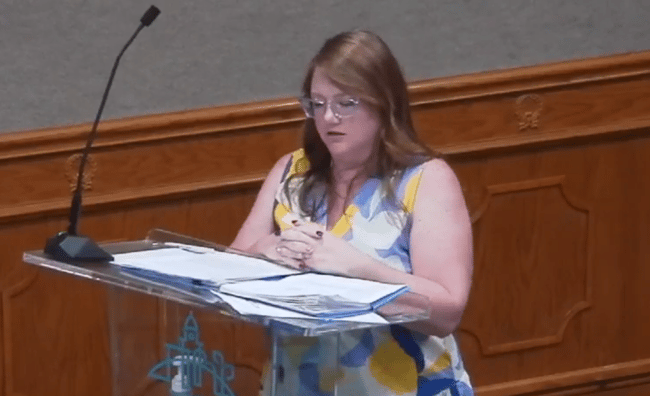
TIFFIN, Ohio — A developer sought to annex roughly 149 acres of Hopewell Township into Tiffin after the township refused to rezone the farmland out of agricultural use, Mayor Lee Wilkinson said in an interview Friday. “So he approached the city to see if it was possible to annex that property so that he could get the zoning change to something that would allow him to develop,” Wilkinson said, describing the sequence as he understood it from the developer, Leonard “Lenny” Clouse, whom the mayor identified as the owner of the ground. The account is the city’s fullest public explanation of an annexation that three residents challenged at Monday’s City Council meeting. It places a township zoning decision at the origin of a process that leaves the township’s residents no way to object. A sewer agreement, and a knock on the door Anna Flechtner lives with her husband, Tom, and their two young children at the intersection of West State Route 18 and U.S. Route 224. The home has been in her family more than 40 years, she told council, and her children are the third generation to live there. They attend Hopewell Loudon Schools. “We have never sought to become residents of the city of Tiffin,” she said. The family became part of the annexation because of a sewer service agreement its parents signed roughly two decades ago. Wilkinson said that agreement obligates a new owner to annex if asked once the property transfers, and that the city needed at least one owner at that corner to sign so the territory would connect to the city. Anna Flechtner speaks at a Tiffin City Council meeting, Monday, July 20, 2026. (Screenshot via City of Tiffin / Facebook Live) Flechtner told council the family was warned they could lose sewer service if they did not sign. The family signed, she said, believing they had no choice. Asked whether losing service was ever a real possibility, the mayor said he did not know. “I’m not really sure what those consequences are,” Wilkinson said, adding that he would have to review the legalities and take advice from the law director. He said he knew only that the agreement had been signed and that the property had transferred. Wilkinson said his visit to the Flechtner home came out of the city’s project coordination meetings, held every other week, where staff divide responsibility for pending work. He said he volunteered to go, obtained the sewer agreement from the law director, knocked on the door and introduced himself. He estimated it was nearly a year ago and called it a short conversation. “I thought that I was just doing the right thing,” he said — being proactive, he said, and trying to “let them know ahead of time what’s coming.” One day to sign Flechtner told council that a week before Monday’s meeting the city’s law director gave the family one day to decide whether to sign a replacement petition or face legal action from the city. Wilkinson said he did not know about the deadline, and called it “presumptuous” after months of waiting to reach that point. He said the Flechtners had come to his office months earlier for a conversation with him, the law director and the city administrator that he thought went well, and that he did not know what had changed since. The mayor said recent communications forwarded to him suggest a no build zone behind the homes is being floated as a possible solution, but said he has no written documentation of it from Clouse and that someone raised it as a potential answer. What the 1999 agreement does Asked whether an annexation agreement with Hopewell Township exists, Wilkinson said one does and emailed it during the interview. What the city sent is a Cooperative Development Agreement dated Oct. 11, 1999, among the City of Tiffin, the Township of Hopewell and Seneca County, together with two addenda. The most recent, signed Nov. 9, 2020, runs the agreement through Oct. 1, 2040. It is a standing agreement among the three governments rather than a document specific to this petition. The agreement records what it calls a longstanding city requirement that owners whose property is served by a connection to Tiffin’s sanitary sewer agree to petition for annexation at the earliest possible time — the mechanism that pulled the Flechtners in. Under Section 4, the city may require a sewer connection applicant to sign a recordable instrument binding the applicant and successor owners to exert all reasonable efforts to obtain annexation and to join any lawful annexation petition. The section carves out an exception: an applicant who lives in a single family home as a principal residence, where the home was on an approved septic system when the application was made or was occupied when the agreement was signed, is not bound while it remains that applicant’s principal residence, and the city may not enforce the obligation against that applicant’s spouse or surviving spouse on the same terms. By its terms the exception runs to the applicant and the applicant’s spouse. The section does not address owners who acquire a property by transfer. A resolution the Hopewell Township trustees adopted the same day, attached to the agreement, commits the township not to oppose by any means an annexation of any part of the township other than the Bascom area. The 2020 addendum requires the city to pay the township for 15 years after any annexation an amount equal to the property, estate and hotel excise taxes the city collects there, and to notify the township and discuss the effects whenever it proposes a tax abatement in the annexed area. Why the first petition failed — two accounts Flechtner told council the medical offices on U.S. Route 224 declined to sign, which forced a new petition into circulation, and that the commercial property owners signed again. Wilkinson gave a different sequence. He said Northwest Ohio Orthopedics indicated at one point that it wanted to be annexed as well and was added to the petition, then changed its mind, requiring the petition to be rewritten and the process restarted. He said he did not know offhand when that happened. The practice operates at 3101 W. U.S. 224. The maps, and the mayor’s answer Tiffin Mayor Lee Wilkinson. (Official Portrait) Two documents produced by the City of Tiffin Engineering Department show the property laid out for industry. One is titled “Concept Plan — City of Tiffin Industrial Park” and carries the department’s name and its 51 E. Market St. address. It divides the ground into 11 numbered lots ranging from 8 to 25 acres, drawing two 80 foot road rights of way, a 21 acre detention lot and proposed sanitary sewer alongside existing lines. The printed acreages total 148.5. A note on its face says the plan is for depictional purposes only and to show the potential development opportunities the site offers; three further notes say sewer capacity, site elevations and private utility feasibility all still need to be evaluated. Its legend includes a category for land with enforceable sewer service agreements, with one parcel near the eastern edge marked in that pattern. The second, a proposed zoning classification map, assigns M 1 light industrial, M 2 heavy industrial and C 2 general commercial districts across the property, alongside existing commercial zoning to the east. The largest single proposed district is heavy industrial. The Flechtner property is marked on the copy reviewed by TiffinOhio.net. Neither document bears a date. Asked whether the city had done any planning work on the property — layout, zoning or sewer — Wilkinson said it had not, beyond preliminary work. The city engineer, he said, helped produce “a drawing, a sketch, nothing official” showing what the ground could look like. He estimated it was made several months ago, said he did not know who requested it or whether the developer approached the engineer directly, and said he was not present at any meetings where that might have been discussed. Shown the concept plan during the interview, the mayor said he had the zoning classification map but not that document. He called it a generalized proposal and said no road is planned. “There was actually no planned development that was named of any variety that is going to go on any part of that property,” he said. “It’s just preparing to be developed.” The family, he said, is under the impression a large industrial park is coming, and “no one has planned that ahead of time.” Flechtner told council the family has repeatedly asked what the plan is and been told there is none, and that a city engineering map showed proposed light and heavy industrial zoning more than a year ago, before any annexation. “If there is no development plan, why were future zoning maps already being prepared?” she asked. What the zoning would allow At Monday’s meeting Wilkinson read aloud from the city’s zoning code. The ground behind the homes along State Route 18 is shown as M 1 light industrial, a district the code describes as intended for manufacturing, wholesale business and research that is clean, quiet and free of hazardous or objectionable elements such as noise, odor, dust, smoke or glare, operating entirely within enclosed structures and generating little industrial traffic. The heavy industrial designation, M 2, applies farther from the homes, the mayor said. The code describes that district as intended for major manufacturing, processing, warehousing and major research and testing operations — activities that require extensive community facilities and reasonable access to arterial thoroughfares. Flechtner said the heavy industrial area still borders seven or eight family homes, and that she believes 33 homes neighbor the property overall. “So I don’t know that that would be the best area to put an industrial park in surrounding all of our homes,” she said. “It has been opposed previously.” Wilkinson said he did not see that many adjoining properties. Flechtner counted them off for him. The mayor said he would check the setback requirements, and said he would also need to ask the law director whether property must be zoned before or after annexation, describing it as his first experience with the process. Why the neighbors have no say The annexation is being pursued as what Ohio law calls an expedited Type 1 procedure, the fastest and most closed of the state’s annexation tracks. Every owner inside the proposed territory must sign, which is why a single withdrawal collapsed the first petition. In exchange for that unanimity requirement, the process strips out nearly every public step: no notice is required, no hearing is held, the county commissioners must grant the petition at their next regular session, and there is no appeal for anyone — including neighbors outside the territory. Owners who sign waive their own right to appeal. The law requires the petition to be accompanied by an agreement executed between the municipality and each affected township. Wilkinson said he wished he knew more about the intricacies of the law, and said he believed the procedure carries that name because of the route taken through the sewer agreement rather than because of its speed. “There was nothing fast about it,” he said. Flechtner said many of her neighbors learned about the proposal only because she and her husband went door to door, and that the family attended a Hopewell Township trustees meeting a week before the council meeting where she said trustees were also unaware of it. At the podium Two other residents followed Flechtner Monday night. Lindsay Parkins, who said she has lived near the property for 22 years and is separated from it by roughly a half acre strip, said the land was once part of the Golden Acre Turkey Farm and that a future land use map showing light and heavy industrial use is an enormous concern for her family. She listed chemical processing, pollution, large structures, disturbed wildlife and water, smoke, odor and heavy traffic among the consequences she associates with industrial use, and urged the city to weigh more than tax revenue. “We’re not opposed to growth when done responsibly and fairly. And this annexation does not seem like either,” she said. As a group, she added, “we don’t want to be just a feather in a millionaire’s hat.” Cory Showman, who said he owns adjacent property, raised the city’s use of tax incentives. “In the past five years, we had three companies leave Tiffin right after tax abatements,” Showman said. He said a plant once floated for the site would have paid about $16 an hour with roughly 140 employees, and called for no abatement on any industrial plant built there. Asked whether the city plans to offer incentives there, Wilkinson said there are none planned, noting the ground is not in the city. Tiffin has absorbed two major manufacturing announcements this year. First Brands Group filed notice in February that it would close the Toledo Molding & Die plant in Tiffin, eliminating 407 jobs, before a bankruptcy sale to JVIS preserved hundreds of positions. American Fine Sinter announced in April that it will wind down its Tiffin operation by March 2028, affecting about 175 jobs. TiffinOhio.net’s reporting has not linked either closure to a tax abatement. What happens next Council President Bridget Boyle told the residents no annexation measure is pending before council. “There’s nothing in front of council that we’re voting on,” Boyle said, offering to answer the family’s written questions by email. Once a petition is signed and delivered to the county commissioners, she said, they are required by law to approve it. The record then goes to the clerk of council, who announces receipt at the next meeting, and the matter sits on the table 60 days before council votes to accept or reject it. Proposed zoning would run concurrently before council and the city planning commission, with a joint public hearing and a further planning commission hearing, and adjacent owners would receive mailed notice at that stage. “You will have a chance when the time’s appropriate,” Boyle told the residents. Wilkinson said the city backed the proposal because Tiffin is nearly out of ground it can offer to industry at the Eagle Rock and North Star industrial parks, and that the process has not reached the stage that triggers the waiting period and public hearings. “So we’re not trying to keep it a secret. We’re just very early in the process,” he said Monday. Development Solutions LLC, the company Flechtner said is pursuing the annexation, was organized in Ohio in 2016 and remains active. Its filing with the Ohio Secretary of State lists Leonard J. Clouse of New Riegel as statutory agent; Ohio filings for limited liability companies do not disclose ownership. Clouse is president and CEO of Clouse Construction, a New Riegel based contractor and one of the region’s largest metal builders. The company has done business with the city before. Council authorized the mayor in 2021 to lease roughly 12.318 acres in the Eagle Rock Business Park to the company for nominal consideration under a development agreement, then to sell that parcel and grant an option on an adjacent 8.732 acres, and later to accept drainage and sanitary sewer easements along Maule Road. The company developed the initial 50,000 square foot speculative industrial building at Eagle Rock, which Clouse Construction built. Flechtner left council a list of questions. She asked whether the mayor was acting on behalf of the city or assisting the developer when he came to her home, what city resources are supporting a privately initiated annexation, when the city first became involved, whether council had been fully informed, and how many neighboring families will be affected by a process that gives them no way to object. “Our concern is not simply with the annexation itself,” she said. Her concern, she said, is that no one will say why it is happening.
Continue reading for free.
Sign up for TiffinOhio.net's free newsletter to continue. No spam. Unsubscribe anytime.
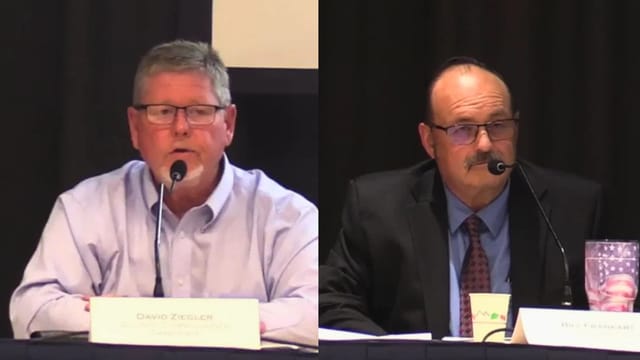
Independent commissioner candidate David Ziegler said data centers do not belong in Seneca County, while Republican incumbent Bill Frankart stopped short of saying whether he supports or opposes bringing the massive facilities into the county.
Independent commissioner candidate David Ziegler said data centers do not belong in Seneca County, while Republican incumbent Bill Frankart stopped short of saying whether he supports or opposes bringing the massive facilities into the county.
Hours later, the woman took her concerns to City Council, where officials discussed whether Tiffin should explore additional camping rules while acknowledging limits on what the city can enforce on private property.
Hours later, the woman took her concerns to City Council, where officials discussed whether Tiffin should explore additional camping rules while acknowledging limits on what the city can enforce on private property.
The Sept. 23 League of Women Voters forum will bring candidates for Ohio House District 88 and Seneca County commissioner together at Tiffin Middle School ahead of the November election.
The Sept. 23 League of Women Voters forum will bring candidates for Ohio House District 88 and Seneca County commissioner together at Tiffin Middle School ahead of the November election.
The Ohio Republican voted for legislation restricting local governments from adopting rules specifically targeting large cryptocurrency-mining operations, then added his name as a cosponsor.
The Ohio Republican voted for legislation restricting local governments from adopting rules specifically targeting large cryptocurrency-mining operations, then added his name as a cosponsor.
City Engineer Matt Watson defended a $50,000 sewer agreement system tying the Flechtner property to Lenny Clouse's industrial plan, as council has yet to receive annexation legislation.
City Engineer Matt Watson defended a $50,000 sewer agreement system tying the Flechtner property to Lenny Clouse's industrial plan, as council has yet to receive annexation legislation.
By TiffinOhio.net Staff
Tap to finish signing up & listen
Tiffin mayor says developer turned to annexation after Hopewell Township refused to rezone 149 acres
16 min
Tiffin mayor says developer turned to annexation after Hopewell Township refused to rezone 149 acres
by TiffinOhio.net Staff
Newsletter required
Subscribe free to listen to this story
This article includes a 16 min AI narration. Sign up for our free newsletter to unlock listening and the full story — no spam, unsubscribe anytime.
0:0016 min
Share Your Feedback
We want to hear from you. Whether you've spotted an error, have a story idea, or just want to share your thoughts—we're listening.
📰
Before you go...
Stay connected with local news that matters. Get our free newsletter delivered to your inbox.
✓ Thank you! You're now subscribed. Pro tip: Add newsbriefing@tiffinohio.net to your contacts to ensure our newsletters reach your inbox.