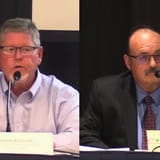
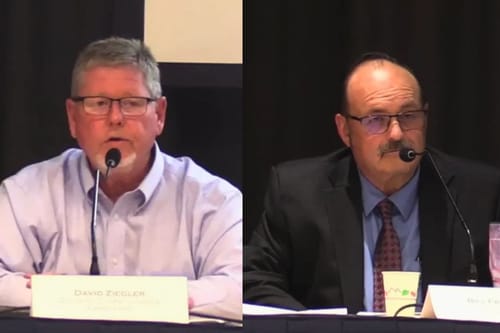
TIFFIN, Ohio — Independent Seneca County commissioner candidate David Ziegler flatly rejected data center development in the county Wednesday night, while Republican incumbent Bill Frankart stopped short of saying whether he supports or opposes bringing the facilities to Seneca County.
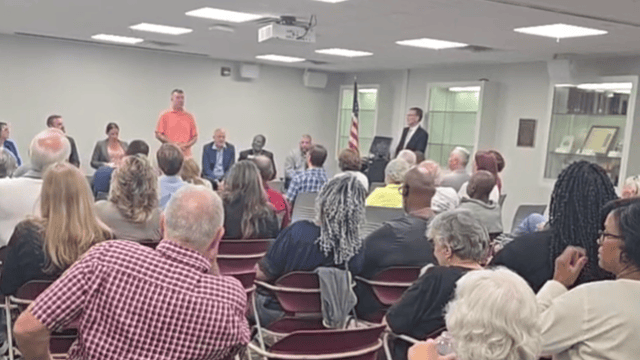
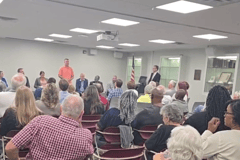
The contrast emerged during the Tiffin Area League of Women Voters Candidates Night at Tiffin Middle School, where Frankart and Ziegler faced questions on data centers, the county jail’s use for ICE detention, the landfill, large poultry operations, solar development, property taxes and county spending.
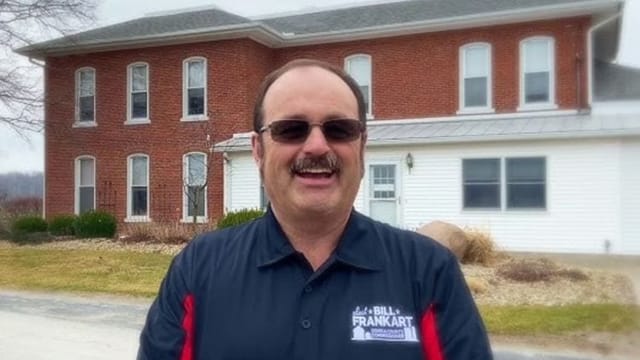
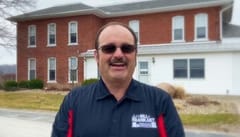
Frankart, a grain farmer and former Adams Township trustee, was elected to the Seneca County Board of Commissioners in 2022 and is seeking a second term.
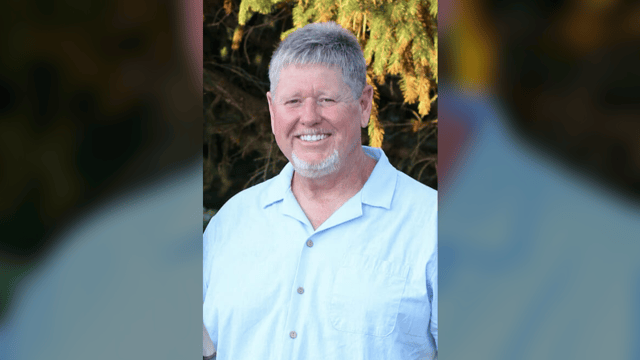
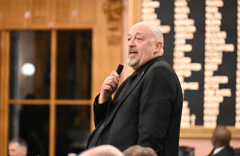
Ziegler, a lifelong Seneca County resident and Eden Township trustee, is challenging Frankart as an independent. He said during his opening statement that party politics should be left “at the door” in local government.
Ziegler gives blunt answer on data centers
The candidates were first asked what they thought about data centers coming to Seneca County and whether they would support prohibiting them.
Ziegler gave one of the most direct answers of the evening.
“We’re here to be honest, correct? I don’t like them,” Ziegler said. “I don’t think they belong in small communities like that or like we live in.”
He continued:
“I really don’t have anything else to say about it. I don’t think that we need to be involved with that type of industry in Seneca County, period.”
Frankart did not give a similarly direct answer when asked the same question.
Instead, he said the issue “falls back to the townships,” referenced Tiffin’s moratorium on data centers, discussed his own decision to enroll farmland in a preservation program and pointed to ongoing discussions in Columbus.
“As far as data centers, I think the Legislature’s really looking hard at them,” Frankart said. “And I think that in time we’re gonna see, you know, where they end up at.”
Frankart did not say whether he personally supports or opposes data center development in Seneca County, whether he would support a data center proposed in the county or what restrictions he believes county government should pursue.
His comments about townships suggested a preference for decisions being made at a local level, but he did not spell out what role he believes the Board of Commissioners should take if a major data center project comes to Seneca County.
Candidates questioned about ICE detention at county jail
The candidates were also asked directly whether they support the Seneca County Jail being used as a detention facility for U.S. Immigration and Customs Enforcement.
Frankart noted that the arrangement has existed for years but largely deferred questions about its operation to the sheriff.
“It’s been an ICE detention facility for quite a while,” Frankart said.
He said there are fewer people moving through the jail under the arrangement than in the past and described much of the issue as contractual.
“As far as getting into all the details, it’s all contractual and stuff on that,” Frankart said, adding that he would “yield to the sheriff” for a more detailed explanation of how the agreement works.
Frankart did not explicitly say whether he supports or opposes continuing the arrangement.
Ziegler was more direct, describing the federal detainees as a source of county revenue and saying he did not object as long as the program is being operated properly.
“It is a revenue source,” Ziegler said.
“As long as it’s being used properly, it’s bringing money in the community,” he continued. “I really can’t be negative about bringing money into our community.”
Ziegler acknowledged the political controversy surrounding ICE.
“I know ICE is a touchy situation,” he said. “Some people like it. Some people think it’s great. It’s something that we have and hopefully we use it for our best interests.”
Landfill remains major issue
The WIN Waste landfill near Fostoria again emerged as a major issue in the commissioner race.
The candidates were asked about both the landfill and large poultry operations, including how county officials should respond when residents believe companies are not complying with promises or regulations.
Ziegler said residents deserve straight answers.
“The people, they need straight answers when it comes to these,” Ziegler said.
He said communities should not be told one thing before a facility is developed only to later discover that requirements or commitments are not being followed.
“We have these facilities. We have the landfill. We have the chicken farms. They’re not going anywhere,” Ziegler said. “But we do need to keep the regulation.”
Ziegler said the Seneca County General Health District should ensure the landfill is held accountable and said officials should examine whether setbacks for large poultry operations need to be changed to provide greater separation from neighboring homes.
Frankart pointed to Seneca County’s ongoing effort to withdraw from the Ottawa-Sandusky-Seneca Joint Solid Waste Management District and establish its own district.
He said the county has also established additional landfill oversight through the health department.
“Now we do have, again, more local control and more activity with boots on the ground working with the Ohio EPA,” Frankart said.
Frankart later returned to the solid waste issue when asked specifically whether leaving the three-county district was the right move.
He said Seneca County is the largest contributor among the three counties and argued it has struggled to get enough money back for local landfill oversight.
“We get crumbs back, and we get a lot of pushback there,” Frankart said.
He said that was one reason commissioners decided to pursue a separate Seneca County solid waste district.
“At the end of the day … we decided to bring it back to our county so that way we can assist our health department with more help to be able to have oversight out there,” Frankart said.
State lawmakers last year enacted Senate Bill 147, which created a process allowing an individual county to withdraw from a joint solid waste management district without securing approval from the other counties in the district.
Frankart testified in favor of that legislation during its consideration in Columbus.
Frankart says poultry operation is ‘out of compliance’
Frankart also made a notable statement about a large poultry operation while answering the combined landfill and poultry question.
He said siting of the poultry facility was handled at the state level because of its size.
“To this day … I think that they are — they’re out of compliance,” Frankart said.
Frankart did not identify during the forum what requirement he believed the operation was violating or provide additional details about the alleged noncompliance.
“We will keep on them,” he said, before adding that he believed “everything’s okay there at this point.”
The seemingly conflicting remarks were not explored further before the moderator moved to the next question.
Ziegler: Showing up would be ‘my job’
The candidates were also asked how they would manage their schedules to ensure they remain available at public events and forums where residents can raise concerns.
Ziegler gave another pointed answer.
“Well, it’s gonna be my job,” he said. “I’m gonna be there.”
Ziegler said he does not view accessibility as something a commissioner should have to fit around other responsibilities.
“It’s not balancing your time,” he said. “It’s showing up to your job.”
Frankart defended his own accessibility, saying residents regularly contact him outside traditional business hours.
“My phone’s on at five in the morning,” Frankart said, describing receiving calls late at night and early in the morning about county issues.
“I’ve always told everybody, ‘Give me a call.’ I’m always around,” he said.
Frankart said he spends considerable time attending events throughout the county and working with residents, townships and villages.
Both point to local authority on solar
The candidates found more agreement when asked about large solar projects.
Frankart discussed Senate Bill 52, the state law enacted in 2021 that expanded county authority over certain large wind and solar developments and established procedures for local review and, under some circumstances, a referendum.
Frankart said he worked with opponents of large wind projects while serving as a township trustee and testified in Columbus during debate over the legislation.
He said he supports the framework that is now in place.
Ziegler agreed with Frankart’s general position.
“I agree with Bill on that and with the SB 52,” Ziegler said.
He said residents should have a say over whether large solar developments move forward in their communities.
Foster care costs strain county budget
Asked whether they would make significant changes to the Seneca County budget, Ziegler said he would first need to examine county programs and finances rather than enter office with a predetermined list of cuts.
“I’m not coming into this position acting like I know … or I have all the answers on day one,” Ziegler said.
He said programs that are working should continue to receive support, while programs that are not working should be changed or eliminated.
Frankart identified foster care costs as a significant and growing pressure on county finances.
He said some children with more complicated needs must be placed in specialized facilities, sometimes outside Ohio.
“It can be up to eight, nine hundred dollars a day to take care of kids,” Frankart said.
He described the costs as an unfunded mandate placing increasing pressure on counties and said local officials are working with state lawmakers on the issue.
Property tax changes worry both candidates
Property taxes also drew concern from both candidates.
Asked about state legislation affecting property taxes and local government revenue, Frankart said the county can tighten its own spending but ultimately has to wait to see what lawmakers in Columbus enact and how those changes affect future county budgets.
He said county officials are already looking ahead to the 2027 and 2028 budgets as the state considers changes.
Ziegler said he personally wants lower property taxes and worries that continued increases could eventually make it difficult for some homeowners to remain in their homes.
But he also cautioned that major changes can affect services funded through property taxes, including schools, parks, libraries, mental health services, developmental disability programs, fire departments and EMS.
“I have a concern that in years to come, I could possibly be taxed out of my home,” Ziegler said.
He said county leaders should examine the actual financial consequences of any changes before deciding how to respond.
“I wanna look at the actual numbers and find out the most responsible path forward to protect our taxpayers, but make sure that essential services … are still available when the people that need them most need them,” Ziegler said.
Different pitches for the commissioner’s office
The candidates used their closing statements to offer different arguments for how they would approach the office.
Frankart highlighted his work on solid waste policy, county government operations and his effort to remain active throughout Seneca County.
“My responsibility is to listen, ask questions, make fact-based decisions and keep working,” Frankart said.
Ziegler emphasized his experience as an Eden Township trustee and his decision to run without a party label.
“I don’t believe party labels should determine whether somebody gets heard by their local government,” Ziegler said.
He said he would not claim to have all the answers or make promises about issues beyond a county commissioner’s authority.
“What I can promise is that I’m willing to listen. I can ask questions. I will tell you the truth, and I will be careful with your money,” Ziegler said.
Frankart is seeking a second four-year term on the Seneca County Board of Commissioners. Ziegler is challenging him as an independent after serving as an Eden Township trustee.
The general election is Nov. 3.