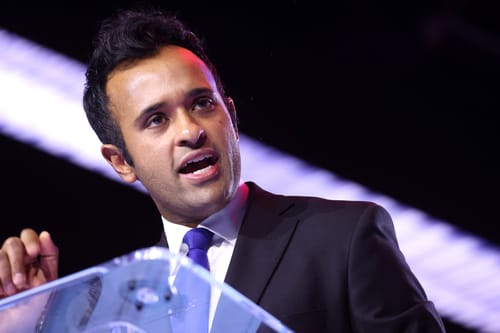
The biggest data center buildout in America could be headed straight for Ohio.
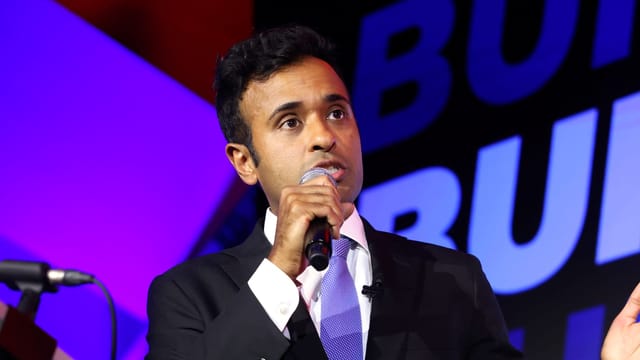
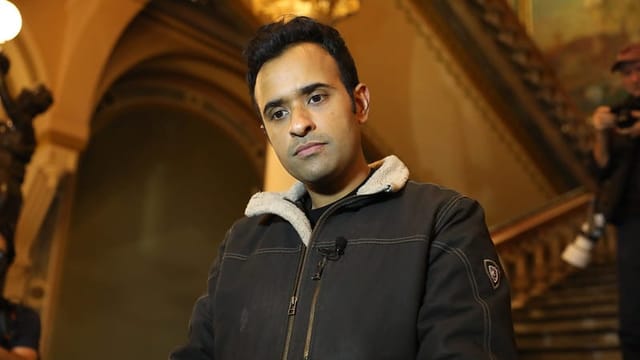
And if Vivek Ramaswamy is elected governor, Ohio would have a chief executive who spent much of his campaign cheering it on, holds investments across the industry and has proposed rules that would allow hyperscale projects to keep being built once companies meet his conditions.
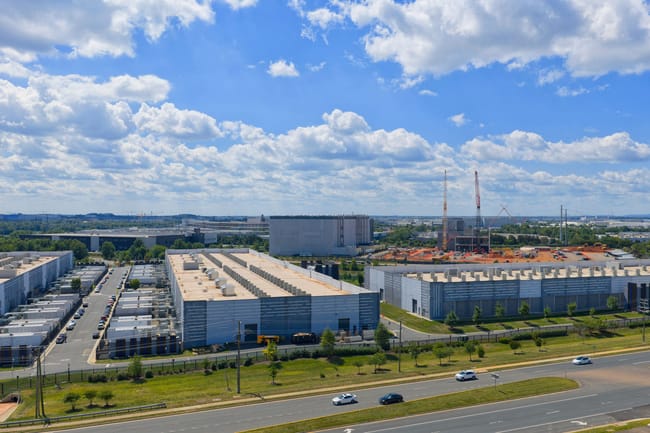
The scale of what is already coming to Ohio is hard to overstate.
AEP Ohio reported in February that data centers and developers had signed binding contracts for 17,861 megawatts of electricity.
For comparison, peak demand from every AEP Ohio customer combined — homes, factories, stores, hospitals and everything else — has historically ranged between about 8,000 and 10,500 megawatts.
Before AEP imposed new financial requirements on developers, companies had requested roughly 30,000 megawatts.
And that is just one Ohio utility.
In Pike County, an even larger bet on artificial intelligence is taking shape at the former Portsmouth Gaseous Diffusion Plant.
AEP Ohio says a 10-gigawatt data center campus is planned there.
OpenAI announced last month that it has agreed to secure approximately 8 gigawatts of computing capacity at the site. NVIDIA will provide the computing infrastructure, while SB Energy will build, own and operate the data center.
NVIDIA says it is investing $1.5 billion in SB Energy and providing financial backing for the project.
That same NVIDIA is among the companies Ramaswamy has personally invested in.
Ramaswamy wanted the boom
Ramaswamy’s campaign has tried to reposition him as a skeptic of the data center industry as voter opposition has grown.
His own words tell a longer story.
As TiffinOhio.net previously reported, Ramaswamy was recorded repeatedly praising Ohio’s data center boom in 2025.
“We’ve got AI data centers moving to our state. That’s a good thing. It’s a good thing,” Ramaswamy said in one March 2025 video.
At a Republican dinner in Wintersville that same month, he was even more explicit.
“It takes two years to build an AI data center or Bitcoin mining firm or whatever — all of which I want in the state, by the way,” Ramaswamy said.
TiffinOhio.net identified at least 10 recorded instances over a matter of weeks in which Ramaswamy described data center development as good, great or something Ohio should welcome.
He carried that message into 2026.
In May, while already running for governor, Ramaswamy traveled to Utah to keynote the Operation Gigawatt Summit, an industry gathering focused on accelerating AI infrastructure, power generation and data center development. Sponsors included NVIDIA and Oracle.
Then the politics changed.
Communities across Ohio began organizing against hyperscale projects. Local governments imposed moratoriums. Electricity costs became a statewide political issue. Data centers went from economic-development ribbon cuttings to one of the most contentious issues of the 2026 election.
Ramaswamy changed his pitch.
His moratorium ends when his rules begin
Ramaswamy now says that on his first day as governor he would issue an executive order stopping new data center project announcements until lawmakers pass his preferred legislation.
But his plan is not to stop hyperscale data center development in Ohio.
It is to set the price companies must pay to keep building.
Under the “Ohioans-First Data Center Pledge” Ramaswamy released in August, projects would be allowed to proceed if they meet three requirements.
Companies would have to provide free electricity or compensation to nearby residents, pay full property taxes that would be used for local property tax relief, and meet environmental and farmland protections.
“If a project fails to meet any one of these three requirements, it will not be built,” his campaign says.
The inverse is just as clear: meet them, and construction can continue.
Ramaswamy reinforced that position during a Sept. 4 interview on “The State of Ohio.”
He described how a hyperscaler could finance its own power generation and use excess capacity to provide electricity to surrounding residents. He talked about using industrial sites, requiring landscaping around facilities and ending some secrecy agreements.
He did not propose closing Ohio to hyperscale data centers.
He proposed a framework for approving them.
Other states are shutting the door
That could become much more consequential as other states move in the opposite direction.
New York Gov. Kathy Hochul signed an executive order in July imposing what her office called the nation’s first statewide moratorium on new hyperscale data centers.
New York’s one-year pause is designed to develop new rules for utility costs, infrastructure and community impacts. Hochul also called for repealing state sales-tax exemptions for massive data centers.
“Progress shouldn’t arrive with a higher utility bill, depleted water supply or noise pollution,” Hochul said when announcing the order.
New York is not alone.
The Wall Street Journal reported this week that more than 10 states have moved to suspend, repeal or reconsider incentives offered to data centers as the cost of the artificial-intelligence buildout explodes.
That leaves hyperscalers looking for something they increasingly cannot find in established markets: enormous blocks of land, enormous supplies of electricity and a government willing to let them build.
Ohio checks every box.
CBRE reported last month that power availability and the ability to win government approval are now among the most important factors determining where data centers are built. Northern Virginia remains America’s largest data center market, but land and permitting constraints are slowing its expansion.
Ohio, meanwhile, already has a pipeline of contracted electricity demand unlike anything the state has seen before.
If New York and other states make hyperscale construction harder while a Ramaswamy administration establishes a path for companies to build in Ohio, projects do not disappear.
They can move.
Ohio is positioned to take them.
Ramaswamy has money in the companies driving the boom
Ramaswamy would not enter the governor’s office as a financially detached observer of that industry.
His own investment portfolio reaches into it.
A TiffinOhio.net review published in May detailed holdings identified in Ramaswamy’s Ohio financial disclosure and an analysis by progressive policy group Innovation Ohio.
They include NVIDIA, Microsoft and Amazon.
Amazon and Microsoft operate enormous cloud-computing businesses built around hyperscale data centers.
NVIDIA sells the processors at the heart of the AI infrastructure boom — including the equipment that will fill the massive OpenAI campus being built in Pike County.
Ramaswamy has also reported investments in industrial real estate companies Prologis, Plymouth Industrial REIT, Rexford Industrial Realty and Terreno Realty, along with an infrastructure investment fund with exposure to digital infrastructure.
His exposure to the semiconductor industry is particularly significant.
Ramaswamy’s 2023 federal financial disclosure listed between $1 million and $5 million in the Strive U.S. Semiconductor ETF, a fund he helped launch through the asset-management company he founded.
The fund is built around semiconductor companies whose products are essential to data centers.
Ramaswamy’s campaign also received a maximum $16,615 contribution from the Vistra Employee PAC in 2025. Vistra is among the energy companies pursuing new generation tied to the country’s explosion in AI electricity demand.
The overlap would follow Ramaswamy into the governor’s office.
A governor with enormous power over the buildout
Ohio’s governor does not personally approve every data center.
He does control appointments across the state machinery that determines how easy they are to build and how much public support they receive.
Under Ohio law, the governor appoints all nine members of the JobsOhio board. JobsOhio recruits companies, negotiates economic-development packages and has played a central role in bringing major technology investments to the state.
The governor also appoints members of the Public Utilities Commission of Ohio, which regulates electric utilities and has already adopted special rules governing enormous data center loads.
And the governor appoints two members of the Ohio Tax Credit Authority while his appointed development director chairs it. That authority administers the state’s lucrative data center sales-tax exemption.
Those decisions involve billions of dollars.
Ohio already gave the industry a massive tax advantage
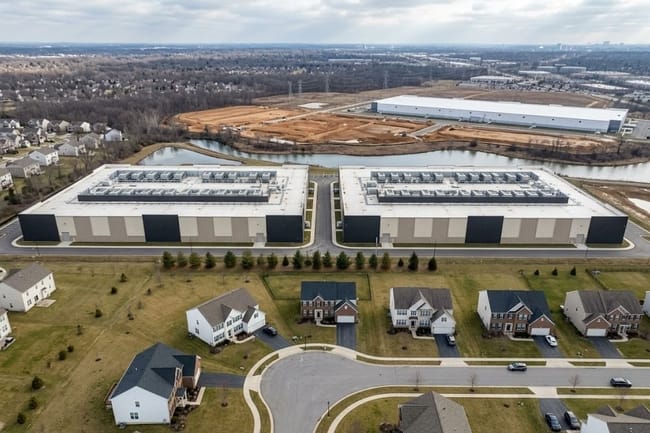
Ohio’s existing data center subsidy has become far more expensive than state officials projected.
Data centers can receive exemptions from sales and use taxes on servers, cooling systems, electrical equipment and other qualifying purchases under Ohio Revised Code Section 122.175.
The exemption cost the state nearly $1.6 billion in 2025, more than 11 times an earlier state estimate.
Gov. Mike DeWine responded in May by suspending consideration of new exemption applications while lawmakers study the industry.
Ramaswamy’s August data center plan promises to eliminate property-tax abatements for future projects.
It does not promise to permanently repeal Ohio’s sales-tax exemption.
That leaves one of the industry’s largest state subsidies unresolved just as Ramaswamy is asking voters to put him in charge of the government that administers it.
From data center hub to data center capital
Northern Virginia is still America’s data center capital today.
But the next wave of AI infrastructure is too large to remain concentrated there.
CBRE reported in August that Northern Virginia had about 4,497 megawatts of operating data center inventory at the end of the first half of 2026.
AEP Ohio already has commitments for nearly 18,000 megawatts of future data center electricity demand in its territory.
Those figures measure different things — operating computing capacity in Virginia versus contracted electric load in Ohio — but the scale of Ohio’s pipeline is unmistakable.
One Ohio project alone is planned around 10 gigawatts.
New York has stopped new hyperscale projects for a year. Other states are reconsidering subsidies. Established markets are struggling to find enough land and electricity.
Ohio already has hyperscalers lining up.
And Ramaswamy’s policy tells them what they have to do to get in.
If he wins in November, the companies looking for somewhere to put the next generation of massive AI facilities may find a state government ready to make Ohio their answer.
Some of those companies are already in Ramaswamy’s investment portfolio.