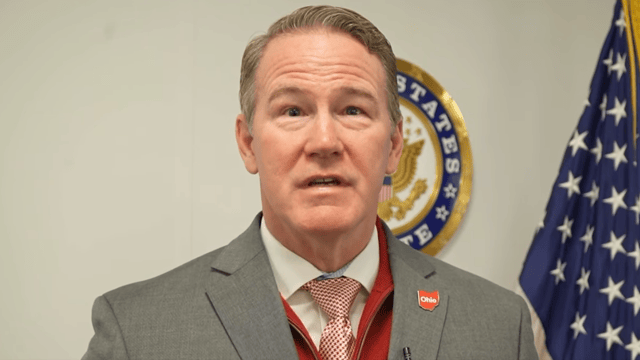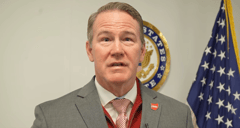
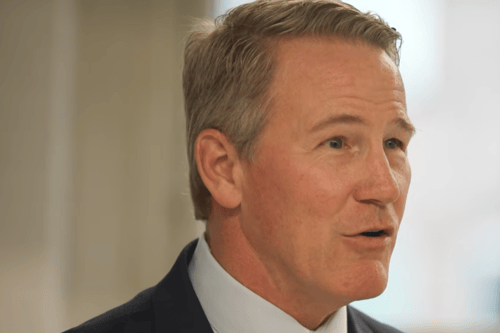
The trial at the center of the largest public corruption case in Ohio history resumed in an Akron courtroom this spring, and one of the witnesses called to testify was a sitting United States senator: Jon Husted, the Republican appointed to fill JD Vance’s seat and now fighting to keep it.
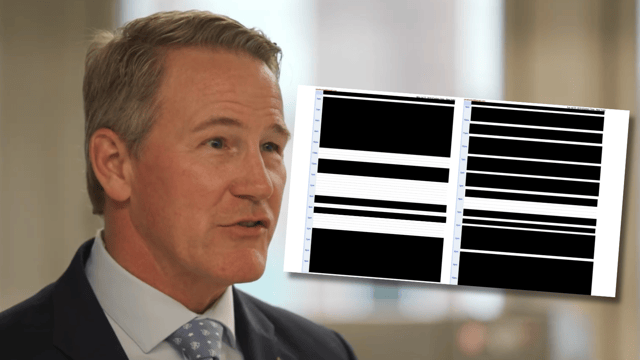
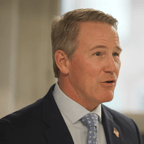
Husted testified remotely on Wednesday, March 11, 2026, as a defense witness in the case against two former FirstEnergy executives accused of bribing Ohio’s top utility regulator to help pass House Bill 6 — the 2019 law Husted championed as lieutenant governor. He told jurors he recalled little of a pivotal 2018 dinner with the executives, describing it as an occasion for the company to “say ‘hi’ and congratulate us on winning,” according to reporting by WOSU and The Associated Press. Neither Husted nor Gov. Mike DeWine has been charged or accused of wrongdoing in the scheme.
But the scandal that grew out of House Bill 6 has shadowed Husted for years — and it is still costing the Ohioans he now represents in Washington.
A bailout that keeps taking from ratepayers
House Bill 6, signed by DeWine on July 23, 2019, forced Ohio utility customers to subsidize a set of failing power plants. It provided a roughly $1 billion bailout for two nuclear plants tied to FirstEnergy, extended subsidies to two aging coal plants owned in part by Ohio utilities, and gutted the state’s renewable-energy and energy-efficiency standards.
The nuclear subsidies were partially repealed in 2021 after the scandal broke. The coal subsidies, however, stayed on the books far longer. According to the Common Cause Ohio scandal timeline, Ohioans propped up those coal plants at a cost of more than $445,000 a day until the last remnant of HB 6 finally ended when House Bill 15 took effect on Aug. 14, 2025. The total tab for the coal subsidies alone exceeded $500 million, paid by ratepayers.
The costs have not stopped there. In November 2025, the Public Utilities Commission of Ohio found that FirstEnergy violated state law and commission orders, and ordered the company to pay a combined $250.70 million in customer restitution and civil forfeitures. Ohio households, meanwhile, have paid more for electricity in the years since HB 6 took effect, as TiffinOhio.net has previously reported.
How the scheme worked, and who paid for it
Federal prosecutors described what happened as likely the largest bribery and money-laundering scheme ever perpetrated against the people of Ohio. FirstEnergy funneled roughly $60 million through Generation Now, a dark-money nonprofit tied to then-House Speaker Larry Householder, to help elect friendly lawmakers, install Householder as speaker, pass HB 6, and then defeat a citizen referendum that sought to repeal it.
The consequences have reached the top of Ohio’s Republican political class. Householder is serving a 20-year federal prison sentence after being convicted of racketeering in 2023; the U.S. Supreme Court declined to take up his appeal in April 2026. Former Ohio Republican Party chair Matt Borges was convicted in the same case. FirstEnergy admitted to the scheme, entering a $230 million deferred-prosecution agreement in 2021 and later paying $100 million to settle securities-fraud charges. American Electric Power, which benefited from the coal subsidies, paid $19 million to settle related charges with the Securities and Exchange Commission.
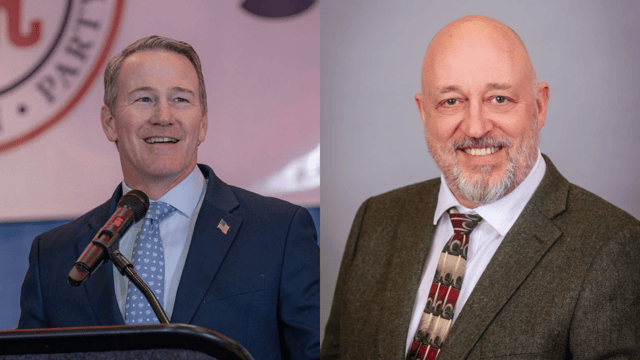
At the regulatory center of the case was Sam Randazzo, the DeWine-appointed PUCO chair who prosecutors say accepted $4.3 million from FirstEnergy. Randazzo was charged in state and federal court and died by suicide in April 2024. The two executives accused of arranging his payment — former CEO Chuck Jones and former lobbyist Michael Dowling — are the defendants in the trial in which Husted testified. That trial ended in a mistrial in the spring of 2026; a Summit County grand jury reindicted the pair in June, and a retrial is scheduled for September 2026.
Husted’s proximity to the scheme
Husted was lieutenant governor-elect and then lieutenant governor during the period when the scheme unfolded. Prosecutors say the bribery was aimed in part at securing the very bailout he championed. His name has surfaced repeatedly in the case: he was among the defense witnesses the executives listed, and he was present at the December 2018 dinner with DeWine, Jones and Dowling that prosecutors have treated as pivotal.
Public records reported by cleveland.com in 2024 also showed that FirstEnergy made a secret $1 million payment to a group supporting Husted’s campaign, before the scandal became public. Husted declined at the time to say whether he had known about the contribution. TiffinOhio.net has separately reported on his official calendar entries tied to key figures in the scandal.
Husted has consistently denied knowledge of the corruption. In his March 2026 testimony, he said he did not recall the substance of the 2018 dinner and maintained that Randazzo was not FirstEnergy’s preferred candidate to lead the PUCO. He has not been charged with any crime, and no court has found that he broke the law. What the record establishes is proximity: to the company, to the money, and to the bailout at the heart of the case.
The scandal reaches the 88th District
The HB 6 story is not only a Columbus story. It runs through Seneca and Sandusky counties, too.
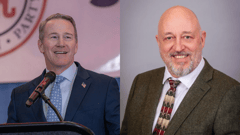
Before he was elected, state Rep. Gary Click — the Vickery Republican who represents Ohio’s 88th House District — used his campaign committee to publicly defend HB 6 during the 2019 fight over the referendum to repeal it. As TiffinOhio.net previously documented, a sponsored Facebook ad paid for by The Committee to Elect Gary Click ran Sept. 20–22, 2019, during the closing stretch of the signature drive. In it, Click endorsed the law, added the hashtag “#YestoHB6,” and tagged then-Speaker Householder, Gov. DeWine and then-Senate President Larry Obhof. The ad ran while a FirstEnergy-linked dark-money group spent roughly $16.5 million on advertising — including messaging that falsely suggested Chinese interests were behind the repeal effort — to keep HB 6 on the books.
Click’s defense of the law did not end there. As of this reporting, the issues page on his campaign website, garyclick.com, still describes the bailout in favorable terms. “House Bill 6 was a necessary investment, providing stability by preserving nuclear energy in Ohio,” the page reads. “Wind turbines, on the other hand, tend to drain our resources, add nothing to the stability of the grid and disrupt our rural neighborhoods.” The Internet Archive shows the same language on the page in May 2026, during Click’s re-election year — nearly three years after Householder was sentenced to 20 years in prison, and months into the bribery trial of the two former FirstEnergy executives.
What it means for Ohioans now
Five years on, the machinery of the scandal is still grinding through Ohio’s courts and regulators — and Ohioans are still paying for it, through past subsidies, restitution proceedings and the rate cases now moving before the PUCO. Attorney General Dave Yost has called it the corruption case of the century.
The pattern the case laid bare — a speaker in prison, a former party chair convicted, a DeWine-appointed regulator dead before trial, a utility admitting it bribed public officials — sits squarely within the Republican leadership that has controlled Ohio’s statehouse throughout. Years after the arrests, the bailout still has defenders in that leadership: Click’s campaign continues to call it a necessary investment, and Husted, who rose through the same ranks and championed the law at its center, now asks Ohio voters to return him to the Senate in the Nov. 3, 2026, special election against Democrat Sherrod Brown.
Husted has said his role in HB 6 is a matter he is willing to discuss, and he has denied any wrongdoing; he has not been charged. The retrial of the FirstEnergy executives — the case that put a sitting senator on the witness stand — is set to begin in the fall, in the middle of his campaign.