

When CNBC last week announced it had rated Ohio this year’s “Top State for Business,” Republican leaders said it was proof that their economic policies were working for Ohioans. But that’s not what the rating was meant to assess, said a journalist who helped produce it.
Nor was the ranking an evaluation of which state had attracted the most high-quality jobs. It was something less concrete: a measure of which states were best positioned according to the criteria on which states market themselves.
For their part, critics said the rankings don’t pay proper attention to the severe financial difficulties in which millions of now Ohioans find themselves.
Big party
Last Thursday, Ohio Republicans were triumphal about the top ranking.
The CNBC broadcast segment started with Ohio State football legend Archie Griffin declaring, “We have a winning team in Ohio, both on and off the field.”
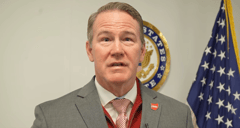
It cut to a celebration at the Boathouse at Columbus’s Confluence Park, replete with drone shots of Ohio State cheerleaders and an interview with Gov. Mike DeWine.
Of the many press releases that went out, Ohio House Speaker Matt Huffman issued one crediting policies enacted since the start of the GOP’s total legislative and executive rule in 2011.
“I want to congratulate the many members of the Ohio General Assembly who have supported legislation over the last 15 years that led to this accomplishment,” Huffman said in a written statement.
He went on, “Through responsible policies and investments, including the elimination of Ohio’s estate tax, flattening the personal income tax, business income deductions, regulatory reform, free market energy creation, substantial support for vocational training, tools for state and local economic development, and much more, we have continued to make Ohio the best place to live, work, raise a family, and do business.”
However, the think tank Policy Matters Ohio has said that many of those and other changes since 2005 have favored corporations and the wealthy while cutting $17 billion in state tax revenue.
Critics said that leaves huge numbers of moderate-income Ohioans facing an affordability crisis with less support from the state — and shouldering more of the burden to pay for services that remain.
“Ohio’s No. 1 ranking may be good news for businesses, but it doesn’t reflect the reality that many of the most common jobs in the state pay too little for even a single person to get by — and far too little to raise a family,” Policy Matters Executive Director Hannah Halbert said in a written statement. “Ohioans still struggle with unaffordable childcare, gaps in health coverage, and wages that have not kept pace with inflation.”
Method and metrics
The stark disagreement over the benefits of GOP economic policies raises an obvious question: When CNBC rated Ohio best for business, what was it seeking to measure?
“We’re looking at this through the lens of somebody who is selecting a site, whatever it is, a plant or a data center, how they’re making their decisions,” Scott Cohn, the CNBC reporter who covered the story, said in an interview. “That’s how this all began back in 2007 — why are companies choosing this state over that state?”
But when the CNBC team did its evaluation, it didn’t attempt an entirely objective look at which states were best for business. Rather, it based its analysis on how states were promoting themselves.
The study determined what states’ economic-development arms collectively mentioned most in materials promoting their states. Then it sought to measure which states did best in providing those things.
Year by year, states change how they promote themselves to businesses. The CNBC study assesses the pitches of all 50 states each year to decide what weight to give to each of the 10 criteria on which it ranks individual states.
This year, the top category was infrastructure — adequate roads, bridges, electricity, and “shovel ready” sites on which to build. And, in addition to available water, a major factor in Ohio’s success wasn’t the consequence of any government policy, it was an accident of geography.
“We go through and see how the states are marketing themselves,” Cohn said. “We’re going to their websites and tallying up what they’re mentioning the most, the things that we lump into the category of infrastructure.
“So for example — and this really helps Ohio — almost every state… says ‘We have X amount of population within a day’s drive. Well, you can measure that, and Ohio has the most. Ohio has 143 million people within a day’s drive, more than any other state. So it gets some points for that within the category of infrastructure.”
Conversely, the rankings de-emphasize other criteria not because they’re unimportant to businesses, but because state marketing materials don’t make a big deal out of them.
For example, a top-notch public-education system is clearly important to businesses in at least two ways: It trains their future workforce and it’s a big selling point for firms trying to attract talent.
Yet when CNBC weighted its 10 criteria, education was second-to-last, receiving only 4% of the overall ranking.
“We look at what the states are talking about,” Cohn said. “For whatever reason, some states talk about (education) a lot, and a lot of states talk about, ‘We have a great university system.’ That counts toward a state’s weight. But it’s not what the states are saying in aggregate.”
Whack-a-mole
Cohn explained that good or bad performance on certain criteria can have the opposite effect on others.
“It’s kind of like a game of whack-a-mole, you can lower the business cost,” he said. “That’s great for businesses, but in the process you’re lowering wage costs and you’re doing all sorts of things that affect individuals. And if you have an affordability issue with individuals, well maybe you’re going to have a problem with workforce.”
As Cohn pointed out to DeWine during their interview, Ohio ranks poorly for workforce — 35th.
“It’s a glaring weak spot,” Cohn told the governor. “Not just because the workers are not here, but because they’re not coming and many are leaving.”
In addition, because weighting depends solely on what states’ marketers think is important, many Ohioans — and maybe some businesses — could disagree with their priorities.
For example, Ohio ranked No. 1 for its low cost of doing business, which as the fifth-highest criterion, made up 11.4% of the ranking.
Low wages helped Ohio in that regard, but Cohn explained that they hurt states in the cost-of-living category.
“Lower wage costs counts toward the cost of doing business, but maybe it comes back to bite them on cost of living,” he said.
However, because state marketers don’t emphasize it, an affordable cost of living ranked dead last, making up just 2% of the state’s overall rating.
In other words, the rankings don’t say there’s no affordability crisis in Ohio. They say that as a group, state economic marketers don’t consider that a priority when they’re selling their states.
Who wins?
So do the rankings vindicate or repudiate the economic policies Ohio Republicans have implemented since 2011?
“Neither,” Cohn said. “We gather up the data through the lens that I told you about — looking at where is a company going to locate. And if what everybody wants in their politicians is the party that’s going to attract the most business — and that’s a perfectly valid thing to want — then this says a lot about what Ohio is doing in that regard.”
But, he added, “If they’re looking for areas where the state doesn’t do as well, it speaks for itself. It’s not the best state for education. It’s not the top state for workforce. It’s not the top state for quality of life. It’s not bad, but it’s not anywhere near the top. It’s a study of the top states for business. It’s not a study of the top states for workers. But there are areas in there that you can look to, like quality of life or whatever else.”
The November midterm elections are approaching. And Ohio Democrats said that if Republicans want to use the CNBC ranking to say the economy is good for average Ohioans, they’re ignoring reality.
U.S. Sen. “Jon Husted and Ohio Republicans are bragging about the economy while hardworking Ohioans are struggling more than ever,” Ohio Democratic Party spokesman Tony Wen said in an email. “Under their leadership, inflation is up, gas prices have skyrocketed, and more than 160,000 Ohioans have lost their healthcare — but Husted still thinks everything is great. Ohioans know better, and they’ll hold him accountable in November.”
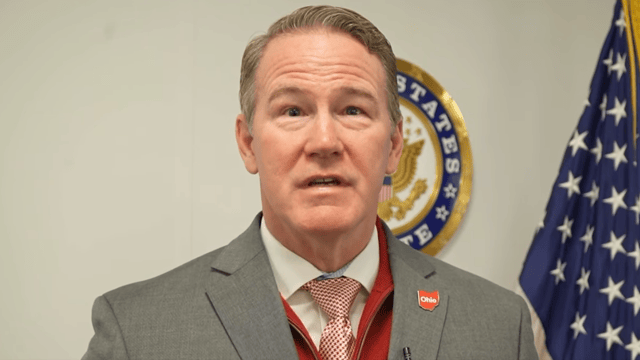
For his part, Husted took to X to tout the CNBC ranking.
“This did not happen by accident—it has been decades of focus,” he wrote. “We’ve cut taxes, eliminated three business taxes, and invested in infrastructure and our workforce. We also made Ohio the easiest and lowest cost state to do business.”
Asked for a response to Wen’s criticism, Husted Communications Director Amy Natoce didn’t answer — other than to attempt to attack the credibility of the Ohio Capital Journal.
This story is republished from the Ohio Capital Journal under a Creative Commons license. View the original article.