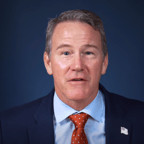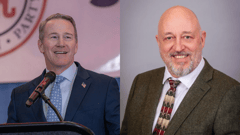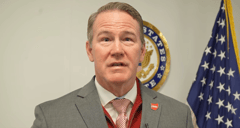
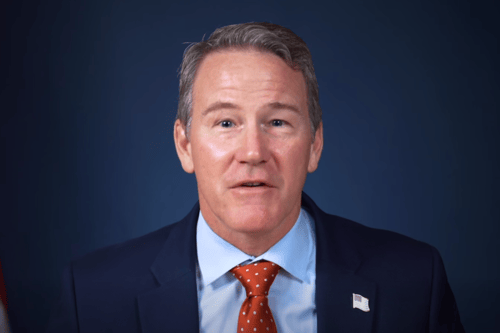
Jon Husted has spent his first full year as a United States senator telling Ohioans that he is the man who knows how to catch cheaters.
In January he co-launched a Senate task force on fraud in federal spending, saying it is the job of senators to find bad actors and hold them accountable. In February he introduced a bill to cancel unspent pandemic unemployment money, warning that distributing it now would be a fraudster’s paradise. In a March newsletter to constituents he wrote that every dollar taken by fraudsters is a dollar taken from working taxpayers. And in late March he forced a floor vote on a national photo ID mandate, staking the argument on his eight years running Ohio’s elections, where his stated mission was to make it easy to vote and hard to cheat.
He is also holding $10,600 from John J. Cafaro.
Cafaro is the Youngstown-area developer whose firm, Greenwater Services of Brookfield, received a $1.7 million no-bid federal contract in April to install a water purification system in the Lincoln Memorial Reflecting Pool — the pool that turned bright green with algae days after President Donald Trump declared the renovation finished on June 6. He is also a two-time federal felon. In 2001 he pleaded guilty to conspiracy to bribe then-U.S. Rep. James A. Traficant Jr., a Youngstown Democrat, and drew 15 months of probation and a $150,000 fine. In 2010 he pleaded guilty to a felony count of making a materially false statement to the government — for concealing a $10,000 loan to a staffer on his daughter Capri Cafaro’s 2004 congressional campaign so it would not surface on a federal campaign finance report. He served three years of probation and paid a $250,000 fine.
Set that beside Husted’s résumé. Ohio’s former chief elections officer — the official responsible from 2011 to 2019 for administering the state’s campaign finance disclosure system — is banking money from a man with a federal felony conviction for hiding a campaign contribution.
What the filings show
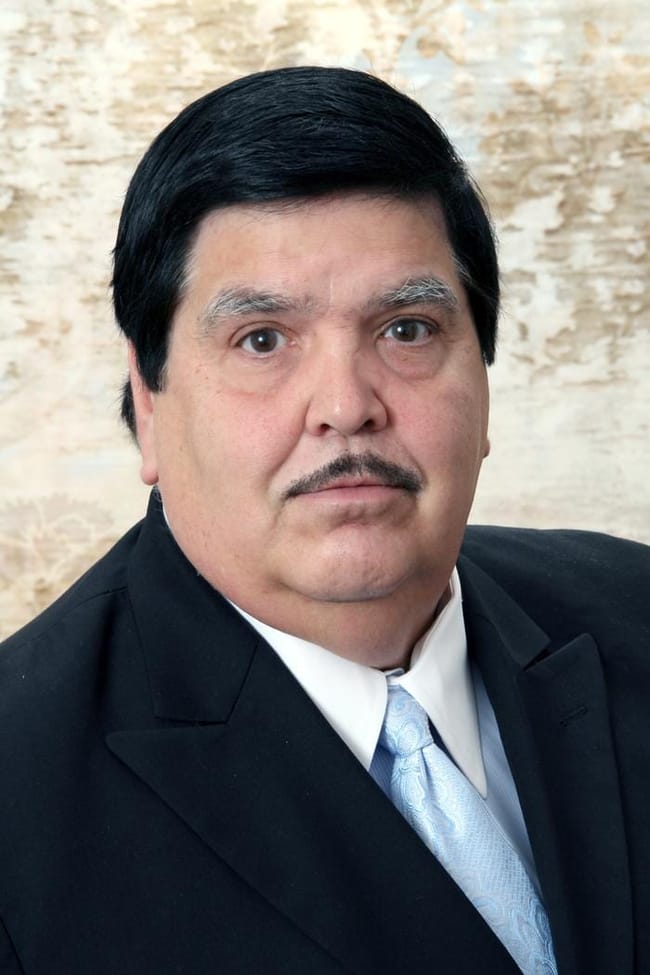
Federal Election Commission records reviewed by TiffinOhio.net show that Team Husted, the senator’s joint fundraising committee, received $28,100 from four members of the Cafaro family on four dates between March 2025 and March 2026.
John J. Cafaro, listing a Brookfield address and Cafaro Investments as his employer, gave $7,500 on Aug. 26, 2025, and $3,100 on March 1, 2026 — $10,600 in all. Janet S. Cafaro, listing the same Brookfield address, gave $7,500 the same August day. Anthony M. Cafaro Sr., John’s older brother and the retired president of the Cafaro Company, and Phyllis C. Cafaro each gave $2,500 on March 24, 2025, and $2,500 more on Sept. 30, 2025.
Joint fundraising committees split their receipts by formula among the participants. Of the $28,100, $24,000 was allocated to Husted for Senate, the senator’s principal campaign committee, and $4,100 to Jobs Opportunity Now, his leadership PAC. Of John J. Cafaro’s $10,600, $7,000 landed in the campaign account and $3,600 in the leadership PAC, the latter reported as an in-kind food and beverage contribution.
Nothing has gone back. A review of disbursements by all three committees through June 30, 2026 — the most recent period on file — turns up no refund, no return and no redesignation to any Cafaro. The only outgoing entry naming one is the offsetting in-kind line. Husted for Senate closed that period with $9.4 million in the bank.
The part that isn’t explainable
None of the above answers the actual question, which is not how the money arrived. It is why it is still there.
We know Husted’s campaign has a mechanism for this, because we have watched him use it. TiffinOhio.net previously reported that Husted accepted $116,892 from billionaire Les Wexner between 2001 and 2025, including a $3,500 maximum contribution two months before he voted to block a Senate amendment directing the release of Jeffrey Epstein records. When the Justice Department unredacted an FBI document naming Wexner as an Epstein co-conspirator, and after months of gatherings in Ohio towns demanding answers, Husted’s campaign announced it would give the Wexner money away, later reporting $34,300 to a Columbus nonprofit serving human-trafficking survivors.
So the campaign is capable of deciding a donor’s record makes his money unwelcome. It has done the paperwork. It has issued the statement.
Which means the standard being applied to Cafaro is not a legal standard. It is a political one. Wexner became a liability when the story went national and Ohioans started showing up at events with signs. Cafaro has not — not yet — and the money stays.
That is a defensible position for a campaign operative. It is a harder one for a senator whose central pitch is that he can tell a bad actor from a good one, and whose signature legislative demand is that a retired teacher in Fostoria produce a government photo ID before she is allowed to cast a ballot.
Husted’s April op-ed on election integrity argues that public trust in the system is the whole point — that this is about more than policy. He is right that it is. Trust in campaign finance rules does not come from the rules being followed at the minimum legal threshold. It comes from candidates treating disclosure as something more than a filing deadline. Cafaro’s second felony was, precisely, a disclosure crime. Husted spent eight years as the state officer charged with running that system in Ohio.
Why northwest Ohio should care
Because this is the second time this cycle Ohioans have had to ask Jon Husted what his threshold is.
Husted testified in March as a defense witness in the criminal trial of two former FirstEnergy executives, telling the court he had no knowledge of Sam Randazzo’s financial ties to the utility before Randazzo was installed atop the Public Utilities Commission — testimony that documents from the investigations contradict. His official calendars show repeated contact with the central figures in the House Bill 6 scheme across the arc of the bill’s passage. He has denied meaningful involvement throughout, and he has not been charged. What the record establishes is proximity.
Meanwhile the bill for that bailout keeps arriving in Seneca County mailboxes. Ohio households pay an estimated $663 more per year in electricity costs as a result of HB 6, and ratepayers have continued paying hundreds of millions for a law born in a bribery scheme. Residents in Toledo turned out in June with handmade signs over exactly that, as FirstEnergy sought another rate increase.
Husted’s answer in every one of these episodes has been the same answer, delivered in the same register: no one has charged me, the contributions were legal, the process was followed. It is a lawyer’s answer, and it has so far been an accurate one.
It is not, however, what he is asking of anyone else. Sen. Richard Blumenthal of Connecticut, the ranking Democrat on the Permanent Subcommittee on Investigations, wrote to Cafaro and Greenwater in June demanding records, saying the sequence of events raises questions about whether taxpayer dollars are being diverted to unqualified friends of the president. Husted, who co-chairs a task force on fraud in federal spending, has said nothing about a $1.7 million no-bid contract awarded to an Ohio company owned by one of his own donors.
He does not have to. He is favored by no one to lose the argument by staying quiet, and with $9.4 million banked and Election Day on Tuesday, Nov. 3, the incentive runs toward silence.
But the standard he keeps proposing for everyone else is not silence. It is documentation. It is proving you are who you say you are before you are permitted to participate. Applied to his own donor list, that standard has an obvious first test, and it costs $28,100 to pass.