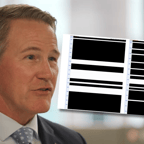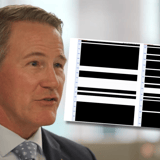
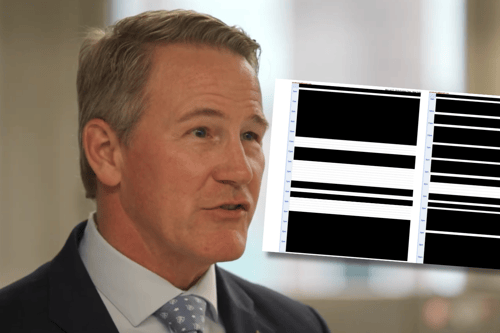
On July 23, 2019, Gov. Mike DeWine signed House Bill 6 into law, completing a legislative campaign that would become the centerpiece of the largest public corruption scandal in Ohio history. Every meeting listed on then-Lt. Gov. Jon Husted’s official calendar that day is blacked out.
The previous day, every entry shown on Husted’s calendar is also redacted.
FirstEnergy’s internal records tell Ohioans considerably more about what Husted was doing during the fight over the company’s bailout. Executives described him as “highly engaged” on HB 6, said he was “fighting to the end” as the legislation neared passage and wrote that he was working to extend the nuclear subsidies FirstEnergy wanted from the legislature.
When Husted was asked on Nov. 30, 2021 to describe his role in the passage of House Bill 6, he answered with one word: “None.”
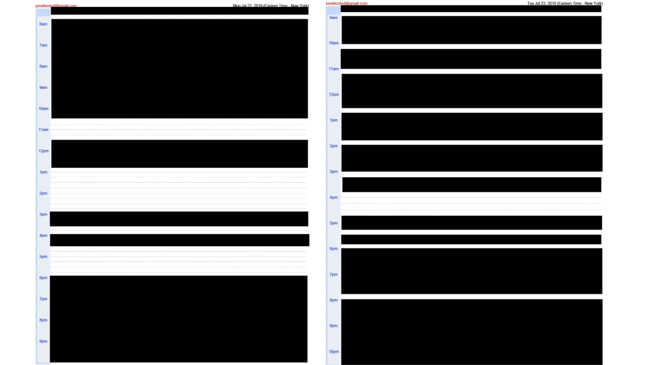
The calendars add a stark new visual record to years of emails, text messages, phone logs and sworn testimony documenting Husted’s contacts with FirstEnergy executives and figures at the center of HB 6. They also leave a basic public-records question unanswered on their face: who ordered the signing-day entries blacked out, and under what legal exemption?
Those answers are not contained on the calendar pages reviewed by TiffinOhio.net.
FirstEnergy: Husted was ‘working on the 10 years’
Husted’s 2021 denial concerned the passage of HB 6 through the legislature. FirstEnergy executives were privately describing him doing precisely that kind of work.
In a July 2019 text exchange, then-FirstEnergy senior vice president Michael Dowling told CEO Chuck Jones that he had just finished a lengthy conversation with Husted while the Ohio Senate was considering how long the nuclear subsidies in HB 6 should last.
“JH is working on the 10 years,” Dowling wrote, according to FirstEnergy texts reported by the Statehouse News Bureau. FirstEnergy wanted 10 years of subsidies; the final legislation provided seven.
Other FirstEnergy communications were equally explicit. In one message, Jones wrote that “Husted, Sam, Evans and Danny McCarthy are fighting to the end and we’ve been talking to them all day,” adding: “Everything that can be done is being done.” The names referred to Husted, Public Utilities Commission of Ohio Chairman Sam Randazzo, coal company executive Matt Evans and DeWine legislative director Dan McCarthy, a former FirstEnergy lobbyist.
Another FirstEnergy executive described Husted as “highly engaged” on HB 6. An email reported by Ohio Capital Journal said DeWine had left the details of the bill to “John [sic] Husted and Danny.”
After those messages became public in August 2022, Husted again denied participating in the legislative process while acknowledging that he advocated for the bill to pass.
“I wasn’t involved in the legislative process, and I stand by that and those are the facts,” Husted told reporters.
The FirstEnergy messages place that denial next to a company executive saying Husted was working on the duration of subsidies being negotiated in the Senate.
Every listed meeting is hidden on signing day
The calendar blackouts peak as HB 6 reached DeWine’s desk.
On July 22, 2019, every entry displayed on Husted’s official calendar is covered by a redaction. That same day, Randazzo held what Cleveland.com later reported was a final meeting with DeWine and administration officials to discuss HB 6 before the governor signed it. The records reviewed by TiffinOhio.net do not establish that Husted participated in that meeting.
On July 23, when lawmakers completed action on HB 6 and DeWine signed it into law, every meeting displayed on Husted’s calendar is again blacked out.
The significance of those dates does not depend on guessing what is underneath the black bars. FirstEnergy executives had already been describing Husted as an active participant in the legislative fight. The government record that would show whom Husted was meeting with during the final two days of that fight does not disclose the names or subjects of the listed meetings.
Ohio’s Public Records Act provides that a redaction is treated as a denial of access to the redacted information unless state or federal law authorizes or requires the withholding. When a public-records request is ultimately denied in whole or in part, the law requires the public office to provide an explanation that includes the legal authority for the denial.
The Husted calendar pages themselves do not state the exemption invoked for the July 22 or July 23 redactions. They also do not identify who applied the redactions. An explanation may have been supplied separately to the original requester; the records reviewed for this story do not contain it.
Nine calls with FirstEnergy during the Randazzo selection
The legislative fight was not the beginning of Husted’s documented contacts with FirstEnergy.
Phone records introduced during the 2026 criminal trial of Jones and Dowling showed Husted spoke with Dowling nine times for a combined 51 minutes in late 2018 and early 2019, during the period when the incoming DeWine administration was deciding who would lead the PUCO. TiffinOhio.net previously reported on the phone records as they emerged at trial.
Husted testified in March that it was his responsibility during the gubernatorial transition to gather information about candidates for PUCO chairman. He also confirmed that he and DeWine attended a Dec. 18, 2018 dinner with Jones and Dowling at the Athletic Club of Columbus.
Husted was called by the defense in the corruption trial of the two former FirstEnergy executives and testified by video on March 11. He told jurors that FirstEnergy initially preferred Columbus attorney Jason Rafeld for the PUCO chairmanship rather than Randazzo and said the company’s preference did not dictate whom the administration would select.
Prosecutors have alleged that Jones and Dowling were involved in arranging a $4.3 million payment to Randazzo during the same broader period in which the administration was selecting the state’s top utility regulator. Jones and Dowling have denied that the payment was a bribe.
Their first state criminal trial ended March 31 with a deadlocked jury. The Ohio Attorney General’s Office and Summit County Prosecutor reindicted the two men in June on a combined 22 felony counts, including bribery and conspiracy charges. The charges are allegations and remain unresolved.
FirstEnergy’s own conduct is not merely alleged. In a 2021 federal deferred prosecution agreement, the company admitted conspiring with public officials and others to pay millions of dollars to public officials in exchange for official actions benefiting FirstEnergy and agreed to a $230 million penalty.
FirstEnergy acknowledged paying millions of dollars through an entity tied to an elected state official in return for pursuing nuclear legislation. The company separately admitted paying $4.3 million to a second public official who then took official actions advancing FirstEnergy’s legislative and regulatory interests. That second official was Randazzo.
Former Ohio House Speaker Larry Householder was later convicted of leading the racketeering conspiracy surrounding HB 6 and sentenced to 20 years in federal prison.
Husted has not been charged in connection with the scandal.
The administration was warned about Randazzo
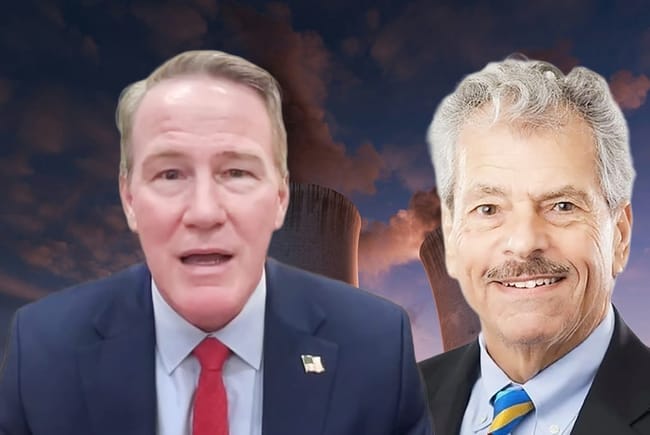
The DeWine administration also received warnings about Randazzo before placing him in charge of the agency responsible for regulating FirstEnergy.
On Jan. 28, 2019, attorney J.B. Hadden met with DeWine Chief of Staff Laurel Dawson and other administration officials and delivered extensive material raising concerns about Randazzo’s relationship with FirstEnergy. The nearly 200-page dossier alleged “opaque and undisclosed financial ties” between Randazzo and the utility.
Husted’s sworn testimony does not establish that he personally reviewed the Hadden dossier. It does establish that he knew concerns about Randazzo had reached the administration.
Asked during the Jones-Dowling trial whether he remembered criticism of Randazzo during the appointment process, Husted recalled that another utility had sent “maybe a letter or something” criticizing him as a potential appointee. Asked whether he was involved in discussions about continuing to support Randazzo, Husted said the administration was trying to determine “what was true.” He identified the utility raising the concern as AEP.
Randazzo’s own 2019 Senate confirmation statement placed Husted directly in the process that brought him back into government. Randazzo wrote that he had expected to spend more time in Florida after retiring from private practice until DeWine and Husted won the election. He said the transition team then approached him about energy and utility issues and that the conversation eventually shifted toward whether he would return to government service at the PUCO.
Randazzo also referenced recent conversations with DeWine, Husted, Dawson and other members of the administration.
Husted called Randazzo two days before HB 6 was introduced
After Randazzo became PUCO chairman, Husted remained in contact with him as the FirstEnergy-backed legislation took shape.
Husted’s official calendar lists a scheduled 9 a.m. phone call with Randazzo on April 10, 2019. House Bill 6 was introduced two days later.
That call was among the contacts identified in an earlier TiffinOhio.net review of Husted’s official calendars, which documented meetings and calls with figures tied to HB 6 during the bill’s development, passage and aftermath.
The April 10 calendar also contains a redacted block from 9 to 10 a.m., overlapping the scheduled Randazzo call. The records do not identify what information within that hour was redacted, and they do not establish that Husted participated in a separate 9:15 a.m. “Energy Discussion” listed on DeWine’s calendar.
Two Randazzo records cannot be found in state online archives
Other gaps remain in the online public record surrounding Randazzo’s appointment.
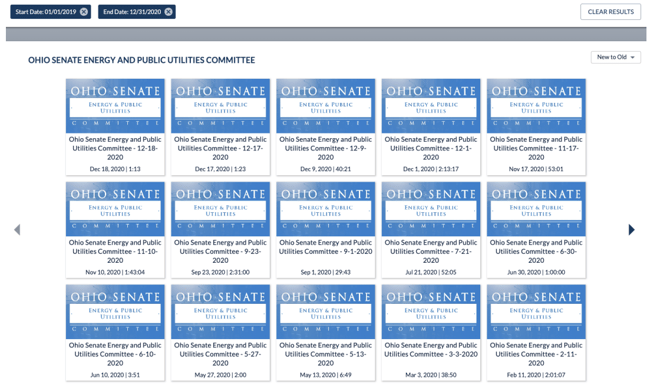
A September 2026 review of the Ohio Channel’s online archive found no recording of Randazzo’s April 2, 2019 confirmation hearing before the Senate Energy and Public Utilities Committee. Other committee proceedings from the same General Assembly remain available, and the archive includes the 2021 confirmation hearing of Randazzo’s successor, Jenifer French.
Randazzo also submitted a signed application for the PUCO position on Jan. 17, 2019. A copy of that application exists and was reviewed for this story. But a September search of the PUCO’s online document portal for Randazzo returned zero results.
The unanswered questions are therefore narrow and factual: whether Randazzo’s confirmation hearing or application was previously available through those online systems, whether either record was subsequently removed or de-indexed, and why neither could be retrieved when the archives were checked.
‘None.’ ‘We weren’t involved.’ ‘My role was very clear.’
Husted’s public descriptions of his involvement can now be read alongside the documentary record.
In November 2021, asked to describe his role in the passage of HB 6, Husted said: “None.”
In August 2022, after FirstEnergy texts surfaced describing him working on the duration of the subsidies, Husted said he had advocated publicly and privately for the legislation but maintained: “I wasn’t involved in the legislative process.”
In 2024, when News 5 Cleveland confronted him with additional FirstEnergy communications describing his involvement, Husted responded: “I don’t know what you’re talking about. We weren’t involved.”
By January 2026, Husted described his involvement differently. “My role was very clear,” he said in an NBC4 interview. “I wanted the nuclear power plants to remain operational.” Husted argued that keeping the plants open was sound energy policy and said his actions were about preserving generation capacity for Ohio.
That explanation describes why Husted says he supported the plants. FirstEnergy’s contemporaneous records describe what its executives believed he was doing as the legislation moved through the Statehouse: working on the length of the subsidies, engaging with Senate leaders and “fighting to the end.”
FirstEnergy’s relationship with Husted predated HB 6
The utility’s political interest in Husted also preceded the DeWine administration.
Records made public in 2024 showed that FirstEnergy contributed $1 million in 2017 to Freedom Frontier, an outside political organization supporting Husted’s campaign for governor, with “Husted campaign” listed as the reason for the expenditure. Ohio Capital Journal reported that FirstEnergy lobbyist Neil Clark later referred to Husted as the company’s “Golden Boy.”
Husted’s spokesperson has said his campaign never received the $1 million contribution and was not affiliated with Freedom Frontier.
Additional records reported by TiffinOhio.net have documented FirstEnergy communications involving Husted before, during and after the HB 6 fight, including the phone records and meetings that surfaced during this year’s criminal trial.
The question raised by the signing-day calendars is more specific than Husted’s broader relationship with FirstEnergy. The public already knows what the company was saying about him as HB 6 moved through the legislature. It does not know what is underneath the redactions on his official schedule during the final two days before the bill became law.
Husted said his role in the passage of HB 6 was “none.” FirstEnergy executives said he was “working on the 10 years” and “fighting to the end.”
On July 23, 2019, the day DeWine signed the FirstEnergy-backed bailout into law, every meeting shown on Husted’s official calendar remains behind a black bar.