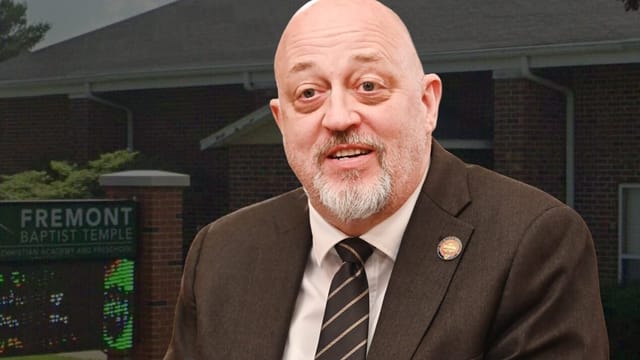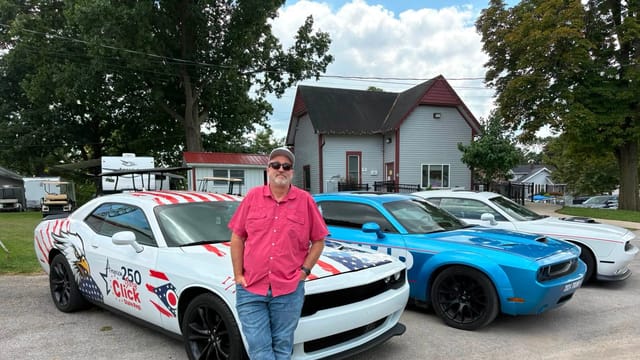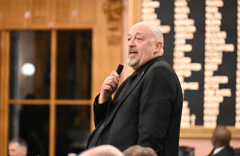
State Rep. Gary Click is responding to criticism of his House Bill 6 record by emphasizing that he was not yet a state lawmaker when the scandal-tainted energy law passed in 2019.
That is true, but it leaves out the central fact documented by Click’s own campaign records: although he had no legislative vote to cast, Click publicly supported HB 6 anyway. His campaign paid to promote the law on Facebook during the 2019 effort to repeal it, using the hashtag “#YestoHB6,” and his campaign website continued describing HB 6 as “a necessary investment” through at least May 2026.
Click’s current campaign website no longer contains that endorsement. The page now tells voters that Click “voted to repeal House Bill 6,” even though the Ohio General Assembly describes the 2021 legislation he co-sponsored as repealing only “portions” of HB 6. Additional portions of the law remained in effect for years afterward.
Click’s campaign paid to defend HB 6
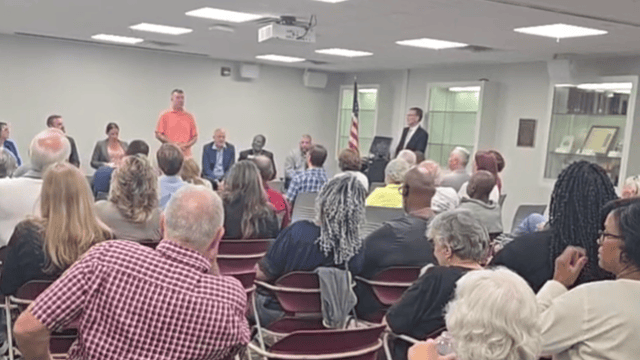
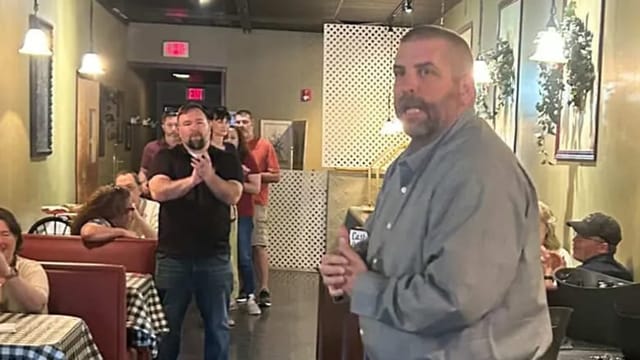
In a Facebook post this weekend, Click falsely accused Democratic challenger Aaron Jones of getting his facts wrong, writing that people “could hardly stop themselves from laughing” when Jones suggested that Click had voted for HB 6 or was tied to former Ohio House Speaker Larry Householder.
“I wasn’t even elected yet,” Click wrote. TiffinOhio.net could not find any record of Jones ever suggesting Click had voted for HB 6.
Click was not a member of the Ohio House when lawmakers passed HB 6 in July 2019. But two months after the law was signed — and while opponents were actively trying to put its repeal before Ohio voters — Click’s campaign paid to promote it.
A Meta Ad Library record shows that The Committee to Elect Gary Click sponsored a Facebook advertisement that ran from Sept. 20 through Sept. 22, 2019. The campaign shared a U.S. Department of Energy post about the closure of Pennsylvania’s Three Mile Island Unit 1 and praised Ohio leaders for supporting HB 6.
“I’m glad that Ohio’s leaders thought this through, keeping our best interest at heart! #YestoHB6”
Click tagged Householder, Gov. Mike DeWine and then-Senate President Larry Obhof in the sponsored post.
This was not a campaign commenting on HB 6 years after the fact. DeWine had signed the law on July 23, 2019. On Aug. 29, the Ohio Attorney General’s Office certified a referendum petition seeking to repeal it.
Click’s campaign ad went live about three weeks later, while opponents were gathering signatures to force a statewide vote. In other words, Click’s campaign spent money telling Ohioans “#YestoHB6” at the same time other Ohioans were trying to stop the law from taking effect.
The referendum ultimately failed to collect enough valid signatures, and HB 6 took effect Oct. 22, 2019.
The repeal fight became part of the corruption case
The significance of that 2019 referendum became much clearer the following year. Federal authorities arrested Householder on July 21, 2020, and accused him and others of operating a roughly $60 million racketeering conspiracy built around passing HB 6 and keeping it in law.
Federal prosecutors later proved at trial that Householder’s enterprise received nearly $61 million in bribes and traded political action for help passing HB 6. The U.S. Department of Justice said the defendants also worked to ensure the law survived by defeating the ballot effort seeking to overturn it.
Householder was convicted of racketeering in March 2023 and sentenced to 20 years in federal prison that June.
Nothing in the available record ties Click to the bribery conspiracy itself. The issue raised by his own campaign materials is different: he publicly backed the legislation around which the corruption scheme was built, including during the very referendum campaign federal prosecutors later said Householder’s enterprise worked to defeat.
Click turned on Householder after the arrest — not before
Click now points to a July 22, 2020 Facebook post as evidence of his independence from Householder. In that post, published one day after federal authorities arrested Householder, Click said he was “gravely disappointed and grieved by the corruption” and called for Householder to be removed as speaker.
“I am calling for bipartisan efforts in the House to swiftly remove and replace the Speaker,” Click wrote.
But Click’s response to Householder’s arrest does not change what Click’s campaign had done ten months earlier. Before the federal case became public, his campaign had spent money promoting HB 6 and praising Ohio’s leaders for passing it.
And Click’s support for the law itself did not disappear when Householder was arrested.
In 2026, Click’s website still called HB 6 a “necessary investment”
An archived copy of Click’s campaign website from May 5, 2026 shows that nearly six years after Householder’s arrest — and almost three years after his federal conviction and 20-year prison sentence — Click’s campaign was still defending HB 6.
Under the Energy section, Click’s website told voters:
“House Bill 6 was a necessary investment, providing stability by preserving nuclear energy in Ohio.”
By then, the corruption surrounding HB 6 was no longer an allegation hanging over the law. Householder had been convicted. Former Ohio Republican Party Chairman Matt Borges had been convicted alongside him. Federal prosecutors had established at trial that millions of dollars in bribes were used to pass and preserve HB 6.
Yet Click’s campaign website still called the law “a necessary investment.”
The timing also undercuts any suggestion that Click simply supported HB 6 in 2019 before anyone knew about the corruption and abandoned that position once the facts became known. His campaign’s favorable description of HB 6 remained online through Householder’s arrest, prosecution, conviction and sentencing.
The old defense is gone
Click’s current campaign website tells a different story. The sentence calling HB 6 “a necessary investment” is gone. The Energy section now says: “Rep Click has fought to ensure that citizens have a voice. He voted to repeal House Bill 6.”
That description leaves out an important distinction in the legislative record. Click co-sponsored House Bill 128 in 2021, but the Ohio General Assembly itself titled that legislation “Revise electric utility service law; repeal portions of HB 6.” It repealed several major provisions of the law, including the nuclear subsidy provisions, but it did not wipe HB 6 off the books.
Other HB 6 provisions survived for years. Click later co-sponsored House Bill 15, signed in 2025, which the General Assembly describes as repealing additional “parts of H.B. 6.”
So Click did later support repealing major pieces of HB 6. But his current website omits what his previous website said even after those votes: that HB 6 itself “was a necessary investment.”
The record is not ambiguous
Click’s latest defense turns on a narrow point: he did not cast the original legislative vote for HB 6 because he had not yet been elected. But no legislative vote is necessary to determine whether he supported the law.
His own campaign supplied that evidence.
In September 2019, Click’s campaign spent money promoting HB 6 and telling Ohioans “#YestoHB6” while a referendum campaign was underway to repeal it. In May 2026, after the bribery scheme had produced federal convictions and a 20-year prison sentence for Householder, Click’s campaign website was still calling HB 6 “a necessary investment.”
Only later did that language disappear from his website, replaced by a reference to Click’s votes to repeal portions of the law.
Click did not vote for HB 6 in 2019. He did something that his latest Facebook post does not mention: he publicly supported it, spent campaign money promoting it during the repeal fight and continued defending it on his campaign website for years afterward.