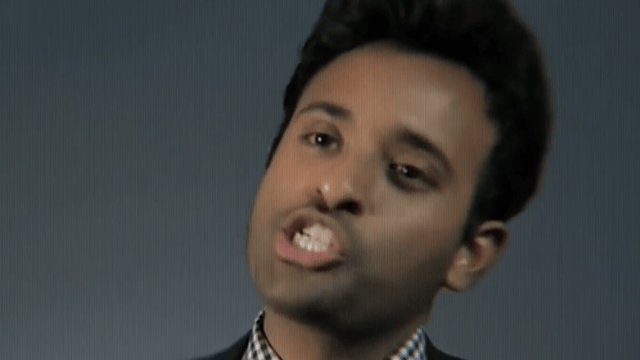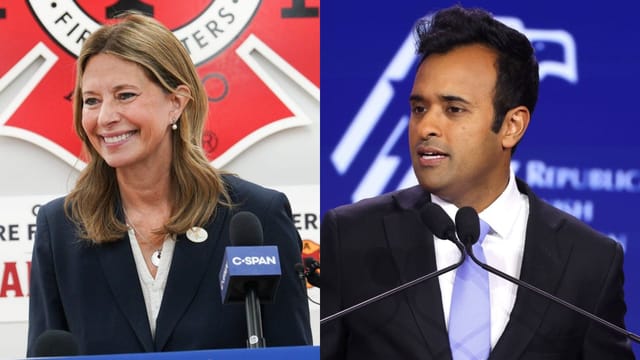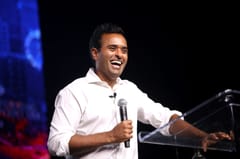

In the summer of 2011, after Ohio voters had gathered a record 1.3 million signatures to overturn Senate Bill 5, the Kasich administration went to work saving it. The committee formed for the job was called Building a Better Ohio. Two of the people who worked on it now hold the two most visible jobs on Vivek Ramaswamy’s campaign for governor.
Jai Chabria, now Ramaswamy’s chief strategist, was then a senior advisor to Gov. John Kasich. The Columbus Dispatch reported in August 2011 that he was among senior administration officials “heavily involved in strategy and decision making” for the pro-SB 5 committee.
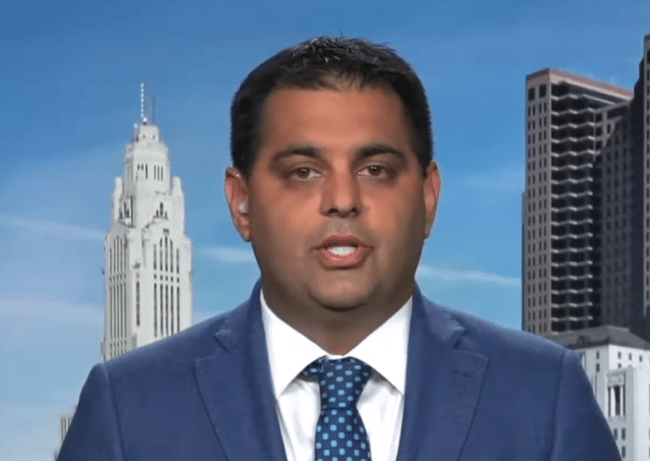
The Dispatch story was not primarily about Chabria. It was about Connie Wehrkamp, Kasich’s deputy press secretary, who took a leave of absence from the governor’s office that week to go work for Building a Better Ohio full time.
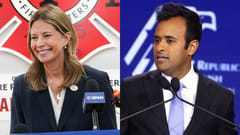
Wehrkamp is now Connie Luck. She is Ramaswamy’s campaign spokeswoman. Her LinkedIn profile lists her as Connie (Wehrkamp) Luck.
The campaign they worked on lost, and it lost badly. On Nov. 8, 2011, Ohioans repealed SB 5, 61% to 39%. In Seneca County the margin was wider: according to the county board of elections’ official canvass, 11,825 voters here rejected the law and 7,122 voted to keep it — 62.41% to 37.59%, across all 51 precincts, on 51% turnout. It was not close. It was buried.
Neither Chabria nor Luck wrote SB 5. The bill was sponsored by a state senator, and nothing in the record makes either of them its author. But when the law reached the ballot, and Ohio’s teachers, firefighters and police officers were fighting to kill it, both were working to save it.

The campaign points to its union endorsements. The Ohio Conference of Teamsters and the statewide construction trades have backed Ramaswamy, citing his opposition to a right-to-work law and his support for prevailing wage. Chabria has noted that a decade ago, Republican endorsements from organized labor “would have been unfathomable.”
What Senate Bill 5 actually did
Since 1983, Ohio law has given public employees the right to bargain collectively — to negotiate as a group, through a union, with the government that employs them. It applies to teachers, firefighters, police officers, dispatchers, school custodians, snowplow drivers, nurses at public hospitals and clerks at the county courthouse. The law says they may negotiate over wages, hours and the other conditions of their work: health insurance, pensions, staffing levels, safety rules, how layoffs are handled.
Senate Bill 5 would have cut that down to wages. Health insurance and pensions would have come off the table entirely. Public workers could still have argued about their paychecks. They could not have bargained over what came out of them.
The bill also would have banned strikes by every public employee in Ohio, and required workers to pay at least 15% of their health insurance premiums. It would have replaced negotiated salary schedules with merit pay, and ended the “fair share” fees that non-members pay toward the cost of bargaining that covers them.

Then there was binding conciliation, and that one hit the firehouse hardest.
Police officers and firefighters in Ohio already cannot legally strike. That was the trade in 1983: safety forces give up the walkout, and in exchange, when talks deadlock, a neutral arbitrator hears both sides and picks one of the final offers. It is the leverage they have instead.
SB 5 would have taken the arbitrator away too. A Tiffin fire captain could not have struck, could not have gone to a referee, and could not have bargained over her pension or her family’s health coverage in the first place. About 350,000 Ohio public employees would have been covered.
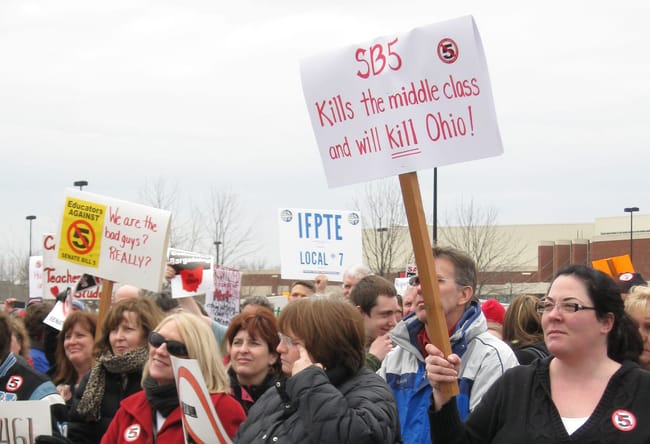
The law never took effect. Ohio’s constitution lets citizens veto a statute directly: gather enough signatures and the law is frozen until voters rule on it. Opponents gathered 1.3 million — the most in state history for a referendum — and on Nov. 8, 2011, Ohio struck the law down.
The unions SB 5 would have covered are not with him
SB 5 was a public-employee bill. It never touched the private-sector building trades. Every worker it would have hit was on a public payroll.
Most of those unions have endorsed Democrat Amy Acton.
The Ohio Civil Service Employees Association, the Ohio Association of Public School Employees, AFSCME Ohio Council 8 and AFSCME Retirees Chapter 1184 endorsed Acton jointly in December. So has the Ohio Federation of Teachers. So have the United Auto Workers, SEIU District 1199, the Communications Workers of America, the United Mine Workers and the painters’ district council.
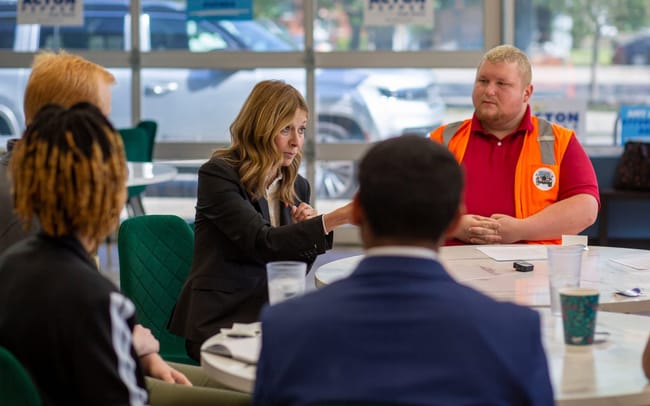
Ramaswamy’s labor support comes almost entirely from the one corner of organized labor that SB 5 left alone.
Even that corner is splitting. In April, the Dayton Building and Construction Trades Council — 18 unions across 10 counties — publicly broke with the statewide trades body that had endorsed Ramaswamy and backed Acton instead.
The lawmaker Ramaswamy endorsed for state treasurer
In January, Ramaswamy’s highest-profile down-ballot endorsement went to state Sen. Kristina Roegner of Hudson in her candidacy for state treasurer. Roegner, who previously served in the Ohio House, was sworn in weeks before SB 5 reached the floor. She voted for it. The House Journal for March 30, 2011 records final passage at 53 to 44, with Roegner in the affirmative column.
It was not a party-line vote. Five Republicans broke with their caucus and voted no. Roegner was not among them. She also voted with the majority to reject a Democratic motion to have the 300-page bill read aloud in full, and again to reject a motion to table it.
She backed the bill publicly as well, calling it “a bill that should cause the taxpayers of Ohio to celebrate” in comments reported that spring.
Two years later, she and then-Rep. Ron Maag announced three measures at a Statehouse press conference: bills barring mandatory union dues in the private and public sectors, and a joint resolution to put right-to-work before voters. Roegner argued the proposals were about individual freedom, not a rerun of SB 5. Then-Senate President Keith Faber said the Senate would not take them up. The bills died.
Ramaswamy endorsed her anyway, calling her “kind and deeply loyal” and joining a letter urging the state party to back her.
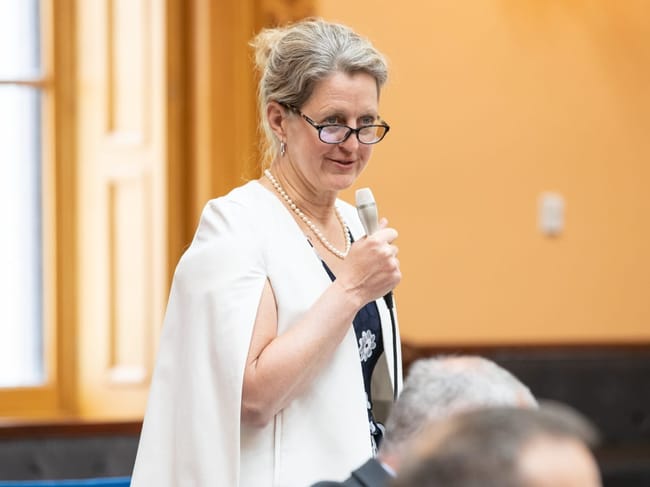
He was not alone. State Rep. Gary Click, the Vickery Republican who represents Seneca County, endorsed Roegner too. She was one of three candidates Click endorsed who lost on May 5. Click’s own standing with the top of the ticket has wobbled: his name was quietly removed from Ramaswamy’s endorsement page in April, then restored.
Roegner lost. Jay Edwards, the former state representative backed by Vice President JD Vance and U.S. Sen. Bernie Moreno — and dogged by questions about his HB 6 vote and Householder ties — beat her 53% to 47%. He faces Democrat Seth Walsh in November.
Chabria waved off the Vance-Ramaswamy split as “a headline in search of a story.”
Where Ramaswamy draws his line
Ramaswamy has never claimed to oppose unions across the board. He opposes particular ones, and he says so. During his 2024 presidential campaign he called for eliminating teachers’ unions and federal employee unions. As a candidate for governor he has said he is “certainly not running a campaign not to eliminate teachers’ unions either.”
David Pepper, Acton’s running mate, has argued in appearances with northwest Ohio union members that a candidate who reserves the right to eliminate the unions he dislikes is a threat to all of them. Ramaswamy’s campaign points to its labor endorsements as the rebuttal.
11,825 votes
The workers SB 5 covered teach in Tiffin and Fostoria. They ride the trucks out of the firehouses. They drive the patrol cars. In 2011, voters in this county were asked whether those workers should keep the right to bargain, and 11,825 of them said yes — a 25-point margin against the law.
The people who lost that fight now run the campaign of the Republican nominee for governor. Whoever wins in November decides whether it gets picked again.
Attempts to reach Ramaswamy’s campaign for comment were unsuccessful. The election is Nov. 3.