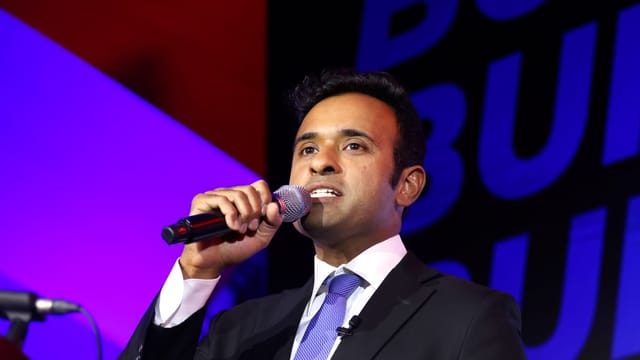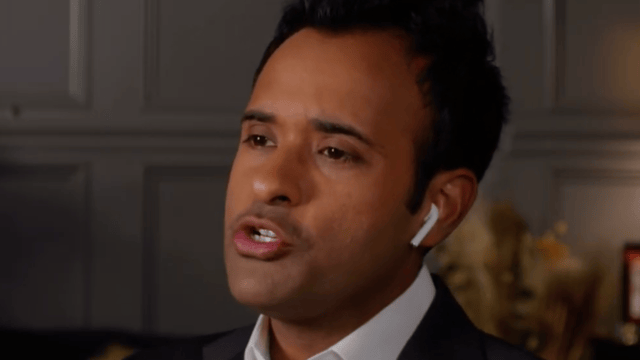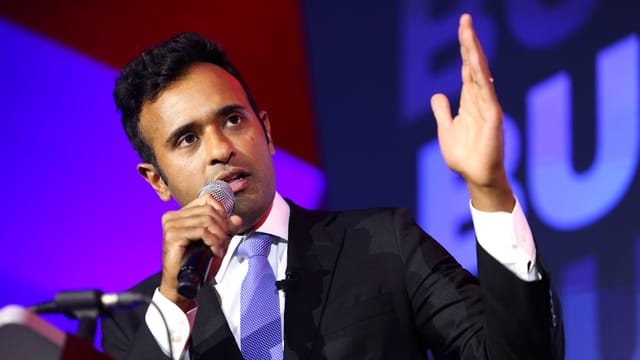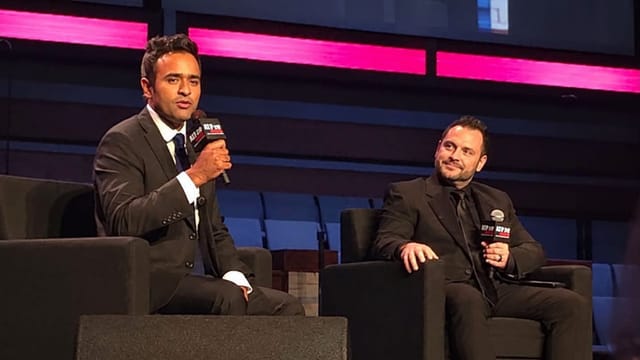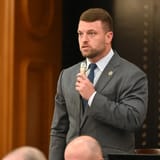
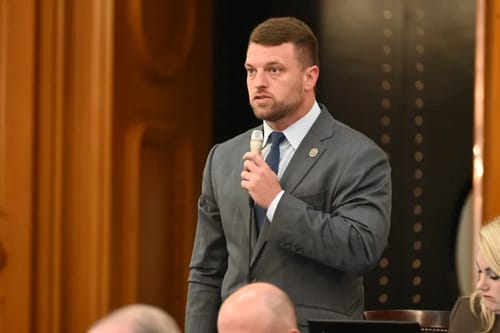
Former state Rep. Jay Edwards, the Republican nominee for Ohio treasurer, would manage roughly $280 billion in state assets if elected on Nov. 3. The record he brings to that campaign includes a vote for House Bill 6, an FBI-recorded dinner with former Speaker Larry Householder and an indicted lobbyist, a $200 personal check to the dark money entity at the center of the bribery scheme, a vote against expelling Householder after his racketeering indictment, FBI recordings released in a 2025 documentary, a public records dispute over deleted text messages, a censure from his own state party, and a 2025 financial disclosure listing dozens of gifts the candidate now says he probably never received.
Edwards, of Nelsonville, served four terms in the Ohio House representing the 94th District from 2017 to 2025, leaving office under term limits. He served as House majority whip from 2019 to 2020 under Householder and chaired the House Finance Committee in 2023 and 2024 under Speaker Jason Stephens. He defeated state Sen. Kristina Roegner 53% to 47% in the May 5 Republican primary, according to unofficial results reported by the Ohio Capital Journal. He will face Democrat Seth Walsh, a Cincinnati city councilmember, on Tuesday, Nov. 3.
Edwards has not been charged with any crime in connection with the HB 6 corruption scandal or any other matter discussed in this article.
House Bill 6 and the Householder leadership team
In 2019, the Ohio House passed House Bill 6 — the $1.3 billion bailout for two FirstEnergy nuclear plants that federal prosecutors would later describe as the product of a $60 million racketeering conspiracy. The bill cleared the chamber 51-38. Edwards voted yes.
By that point, Edwards was a member of Householder’s leadership team. According to the Athens News, which described him in 2020 as a personal friend of Householder, Edwards was tapped by the Speaker to serve as majority whip in the 133rd General Assembly. The federal indictment against Householder later described a closed-circle “enterprise” that funded the campaigns of 21 candidates in the 2018 primaries with FirstEnergy money to build “Team Householder” in the chamber. Edwards’ 2018 campaign was not among those funded by Householder’s public-facing political action committee, the Athens News reported. He was not named in the federal complaint against Householder.
Trial evidence later presented at Householder’s 2023 racketeering trial included a July 21, 2019 text — two days before HB 6 cleared the House. According to Associated Press wire reporting on the trial, Householder texted an unidentified legislator: “The state plane has been arranged to come get you, Tom Brinkman and Bob Cupp on Tuesday morning at Midway and return you to Chicago that afternoon. Jay Edwards will be calling you.” The flight ultimately did not take place. Then-FirstEnergy vice president Michael Dowling, in a separate text quoted in the trial coverage, celebrated the planned flight with a one-word reaction: “Boom.”
In July 2020, federal agents arrested Householder along with lobbyists Matt Borges and Neil Clark, political strategist Jeff Longstreth, and lobbyist Juan Cespedes. U.S. Attorney David DeVillers called the scheme “likely the largest bribery, money laundering scheme ever perpetrated against the people of the state of Ohio.” Edwards joined the unanimous House vote that immediately stripped Householder of the speakership. He did not, however, support removing Householder from the chamber.
The following month, the new Republican Speaker, Bob Cupp, asked Edwards and the rest of the Householder-appointed leadership team to step down from their positions, saying the move would “clearly demonstrate our resolve to start anew.” Only one member, Assistant Majority Whip Laura Lanese, complied. Edwards refused, telling the Athens News he saw no reason to step down from a position he had been elected to unanimously. Cupp then removed Edwards from the House Rules and Reference Committee, which sets the chamber’s agenda. Edwards eventually declined to seek another term as whip in the next General Assembly, taking a roughly $12,000 pay cut as a result.
The FBI-recorded dinner at the Aubergine
On Sept. 23, 2019, Householder attended a $2,400 dinner at the Aubergine Private Dining Club in Grandview Heights, a wealthy inner-ring Columbus suburb. According to trial reporting later published by CBS, Clark had arranged the dinner so two men he believed were potential clients could meet the Speaker; the two men were undercover FBI agents wearing recording devices. Clark had advised them to bring a $50,000 check made out to Generation Now, the 501(c)(4) dark money entity prosecutors say Householder used to launder FirstEnergy money.
Edwards was at the table.
In a 2020 interview with the Athens News, Clark identified Edwards as “Representative 8” in the federal affidavit supporting Householder’s indictment. The FBI’s affidavit specifically stated that “Representative 8” was “not known to be a member of the alleged criminal enterprise,” according to the Athens News, which reported Clark’s claim. Edwards declined at the time to confirm or deny that he was Representative 8 and said he did not recall attending the dinner. Clark died by suicide in March 2021 while awaiting trial.
The dinner became trial evidence in Householder’s 2023 racketeering trial, which ended with a conviction and a 20-year federal prison sentence. In a 2023 letter to ethics officials reported by Signal Ohio, Edwards acknowledged the dinner had been described in media reports as costing more than $2,400 and said that as soon as he became aware of that information, he contacted caucus legal counsel to ask whether he had a duty to amend his financial disclosure statement.
A $200 check to Generation Now
Four months after the Aubergine dinner, Edwards wrote a personal check to Generation Now.
The Energy and Policy Institute, citing bank records published in March 2023, reported that nine checks of $200 each — totaling $1,800 — were deposited by Generation Now in February 2020 from members of what federal prosecutors called “Team Householder.” Eight came from Republican Ohio House members, including Householder himself, Edwards, Jon Cross, Douglas Swearingen, Donald Wilkin, Philip Plummer, Jeffrey Lare, and Brian Baldridge. The ninth came from Brian Gray, a Householder aide.
Edwards’s check, written in January 2020, included the phrase “Brown Tix” in the memo line, according to the bank records. The memo lines on checks from Householder, Gray, Wilkin, and Plummer referenced the “Big 10” championship. Baldridge’s check said “Football.”
The federal racketeering indictment unsealed six months after Edwards’s check described Generation Now as the vehicle through which approximately $60 million in FirstEnergy money was laundered into political activity supporting Householder’s speakership bid and the passage of HB 6. The entity later pleaded guilty to racketeering and was dissolved.
The vote against expelling Householder
In an October 2020 interview with the Athens News — three months after Householder’s federal indictment — Edwards was asked about his relationship with the former Speaker.
“I’ll openly admit I still consider Larry Householder a friend,” Edwards said. “Am I upset by him and some of his actions? Yeah, absolutely, but I think he deserves an untainted day in court and we’ll find out what happens.”
Eight months later, on June 16, 2021, the Ohio House voted 75-21 to expel Householder from the chamber. Edwards voted no, joining 19 other Republicans, Householder himself, and one Democrat in opposition, according to the Ohio Capital Journal’s roll call of the vote. Householder had not yet stood trial. Of the 11 sponsors of HB 6, six voted against the expulsion.
Edwards declined to give interviews explaining the vote at the time.
Deleted texts and a denied records request
In February 2022, the Columbus Dispatch reported that Householder had texted Edwards from outside the chamber about a data privacy bill Edwards opposed — and that Edwards’ opposition stalled the bill that day. The next month, the Ohio Capital Journal filed a public records request for all text messages between Edwards and Householder dating back to June 2021, the month of the expulsion vote. Lawyers for the Ohio House denied the request, telling the outlet no responsive records existed.
Edwards offered a simple explanation: he deletes them.
“You’re going down the rabbit hole saying Jay Edwards deletes texts with Larry Householder. No, that’s not true,” Edwards told the Ohio Capital Journal, referring to himself in the third person. “Jay Edwards deletes all texts. To members, to other people; I go through at night and erase text messages I don’t find useful.”
Edwards said he and Householder — old friends from Perry County and Hocking College — usually avoid discussing the criminal case or public policy in their texts, and that he would have preserved any message he considered a public record. Ohio public records law generally requires elected officials to preserve communications conducted on personal devices when those communications concern public business.
The “Blue 22” speakership and a party censure
On Jan. 3, 2023, Edwards was one of 22 House Republicans who joined all 32 House Democrats to elect Jason Stephens as Speaker over Derek Merrin, the candidate Republican caucus members had endorsed in a closed-door November vote. Stephens won 54-43.
Edwards told the Statehouse News Bureau that he and other members felt Merrin had not been reaching out enough since the caucus vote. “People have been pretty upset and so that’s what led us to today. It didn’t have to be this way,” he said.
Eight days later, the Ohio Republican Party State Central Committee passed a resolution censuring Stephens and his 21 Republican supporters. The censure said the bipartisan vote “dishonors the historic brand” of the party. Edwards was named in the resolution.
Stephens served one term as Speaker. Matt Huffman replaced him in 2025.
On tape in the 2025 Dark Money Game documentary
In April 2025, the streaming service Max released “Ohio Confidential,” a documentary by Academy Award winner Alex Gibney examining the HB 6 bribery scandal as part of his two-part “Dark Money Game” series. The documentary featured previously unreleased FBI recordings of Edwards in conversation with Clark.
In one exchange aired in the film and quoted by WKYC, Clark told Edwards: “I don’t want to say he’s a pay-to-play guy, but he’s clearly influenced by his friends who have money.” Edwards responded: “Why the hell do you not run for office then?” Clark answered: “’Cause I’m the son of a [expletive] convicted felon mafia guy. What are you, out of your mind? The attack ads would just write themselves.”
A separate recording, not included in the documentary but referenced in the WKYC report, captured Clark describing Edwards to an undercover FBI agent.
“He and I are the two principal advisers to the speaker,” Clark told the agent. “So having him, you know, there as a support device, yes. If you want to, if you want to get somebody that’s a member who has influence on the speaker, Jay Edwards would be the guy.”
That description sits alongside the FBI affidavit’s earlier statement that “Representative 8” was “not known to be a member of the alleged criminal enterprise.” Edwards declined to comment to WKYC on whether he ever received any benefit from money in the Generation Now account.
“The recent release of a docuseries has given this subject renewed interest with the press, but this has been exhaustively covered in the past and there is nothing new that was covered,” Edwards told WKYC by email. “It is time to move past this and focus on working to make our state a stronger place to live for hardworking Ohioans.”
Householder’s attorney, Scott Pullins, told WKYC that Clark’s description of Edwards as influential with the Speaker was not accurate, adding that Clark “would talk and exaggerate, especially late at night after drinks.”
The 2025 gift disclosures
In April 2026, Signal Ohio reporter Jake Zuckerman published a review of the financial disclosure Edwards filed as a statewide candidate, documenting more than 42 separate gifts of $75 or more that Edwards reported receiving in 2025. The total reached at least $3,100. By comparison, Signal Ohio’s review of every other statewide candidate’s disclosure found that gubernatorial candidate Vivek Ramaswamy disclosed 24 gifts, Secretary of State Frank LaRose disclosed 23, and most other candidates disclosed none or only a handful. Democratic gubernatorial candidate Amy Acton disclosed none.
In an interview with Signal Ohio, Edwards said he had not actually received some of the gifts he reported.
“You don’t get in trouble by overreporting,” Edwards told Zuckerman. “I know for a fact I didn’t receive gifts from some of them.”
Asked about specific names on the list, Edwards said he hadn’t seen Cleveland restaurateur Robert “Bobby” George in roughly a year but listed him anyway. He said Scott Weisman, a jewelry store owner he golfs with, may have paid for some rounds but he could not remember. He said nursing home executive Steve Boymel had hosted a campaign event for him but he did not think Boymel had given him a gift. He said lobbyist Jett Facemyer — a former Edwards legislative aide who now lobbies for Intralot, the Greek-based vendor that contracts with the Ohio Lottery for its central gaming and video lottery terminal systems — “might have” paid for tickets to a Tim Dillon comedy show.
“I fill out these forms for the OEC,” Edwards told Signal Ohio, referring to the Ohio Ethics Commission. “I don’t fill them out for news reporters.”
The Ohio Ethics Commission requires elected officials and candidates to disclose all gifts worth more than $75 received in the preceding year. The rule exists, the commission says, to identify potential conflicts of interest and provide transparency about the relationships of people in or seeking government office. A disclosure of a gift not actually received raises the inverse problem: it makes it impossible to know who is actually buying gifts for the candidate.
The Bobby George listing and a familiar name
Bobby George, whose listed gift to Edwards was of undisclosed value, was originally charged in August 2024 with nine felony counts — one count of attempted murder, one count of rape, four counts of kidnapping, one count of felonious assault, and two counts of strangulation — in connection with the abuse of a woman he was in a dating relationship with between November 2023 and July 2024. The arrest warrant, obtained by News 5 Cleveland, described allegations including strangling, gun threats, and shoving a towel down the victim’s throat. On Nov. 3, 2025, after waiving his right to a grand jury and accepting an indictment by information, George pleaded guilty to a single count of attempted strangulation, a fifth-degree felony. He was sentenced to five years of probation in Cuyahoga County Court of Common Pleas. Special Prosecutor Jane Hanlin, of Jefferson County, handled the case after Cuyahoga County Prosecutor Michael O’Malley recused.
The Bobby George listing on Edwards’ disclosure is notable for another reason. According to Cleveland Scene’s reporting on a deposition transcript made public in 2025, Bobby George’s father, Cleveland businessman Tony George, was identified as “Individual B” in FirstEnergy’s 2021 deferred prosecution agreement. The agreement, in which the utility admitted paying approximately $60 million to influence Householder on HB 6, used “Individual B” as a codename. A FirstEnergy controller’s deposition in a separate civil case identified Tony George as the person referred to by that codename.
Federal prosecutors and civil filings have described Tony George as the intermediary between FirstEnergy CEO Chuck Jones and Householder beginning in the fall of 2016, as Householder was planning his return to the Ohio House and his run for Speaker. A 2023 Columbus Dispatch story documented that George arranged for the FirstEnergy corporate jet to fly Householder and his son to Donald Trump’s January 2017 presidential inauguration and personally paid Householder’s $1,557 hotel bill in Washington. State audit records show entities controlled by George received nearly $11 million from FirstEnergy over the years.
Tony George has not been charged in the HB 6 scheme and has denied wrongdoing. He has continued to host fundraisers for Republican candidates, including U.S. Sen. Bernie Moreno, who has endorsed Edwards for treasurer. In Signal Ohio’s reporting, Edwards confirmed that Tony George has hosted fundraisers for him.
What the office holds and who is running
The Ohio treasurer manages the state’s roughly $280 billion in assets, oversees state investments, runs the STAR Ohio investment pool used by local governments, and signs the checks that disburse state spending. Robert Sprague, the term-limited incumbent Republican, is running for Secretary of State.
Edwards’ campaign website describes him as “a native son of Southeast Ohio” who flipped a Democratic seat to enter the House in 2016, served as Finance Committee chair, and sponsored a $3.2 billion tax cut and universal school choice. The site does not mention HB 6, Householder, or the gift disclosures. Edwards has been endorsed by Vice President JD Vance and U.S. Sen. Bernie Moreno.
Democrat Seth Walsh, a Cincinnati city councilmember and former community organizer, was unopposed in the May 5 primary and advances directly to the general election. Walsh has said the treasurer’s office should leverage its $280 billion portfolio to direct investment toward community-focused banks and has said the office has a “fiduciary responsibility” to oppose the diversion of state unclaimed funds to finance the Cleveland Browns’ new stadium — a use of public dollars currently blocked by a Franklin County judge.
Edwards has said the unclaimed funds “could have been spent a better way,” particularly for rural Ohioans facing rising property taxes and utility costs, but has not ruled out supporting stadium financing “if we can afford to do them, and if we’ve checked all the other boxes.”
The general election is Tuesday, Nov. 3. The voter registration deadline is Oct. 5, and early in-person voting begins Oct. 6.