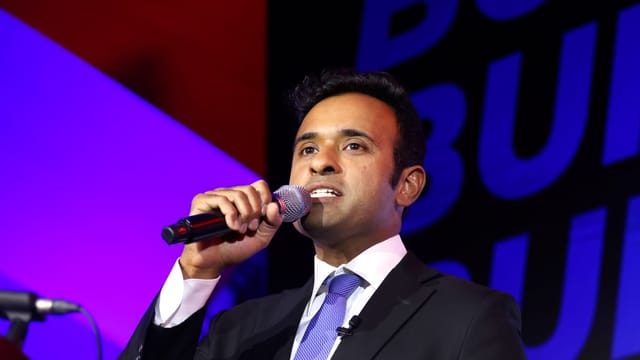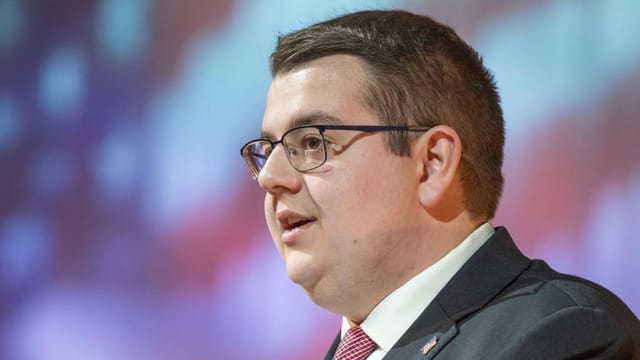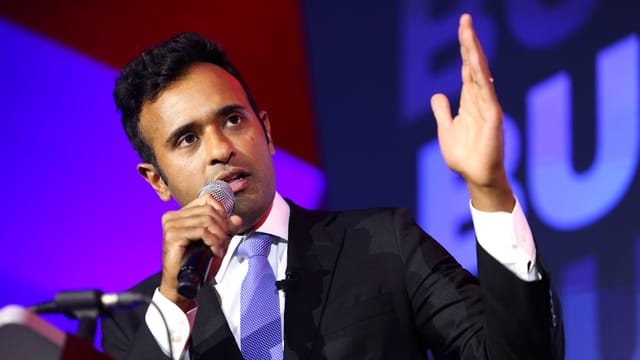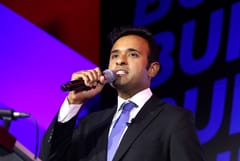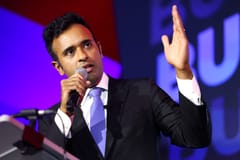
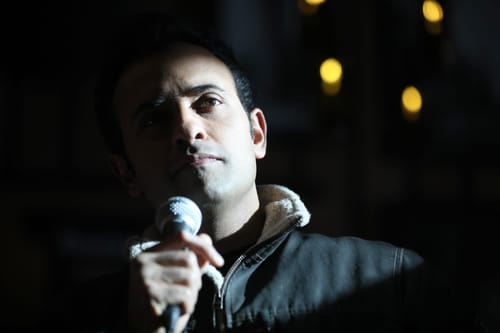

Steve Bannon, one of the loudest voices in the movement that made Vivek Ramaswamy a national figure, told his War Room audience that Ramaswamy is a liability at the top of Ohio’s Republican ticket and is pulling the party’s Senate candidate down with him.
“Gotta be blunt: Vivek is a terrible candidate to have at the top of the ticket. He’s dragging down the Senate candidate. I think Vivek’s down by 5 or 6 points and he’ll lose by more if he continues with what he’s been saying on the campaign trail,” Bannon said.
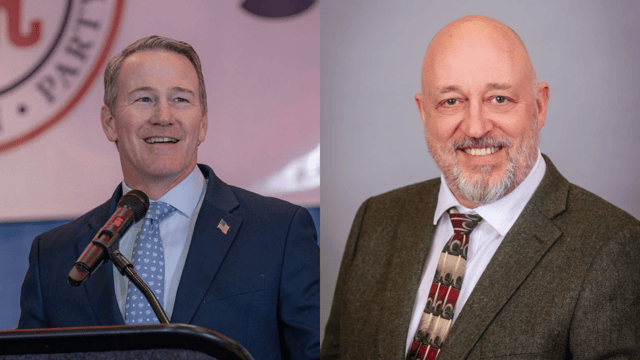
U.S. Sen. Jon Husted is the Republican nominee in Ohio’s Senate race, running against Democrat Sherrod Brown. Ramaswamy faces Democrat Dr. Amy Acton for governor. Both contests are on the November ballot, and the Senate seat is one of a handful that will decide control of the chamber.
The criticism lands on a candidate President Donald Trump endorsed within hours of his campaign launch, and whose bid is bankrolled by a super PAC that has raised roughly $42 million — more than 88% of it from five billionaires who do not live in Ohio, including Elon Musk, Jeff Yass and Bill Ackman.
Bannon’s number is worse than the public polling
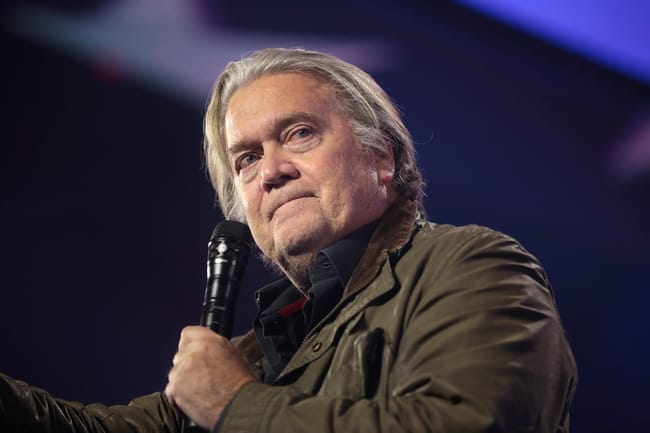
Bannon put Ramaswamy down 5 or 6 points. Recent public surveys show a tighter race.
A bipartisan AARP poll of 800 likely Ohio voters conducted June 14 through 16 by Fabrizio Ward and Impact Research found Acton ahead 47% to 44%, with Brown leading Husted 48% to 45%. A New York Times/Siena survey released in early July had the governor’s race tied at 47%, with Acton leading among independents. In February, an EMC Research poll commissioned by the Ohio Environment Council found Acton ahead by 10 points and Ramaswamy drawing only 65% support from Republicans.
On July 10, Cook Political Report analyst Jessica Taylor moved the race from Lean Republican to Toss Up, citing a favorable national climate for Democrats despite Ramaswamy’s spending advantage. It was the first time the contest had carried that rating since 2018.
Bannon has been writing off Ohio since June
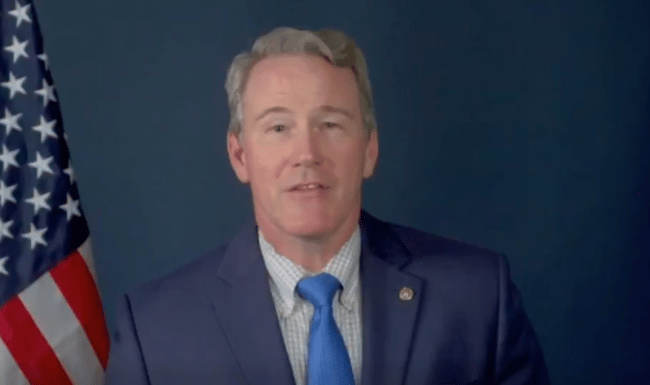
This is not Bannon’s first shot at the state’s Republican ticket. On a Thursday, June 4, episode of War Room, he predicted the party would lose its Senate majority outright, telling listeners grassroots volunteers had gone flat.
“Here’s the reason: We’re going to lose the Senate in the fall anyway,” he said then. He named Ohio directly in a list of states where he said the movement should stop working: “We’re telling everybody to put their freaking pencils down in North Carolina, in Maine, in Ohio, all of it.”
Husted, appointed to the seat by Gov. Mike DeWine in January 2025 and running for the first time to finish Vice President JD Vance’s unexpired term, was outraised roughly 2-to-1 by Brown in the second quarter.
A pattern of hostile receptions on the right
Bannon’s complaint about what Ramaswamy has been “saying on the campaign trail” follows a run of rough audiences among conservatives and libertarians.
On Wednesday, July 29, Ramaswamy left the stage roughly 16 minutes early at the Young Americans for Liberty convention at Xavier University in Cincinnati, the city where he was born, after attendees booed him for saying his generation had already made it while theirs would pay the price. He was scheduled for 30 minutes and used 14.
In the May 5 primary, Ramaswamy took 82.5% against Casey Putsch, a car designer who runs the Genius Garage nonprofit, lives in Perrysburg and describes himself as a Tiffin native. Putsch spent almost nothing and still drew 17.5%. Cook Political Report later pointed to that near-20% protest vote as a measure of Ramaswamy’s weakness inside his own party.
A report released in July found Ramaswamy had spent 79 days outside Ohio this year, including 14 international travel legs.
What it means for northwest Ohio
Bannon’s argument is a turnout argument, and turnout arguments hit hardest in counties where Republican margins are built. Seneca, Sandusky and surrounding counties supply the volunteer base and the raw vote totals that statewide Republicans depend on. If the movement’s most-followed strategist is telling that base to put its pencils down, the effect is felt first in places like Tiffin and Fostoria — and it is felt by every Republican on the ballot, from the Senate race down to the statewide executive offices and two Ohio Supreme Court seats also up this November.
Ohio voters go to the polls Tuesday, Nov. 3.