
When Andrew Frank goes to his local grocery store, it’s not unusual for him to get disapproving glances.
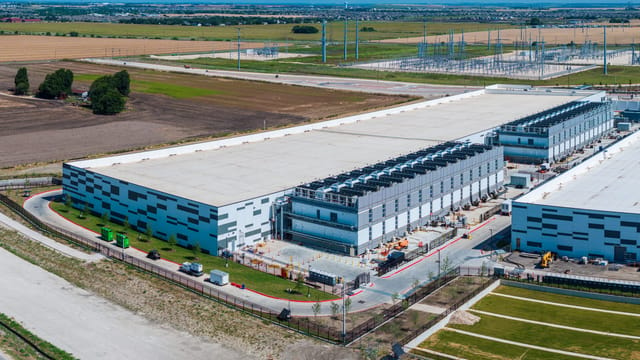
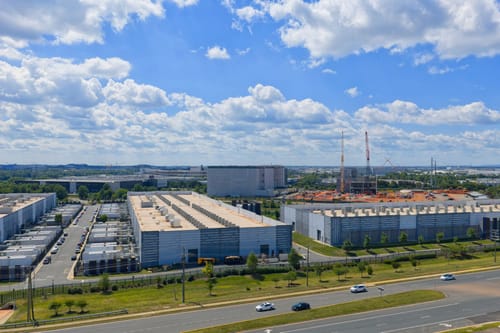
Not everyone is thrilled with his decision to question an incoming 197-acre data center complex in Conesville, Ohio, just outside of where he lives in Coshocton.
For Frank, pursuing what this data center complex could mean for the community in which he grew up is worth the side-eye, as are the sleepless nights spent researching the project and its implications for the place he calls home.
“To me, the biggest thing is just Coshocton to me is home,” Frank said. “I love it. I love the people here. And there’s a lot of things that I sit up and I think about, and I think this is just not who we are as our community.”

The data center complex, Frank said, doesn’t fit in the blue-collar area of Coshocton and Conesville. It’s an Appalachian region that’s hemorrhaged jobs following the closure of a string of industrial plants, including one owned by General Electric, and a coal plant that once employed hundreds of people.
Frank, a licensed social worker who has also worked in telecommunications, filed a lawsuit against the Coshocton Port Authority because, he said, he doesn’t believe there was enough public information provided about the project before it began. Like other opponents of data centers, he brought up concerns about the potential environmental footprint, including the vast water and electric resources used by the data centers, which could drive up Americans’ utility bills, and the limited number of permanent jobs that data centers typically create.
He questions the process by which data centers are approved and built, how public money is involved, and whose voices are heard. In addition to questioning his own local government’s support for the project, he pointed to the tax breaks that major corporations like Google, Amazon and Meta have landed from lawmakers in Ohio, which is home to the country’s fifth-largest number of data centers, according to the Pew Research Center.
From 2017 to 2024, Ohio provided about $2.5 billion in tax incentives for data center development, according to a report prepared for the Ohio Chamber of Commerce Foundation. Gov. Mike DeWine in May paused tax incentives for data center projects, saying it was necessary to do so to allow state lawmakers time to study their growth. In 2025, sales tax exemptions for data center companies cost the state more than $1.5 billion, far more than the state had originally projected, according to reporting from Signal Ohio.
According to Cleveland.com, between 2014 and 2018, Republican Gov. John Kasich’s administration signed agreements with Amazon, Meta, and Google, granting them 100% sales tax exemptions for up to 40 years if the companies met specific investment criteria.
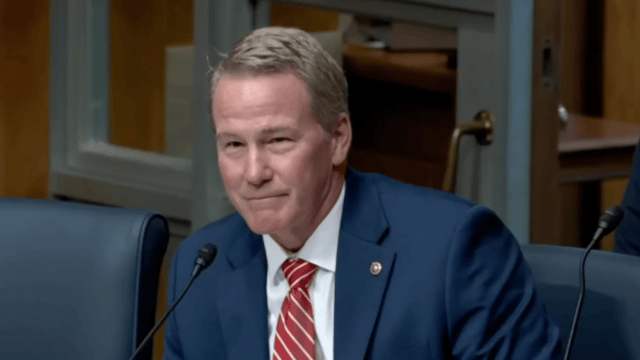
U.S. Sen. Jon Husted served as Ohio’s lieutenant governor under DeWine from 2019 until 2025, when he was appointed to the seat left vacant by Vice President J.D. Vance. He’s running in the Nov. 3 election to finish the last two years of Vance’s Senate term. Husted has championed data center projects and backed tax breaks for companies building them. For example, he backed Google’s plan to build a $600 million data center in New Albany. For that project, Google received a 15-year property tax abatement and a 15-year sales tax exemption that were expected to save the company $43.5 million, according to a 2019 report from Ideastream Public Media.
Linda Moodie, a county leader for Conserve Ohio, an all-volunteer group working to collect signatures on a petition for a ballot measure that would ban large-scale data centers in the state, said residents are often outraged by the tax deals.
“There’s people kind of digging into what’s going on with local city councils and state representatives, and even the governor, and they just feel like their voices aren’t being heard,” Moodie told the Ohio Independent. “And there’s deals being done that don’t necessarily benefit the people of the state, and they’re benefitting the large companies.”
Mark Gavin Sr., an Ohio resident and the owner of the consulting group On The Mark Advocacy & Campaigns, which has collaborated on climate justice initiatives in the state, criticized the public money involved in data centers in written testimony provided to state lawmakers for a June 1 committee hearing. In his testimony, Gavin said the money lost to data center sales tax exemptions could have funded a variety of projects benefiting the public.
“That money did not go to schools. It did not fix roads. It did not lower anyone’s electric bill,” Gavin said. “It went to some of the wealthiest corporations on the planet, and Ohioans got nothing in return.”
Molly Bryden, the climate and sustainability researcher with Policy Matters Ohio, a nonprofit research institute, also criticized the tax breaks.
“Much of this exemption is going to the richest companies in the world,” Bryden said in testimony submitted to state lawmakers. “They are spending hundreds of billions of dollars putting up data centers as fast as they can, world-wide.”
More than anything, Frank said, he just wants the truth when it comes to data centers, especially the one coming into his community. He wants to know how much water it will use, what the neighboring residents will have to pay for utilities once it starts operating, and how it will change the place he loves.
“There’ll be times when I’m sitting here at home, and I get upset and angry because I’m like, people deserve to know what’s going into their communities when it’s something that could affect the water, could affect the power, could affect your utilities,” Frank said. “People might not be able to pay. It could hurt the real estate in our community. I mean, we don’t know what the long-term outcomes are.”