
This story was originally published by Signal Ohio. Sign up for their free newsletters at SignalOhio.org/subscribe.
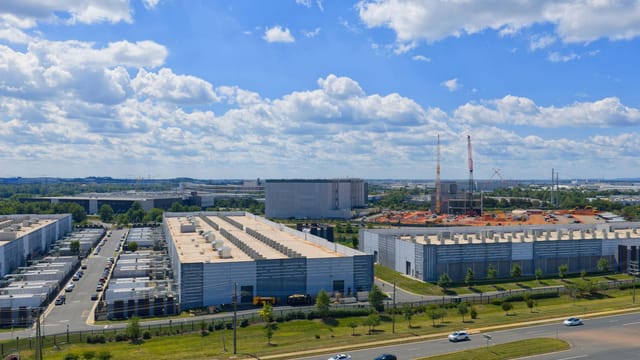
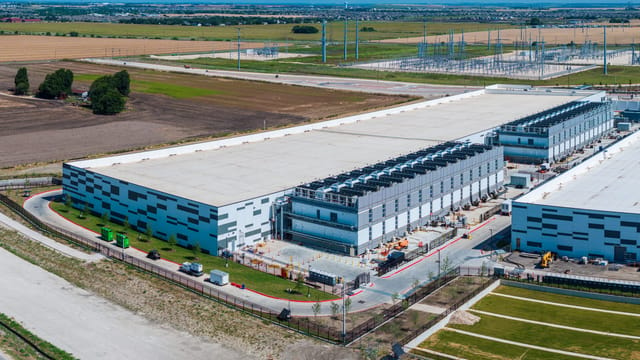
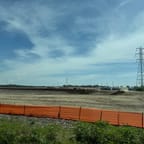
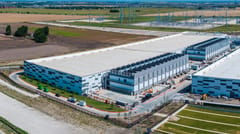
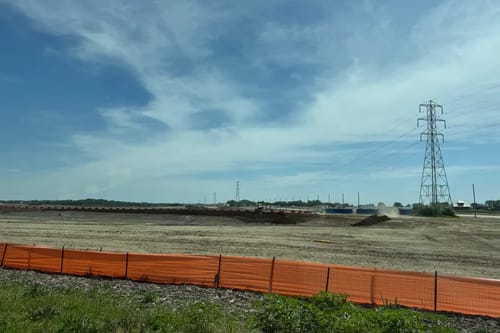
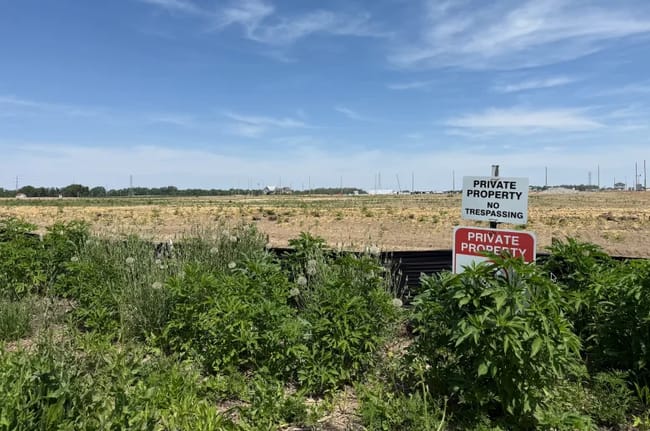
AMERICAN TOWNSHIP, Ohio – Over 373 acres of pancake flat, former farmland, Google is building a $500 million data center here, about seven miles northwest of the county seat of Lima.
The neighbors in American Township, population 14,538, are furious.
They’ve stuffed public hearings and public comment boxes in a perhaps fruitless effort to block an ongoing construction project pushed by one of the most powerful companies in the world.
Their problem isn’t any one thing as much as it’s everything: shell companies Google created and the non-disclosure agreements it signed with county commissioners to keep its identity hidden; constant, noisy construction at the site and nearby roadways; reports of private water wells going ominously dry from construction; the hundreds of tons of emissions from the facility when it’s operational; fears of rising electric costs; and the hundreds of millions of dollars in state and local tax incentives Google is getting to build something the locals don’t want.
“This is all just Google’s land,” said Becky Streeter, a retired nurse practitioner who has lived here for decades, as she drove around the megaproject construction site last month before convening with a group of a dozen neighbors who want to stop it.
American is but one of the dozens of localities caught in the middle of Ohio’s development boom of roughly 185 current and planned data centers – the technology sector’s thinly staffed digital warehouses, lured here by generous tax credits, plentiful land and cheap electric costs. The data centers, especially such “hyperscale” operations, facilitate the rise of artificial intelligence and cryptocurrency systems.
Residents are pushing back for a mix of provincial reasons and broader criticisms about AI and the extraordinary levels of electricity and, to a lesser extent, water needed to facilitate it.
Google’s march toward operational status highlights a lopsided power imbalance, where residents who have lived in the area for decades are effectively powerless to stop a project that was lined up in secret for years by the company. Becky Streeter’s husband, Dave, put it another way as he helped her set up the meeting at a local community center last month.
“It’s the golden rule,” he said. “The one with the gold makes the rules.”
The project site is larger than the National Mall in Washington, D.C. It sticks out not just for the local controversy it stirred, but for its politically powerful neighbor nearby.
Ohio House Speaker Matt Huffman, a Lima Republican who’s among the most politically powerful men in the state, lives just a few miles away from the construction site. At the Statehouse, Huffman has led a so-far unsuccessful charge to impose new rules on data centers and roll back their tax breaks. But he has quietly avoided the fray on Google’s specific project even as it has roiled the community.
The Americans are mad
Interviews, public meetings and written comments from locals of American and nearby Sugar Creek townships all suggest deep opposition to Google’s data center. This pits them against township and county economic development officials who have welcomed the development.
At a standing-room-only public hearing in March, a long line of citizens urged the Ohio Environmental Protection Agency to reject an air permit for the facility to build a fleet of 115 gas-fired generators as a backup mechanism, according to the Lima News.
Of 325 written comments obtained by records request, only two expressed support. Almost all others (some were ambiguous) opposed development, raising concerns about secrecy around the project, air quality, electric costs and others.
“This was all done in a very secretive manner, with no public input,” said Randy Tooker, who lives a half mile away in Elida. “I moved here for the country setting and wildlife. The noise and pollution will undoubtedly affect all of this.”
In late May, the Ohio EPA granted Bistrozzi its air permit. That allows the data center’s generators to emit 236 tons of nitrogen oxides, 96 tons of carbon dioxide, and about 5 tons of fine particulate matter. The engines can run for a maximum of 500 hours per year.
The Ohio EPA wrote in permitting documents that it issues permits based on air quality standards established by the U.S. EPA. Some commenters’ broader “concerns about community health outcomes, including elevated rates of asthma and cancer” are important but under the purview of state and local health departments.
In interviews, more than 15 American Township residents expressed opposition to the data center and a sense of frustration with their inability to do anything about it.
Charlene McCoy lives directly east of the project. She filmed over the course of weeks a thick haze of apparent construction dust drifting over the construction site, leaving the air cloudy and smogged. She began experiencing what she believed was an allergic reaction, with inflamed and red skin. Her eyes would swell up.
“My face got burnt, over and over and over again,” she said.
She provided Signal Statewide with pictures of her face, red and inflamed, taken over time. She paid out of pocket for inconclusive medical tests. By April 17, she checked herself into the hospital, according to paperwork she provided. A test eventually pointed to a contact irritant, which led her to suspect lime kiln dust, which is used to dry soil during production.

Google declined to comment on her claim. Ohio EPA spokesperson Bryant Somerville said the agency heard reports about the dust and asked the company to reduce and contain its spread. He said OEPA will be on site to monitor, and that lime kiln dust shouldn’t be leaving the property or impacting neighbors.
“The construction company has since informed Ohio EPA of its plan to control the dust, which includes additional water trucks and monitoring wind conditions during lime kiln application,” he said.
Lelanna Spencer, 56, who lives a two-minute drive from the development, said the data center was “rammed down our throats” without any real ability to participate. At first, she said, locals were only told the land would be an industrial park.
The “dewatering” events didn’t help.
Google distributed a flier, obtained by Signal Statewide, informing locals of reports of residents seeing “sudden changes in water pressure, flow or temporary loss of water.” This can occur from builders temporarily pumping groundwater out from the water table to dig and build in a dry environment, the flier states.
“If you are currently experiencing any issues with your well water … we want to hear from you directly,” the company said in a flier. “We sincerely apologize for any disruption or concern this may be causing you and your family.”
No one interviewed by Signal Statewide thought they would succeed in stopping the project, though some thought they might be able to push for better terms for neighbors. Joyce Morris, of American, called the development “a ball that’s rolling that you ain’t gonna stop.”
The negative outlook on the facilities isn’t unique to Allen County. April polling from Bowling Green State University found that about 3 in 5 Ohioans have unfavorable views about a data center being built in their hometown, and a similar percentage associate them with higher electric costs and bad environmental outcomes. That number is 7 in 10 nationally, according to Gallup polling.
“We oppose everything about the Data Center being built at the end of our road, but most of all the lack of transparency that there has been with this entire project,” said Shelly Reiff, of Elida, in a public comment.

Discreet data center developers, major tax breaks
The earliest known indications of the development trace to 2022, when Bistrozzi LLC, later revealed as a front company for Google, was incorporated in Delaware.
In 2025, Bistrozzi began acquiring hundreds of acres of land and striking tax deals and a non-disclosure agreement with the county commissioners for what was then only publicly known as “Project BOSC.”
The three-year non-disclosure agreement, signed May 27, 2025, obligated commissioners to stay mum about private details of the data center while they consider a local tax abatement for it, according to a copy of the agreement obtained in a records request.
On a state level, Google is already contractually exempt from Ohio’s 5.75% sales tax, plus any local sales taxes (i.e. a 1.1% sales tax in Allen County) on its builds. This exemption lasts until 2058 and is expected to save the company at least $600 million, in an estimate that state officials say is likely an underestimation because the total cost isn’t known until companies submit receipts to the state after the fact.
In addition, the county in April 2025 established a “community reinvestment area,” abating 75% of the assessed value of the data center when calculating its property taxes. As part of the deal, Bistrozzi agreed to pay $250,000 annually over 15 years to Elida Local Schools.
In August that year, Bistrozzi (and later, “Bistrozzi Additional LLC”) began spending about $45 million on 373 acres of land split between five landowners, county records show. It also won a permit from the Ohio EPA to fill in about 0.7 acres of wetlands to build. The company agreed to offset the wildlife disruption via mitigation and conservation work at a metropark 90 minutes away.
Then there was the water. In September 2025, the city of Lima agreed to sell between 5 and 10 million gallons of water per day to the facility over 20 years. Water officials say the plant can handle the new demand, but some residents expressed skepticism. Google says the $500 million it’s investing in the area includes $50 million flowing to public works projects, including road construction and updates to Lima’s water system.
Only after all these pieces fell into place did Google in March of this year reveal itself as the project developer.
The announcement included a reference to building roundabouts in town to facilitate added traffic. However, the Allen County Port Authority recently delayed construction on those roundabouts “to allow for adjustments in response to public input.”
Several residents said the port authority planned to use eminent domain to seize land without owners’ permission, for property that includes family land or the site of a popular farmstand, according to Streeter.
An Allen County Port Authority spokesperson declined to respond to inquiries about alleged use of eminent domain, stating the project is still in the design phase, and “efforts are underway to minimize impacts to surrounding property owners.”
None of the three county commissioners responded to an interview request.
A powerful neighbor

Matt Huffman lives not far from the project site. He’s currently the Ohio House Speaker after having finished a stint as the Senate President, and is considered among the most powerful figures in Ohio Republican politics after nearly 20 years in the Statehouse and 14 years on Lima’s city council.
While he has positioned himself against data centers at the Statehouse, he has avoided the hyperscaler controversy in Allen County.
As House Speaker, the de facto leader of the chamber, Huffman controls the agenda and can move or stall bills at his leisure.
The Ohio House under his leadership has attempted, without success, to impose new regulations on data centers, ban their non-disclosure agreements with local public officials, and end the statewide sales tax exemption, which cost Ohio $2 billion last year in state and local sales tax revenue, with most benefits going to parent companies of Google, Facebook and Amazon.
House Republicans nearly passed legislation last month that would roughly halve – but not end – data centers’ sales and property tax incentives. It would also require them to secure their own sources of electricity by either building their own power plants or entering long-term electric supply contracts, and adhere to “best industry practices for water conservation and water-use efficiency.”
Huffman and others in his leadership team in June nixed a final vote on sending the bill to Gov. Mike DeWine, late at night on the final lawmaking day until mid-November. He said at the time that members were frustrated that the bill doesn’t zero out data centers’ sales tax credit – several lawmakers have said the rapidly inflating size of the credit was kept secret from them, adding to the frustration.
But Huffman’s pugilism hasn’t extended to American Township.
He declined an interview request about the project. When asked after a statehouse press conference in June what he thinks about it, Huffman avoided specifics, noting he only heard about the data center a few months ago and he hopes Google is following the “spirit” of the House legislation in terms of water and electricity.
“As projects like these move forward, our priorities remain clear: protecting local control over siting, ensuring data centers provide the energy they require, and safeguarding local water resources,” he said in a statement later.
The hands-off approach is a far cry from when he personally intervened at the Ohio Power Siting Board in 2022, asking its commissioners to kill Birch Solar, a massive solar farm planned in Allen County. At the time, he excoriated the Ohio Chamber of Commerce for siding with “out-of-country rent seekers over the Ohioans who would be impacted” by the solar farm.
“I believe that local officials elected by their neighbors, rather than Columbus-based interest groups, are in the best position to determine what is best for their communities. After all, they are the ones who are actually living in the impacted community,” he wrote.
‘Long-term investments in the people’
Along with the American Township facility, Google has data center campuses in Lancaster and New Albany, collectively totaling $20 billion in investments in Ohio, per the company.
Molly Kocour Boyle, Google’s regional head of data center public affairs, described its data centers as “long-term investments in the people and local economy of the communities we call home.”
She didn’t respond to some specific questions, but described the company as one of the region’s “top taxpayers” and the confidentiality agreements as a common practice in industrial real estate development.
“We recognize a project of this scale brings changes; as with any construction process, there is some disruption, but we are committed to working closely with local officials, state agencies, and nearby residents to address questions as they arise,” she said.
“The collaboration we’ve experienced with local leaders has been vital to our progress. We look forward to being a supportive neighbor and ensuring our presence creates lasting, positive opportunities for residents and small businesses alike.”
Cindy Leis, a project supporter who leads both the county’s economic development arm and its port authority, declined an interview request and instead requested written questions, which she didn’t respond to.
A familiar story for data centers in Ohio
For Becky Streeter, whose retirement has been at least partially overtaken by advocating against the data center, American Township is home. For Google, it’s not even the only rural Ohio operation in the project queue.
“Tilted Gate LLC” in January said it planned to build a 500,000-square-foot data center in Franklin Furnace, in hilly southern Scioto County, for $1 billion. The county commissioners signed non-disclosure agreements with the developers.
From there, according to WSAZ, the commissioners and developers jointly revealed Google’s identity behind the project and approved a 75% property tax abatement for 15 years, partially offset by a $500,000 payment to the local school system.
Citizens voiced broad opposition at public hearings and filed a lawsuit against the county commissioners, alleging violations of state open meetings laws.
Site work on “Project Dazzler,” according to Google, is scheduled to begin this year.
Signal Ohio is a nonprofit news organization covering government, education, health, economy and public safety.