As data centers continue to grow both in numbers and unpopularity, the candidates in Ohio’s U.S. Senate race are calling for more oversight. While they offer contrasting visions for data centers, neither has embraced a full halt in construction desired by advocates.
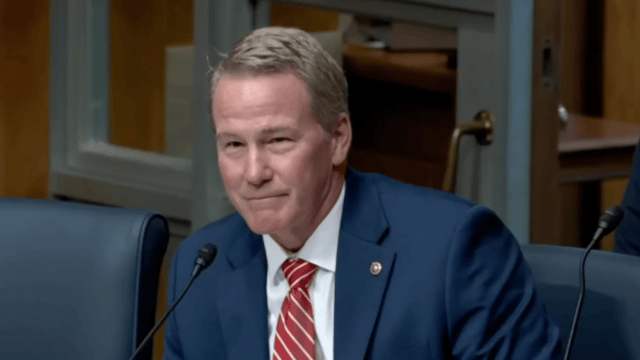
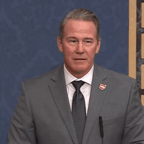
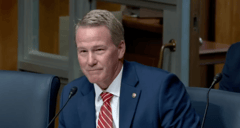
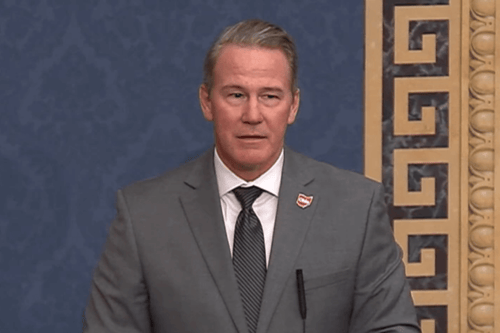
Incumbent Republican Ohio U.S. Sen. Jon Husted played a pivotal role in bringing several billion-dollar data center projects to Ohio as lieutenant governor from 2019 to 2025. He backed tens of millions of dollars in tax breaks for past projects and consistently defends new data center development, arguing that they create construction jobs and broaden the tax base for rural communities.
“If you’re connected to a wire, you’re using the data center,” Husted said in a July 22 appearance on a conservative podcast. “So, understand that when we look in the mirror, we are the problem.”
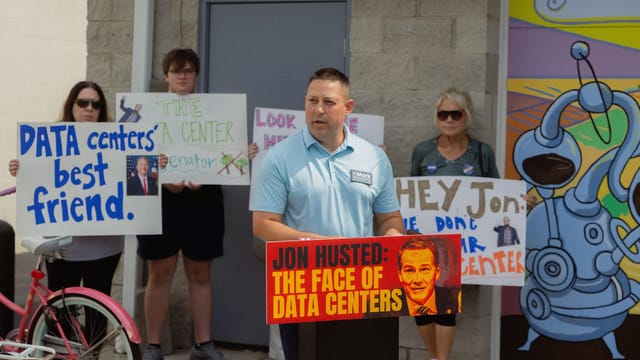
Democratic nominee Sherrod Brown slammed Husted’s record of supporting tax breaks for data center developers in two July ads. In a third ad, he promised to make data centers pay the full cost of their electricity use.
He has also said companies should safely process water used to run data systems and that local communities deserve more transparency when making decisions about new projects. Brown has strong support from construction unions, including many that support data center projects because of the jobs they provide. Brown has called to end the data center tax breaks and says that local communities should have a say on whether to allow data center construction.
“Ohioans shouldn’t be forced to subsidize these costs and Ohioans — not Jon Husted and his billionaire friends — should get to decide if data centers are built in their community,” Brown said in a statement for this story.
Husted did not respond when asked to comment for this story.
One day after Brown’s ad was released, Husted introduced the Ratepayer Protection Act, a U.S. Senate bill that would ask states to consider measures to make data centers pay for their electricity usage. Husted has otherwise said the federal government should not get involved, calling data centers a “local issue.”
Husted and Brown are part of a laundry list of politicians — including President Donald Trump, Ohio Gov. Mike DeWine, and both parties’ nominees to replace him — who have expressed support for “ratepayer protection” policies. The proposals are also backed by a major data center lobbying group and tech companies like Microsoft that own data centers.
Multiple experts said most of the power to lower utility bills lies with regional brokers and state commissions, and federal legislation would do little to move the needle. Even so, Case Western Reserve University energy policy professor Joshua Basseches said the symbolic unity on the issue is encouraging.
“There’s so much partisanship in this country right now that if this could be a bipartisan issue, I think that would be great,” he said.
A full 71% of Ohioans are in favor of a temporary ban, also known as a moratorium, on new data center construction, according to a Bowling Green State University poll.
The Libertarian candidate for governor, Don Kissick, has called for a moratorium. Republican governor candidate Vivek Ramaswamy said this week that if elected he wants to halt new projects until lawmakers require data centers to offer free electricity to nearby residents. Last month, Democratic candidate Dr. Amy Acton announced her support for a conditional moratorium on data centers if requirements on costs, union labor, transparency, environmental standards, community benefit agreements, and development are not met.
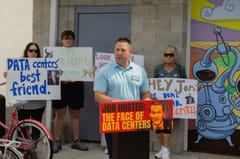
Austin Baurichter is a lawyer and volunteer for anti-data center advocacy group Conserve Ohio, which is gathering signatures to put a moratorium on data centers on the 2027 ballot. He compared Brown and Husted’s promises to regulate data centers to a politician handing an umbrella to someone drowning in a flood.
“Anything less than a full, 12-month moratorium on any advancement of any kind of a data center development falls short of what the people of this state are asking for,” he said.
Husted’s record on data centers
One month into Husted’s tenure as lieutenant governor, Google announced its first major data center in Ohio: a $600 million project in New Albany.
“Google investing in Ohio to open a new data center is great news for our state,” Husted said in a press release at the time. “Ohio is establishing itself as a premier destination for technology investment, and it further strengthens our case that Ohio is becoming the tech capital of the Midwest.”
The deal came with a reported 15-year, $43.5 million sales tax break from the state. Amazon got $81 million in state tax incentives for a data center in Hilliard in 2014, and Meta’s first data center in New Albany came with a 40-year, $37 million tax break in 2017.
The exemption on new equipment for large data centers flew under the radar when it was passed by the Ohio legislature in 2011.
Hyperscale data centers, or facilities that use more than 40 to 50 megawatts of power, were a small percentage of total data center electricity use at that time, according to an environmental advocacy group. Total electricity consumption across the U.S. grew at a slow 0.1% per year from 2005 to 2020.
A June 2023 press release by Husted touting a $7.8 billion investment by Amazon in the state cited a new use for data centers’ computing power: artificial intelligence.
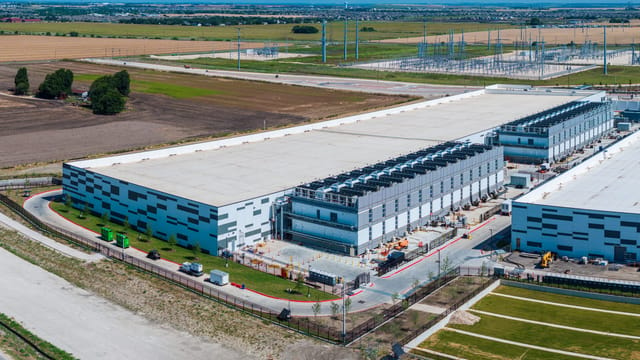
The number of hyperscale data centers doubled worldwide between 2019 and 2024. Data centers could rise from accounting for 4% of total U.S. electricity consumption right now to 9% by 2030, according to projections by the Electric Power Research Institute.
Tech companies poured tens of billions of dollars into Ohio to build new data centers and expand existing campuses. That $600 million Google data center in 2019 has since ballooned into a project spanning sites in New Albany, Columbus, and Lancaster.
“Data centers are essential to our digital lives, and Google’s additional multibillion-dollar investment further establishes central Ohio as an important tech hub in America,” Husted said in June 2024 as Google announced another $2.3 billion investment in central Ohio.
His time as lieutenant governor ended when he was appointed to the U.S. Senate in January 2025, reducing his public appearances at data center groundbreakings and his say in Ohio’s tax code.
“If Ohio wants to be a leader, a leading edge tech state in the Midwest, having those kinds of investments in the state is important,” he said in an interview with Signal Ohio in 2025.
Signal Ohio later reported that the state lost out on $1.6 billion in taxes from data centers in 2025, more than 11 times what they expected. Gov. Mike DeWine has since paused applications for new tax exemptions for data centers.
Meanwhile, U.S. electricity consumption rose 1.7% per year from 2020 to 2026. The average Ohio electricity bill grew by more than 53% from June 2021 to June 2026, far more than the national average, according to the Electricity Price Hub from Heatmap and the Massachusetts Institute of Technology.
Brown’s record on data centers
Brown’s record on data centers started before Ohio had a sales tax exemption for them. As a first-term U.S. senator in 2010, Brown secured $2.8 million in funding for a Dayton-area research center to develop water cooling technology for large data centers.
Today, water cooling systems make large data centers more energy efficient, but they created another problem: A large data center can use up to five million gallons of water per day, according to a 2025 report by the Environmental and Energy Study Institute.
That water must be cooled before it is put back in the environment, Case Western Reserve University environmental law professor Victor Flatt explained, or it can affect local wildlife.
Brown acknowledged this in a June interview with Spectrum News, saying, “They’ve got to make sure that they process the water right and recirculate it.”
Brown did not specify any stance on environmental regulations for data centers in a statement for this story. As a congressman from 1993 to 2025, his only public statement on data centers was a press release welcoming Amazon Web Services to New Albany in 2015.
On the campaign trail 11 years later, Brown has repeatedly criticized the “out-of-control” tax breaks under Husted’s watch and labeled him “the face of data centers” in ads.
Would the Ratepayer Protection Act protect ratepayers?
Both candidates promise to make data centers pay the full cost of their electricity usage.
The White House’s Ratepayer Protection Pledge, which asks data center developers to pay for their utility usage, received commitments from about 200 entities and endorsements from several sitting governors, including Ohio Gov. Mike DeWine.
A companion bill to Husted’s Ratepayer Protection Act passed out of the U.S. House Committee on Energy and Commerce by a unanimous vote in July.
Even so, experts say relief from the federal government in the near future is unlikely.
Public utilities are generally regulated by state commissions like the Public Utilities Commission of Ohio, consultant David M. Klaus said. Klaus worked in the U.S. Department of Energy under three Democratic administrations and wrote a report about the limits of federal action to regulate data centers’ utility bills.
Case Western energy policy professor Basseches said that this is why Congressional legislation like Husted’s Ratepayer Protection Act is narrow in scope.
“The federal government has never been involved in this way, certainly not in a legislative capacity,” Basseches said. “If this thing were to ever cross the finish line and become law, I expect there would be a lot of legal challenges and a lot of fights over authority between different states and the feds.”
PUCO allowed major utility provider AEP Ohio to treat data centers differently in 2025, but a June bill in the state legislature that would have extended the practice across the state didn’t reach the finish line before the legislature’s summer recess.
Other concerns about data centers: the environment and transparency
More power demand from data centers means more power plants, Flatt said. PJM Interconnection, a regional broker that makes sure there is enough power supply to meet demand in Ohio and 12 other states, came up 6.8 gigawatts short in its most recent auction. It warned that data centers may face involuntary outages as a result.
Flatt said new plants in Ohio are likely to be powered by fossil fuels. A 10-gigawatt data center project in Piketon — expected to be the largest data center in the world — will be powered by a new $33.3 billion natural gas plant.
Husted has expressed support for fossil fuels and nuclear energy to power data centers since 2023. He has also criticized wind and solar energy, saying they are “inadequate” to meet increased demand.
In most places, Flatt said solar energy with battery power backup is the cheapest, easiest, fastest form of energy production to build and permit.
“But some states like Ohio and the federal government have put some roadblocks in front of developing solar and certainly in front of developing wind, which would be the second-cheapest,” he added. “That’s going to lead to increased air pollution.”
Chevron donated $200,000 to a super PAC supporting Husted’s election bid in June, and a super PAC that backs nuclear energy spent almost $75,000 on ads supporting him in the second quarter. He also has deep ties to Ohio’s utility lobby.
While Brown has not directly addressed the intersection of data centers and energy production, he consistently supported clean energy initiatives while in the Senate.
Both candidates have otherwise said they see data centers as a local issue. At a July 11 stop in Ironton, Brown said the approval process should be “a local decision with everyone knowing what is at stake.”
The failed June bill included a provision stating that public records requests can supersede nondisclosure agreements, a common tactic used by data center developers to keep plans secret.
While Husted backs data centers, Brown is silent on the prospect of a moratorium
Hyperscale data centers bring jobs to local communities, leading many prominent Ohio labor unions to support them.
Dorsey Hager, the executive secretary-treasurer of the Columbus-Central Ohio Building and Construction Trades Council, estimated in May that data centers make up at least 40% of work hours by union members.
The Ohio Building and Construction Trades Council endorsed Brown in March. The president of the Ohio AFL-CIO, another large union backing Brown’s election campaign, also defended data centers because of the jobs they create.
Democratic nominee for Ohio governor Amy Acton said she would not allow data centers into the state if they do not meet several requirements, including stipulations on union labor, environmental standards, and more. Brown did not respond to a question for this story asking for his reaction to the policy.
Andrew Gula, a volunteer who gathers signatures for Conserve Ohio’s proposed data center moratorium, said he hears a variety of opinions from people who work on building and powering AI data centers. Some have told him they feel like they’re helping automate others’ jobs, and for others, “it is what it is,” he said.
Baurichter, another volunteer for Conserve Ohio, lives in Higginsport, a small village on the Ohio River. He said support for data centers because of the jobs they create in rural Ohio reflects a “corporate-centric” mindset that puts people second.
The lack of support among top Ohio politicians for a moratorium has made him increasingly disillusioned with the political system, he said, adding that Conserve Ohio aims to “take things into our own hands” by collecting signatures for its 2027 ballot initiative.
Baurichter estimated that around 65% of Conserve Ohio’s members are conservative or voted for Donald Trump in the 2024 presidential election. In Ohio’s U.S. Senate election this November, he said “any reasonable person” opposed to data centers would vote for the “lesser of two evils.”
“But that misses altogether that this is nothing but a perpetuation of the same dysfunction that this government has exhibited for decades, that people are waking up to,” he said.
This story is republished from the Ohio Capital Journal under a Creative Commons license. View the original article.