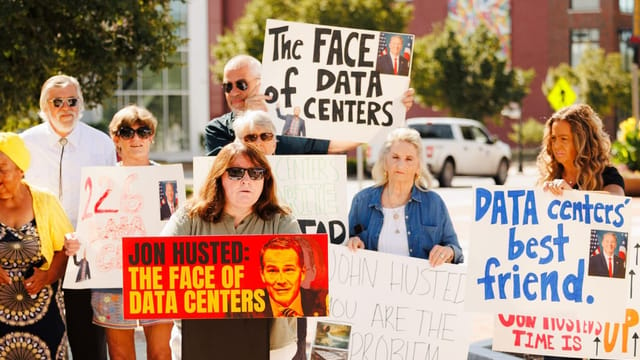
BOWLING GREEN, Ohio — With Meta building an $800 million artificial intelligence data center outside Bowling Green, Wood County residents rallied this week against U.S. Sen. Jon Husted over his years of promoting data center development across Ohio.
Wood County auditor candidate Mark Wongrowski joined residents at the Bowling Green demonstration, where protesters held signs calling Husted “the face of data centers” and criticized the Republican senator’s record as lieutenant governor.
“Senator Jon Husted spent years as our lieutenant governor rolling out the red carpet for data centers,” Wongrowski said. “Instead of taking responsibility, he told Ohioans, ‘when we look in the mirror, we are the problem.’”
“Senator Husted wants you to believe that your electricity bills are your fault,” Wongrowski continued. “Let’s elect leaders who will work for Wood County families and not the corporations cutting backroom deals.”
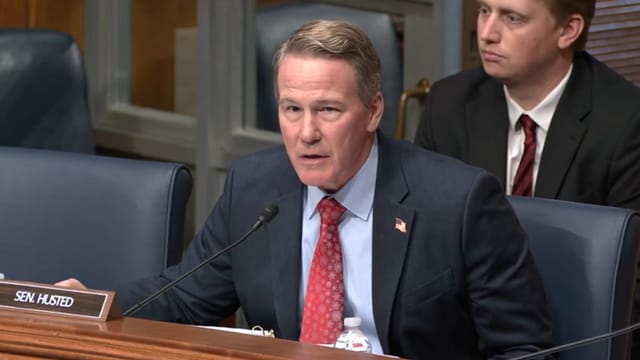
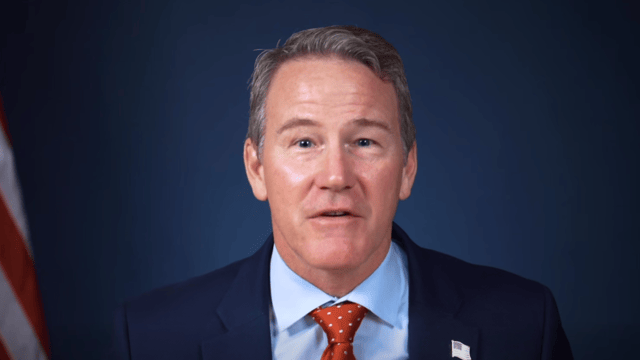
Husted served as Ohio’s lieutenant governor from 2019 until January 2025 and became one of the DeWine administration’s most vocal boosters of large technology and data center investments.
When Amazon Web Services announced plans in 2023 to invest another $7.8 billion in Ohio data centers, Husted said the expansion would position Ohio at the center of the artificial intelligence industry.
“This positions Ohio as a critical location for the most discussed technology in the world, artificial intelligence,” Husted said at the time.
A year later, the DeWine-Husted administration announced another $10 billion AWS data center expansion.
“Artificial Intelligence and data centers are crucial to America’s economic superiority,” Husted said in the December 2024 announcement.
The data center fight has now reached Husted’s former political backyard in northwest Ohio.
Meta announced in April 2025 that it was building a 715,000-square-foot data center in Middleton Township, just outside Bowling Green. The company says the facility represents an investment of more than $800 million and will be optimized for artificial intelligence workloads.
The project sits on a 280-acre site and is expected to support about 100 permanent jobs after construction, according to JobsOhio.
The Meta project was publicly announced several months after Husted left the lieutenant governor’s office. But it arrived after six years in which Husted and the DeWine administration openly promoted Ohio as a destination for the data center and artificial intelligence industries.
Bowling Green resident Beth Cole said the consequences are now landing in communities like hers.
“Jon Husted helped bring data centers to Ohio and has continued to vote for tech billionaires’ interests — I’m one of the unfortunate people that is forced to have a data center being built in my backyard because of it,” Cole said.
Cole also blasted comments Husted made this summer when discussing why demand for data centers has grown.
During a July interview, Husted argued that consumers themselves create demand for data centers by using internet-connected products and services.
“We, the people, have created the demand for these data centers because we use all of these digital products that it processes, and if we don’t want them, then don’t use them,” Husted said. “I mean, you can go back to the bunny ear antenna on your TV — you don’t need a data center. But if you’re connected to a wire, you’re using the data center. So, understand, like, when we look in the mirror, we are the problem.”
The comments were also documented by the Ohio Capital Journal, which reported that Husted played a significant role in attracting several billion-dollar data center projects while lieutenant governor.
“It is incredibly disrespectful that Jon Husted has now decided to blame data center development on Ohioans by telling us to look in the mirror because we are the problem,” Cole said at the Bowling Green rally.
Another Bowling Green resident, Maria Simon, said her own electric bill had climbed sharply over the past year.
“This data center is affecting all of us,” Simon said. “Last July, my electric bill was $29. This year, it’s $130. It’s absolutely frightening.”
Simon’s individual bills do not establish that data centers caused the increase. But electricity affordability and the massive new power demand created by data centers have become statewide issues.
A June analysis by Third Way estimated that total electricity costs for an average Ohio household could approach or exceed $800 between June and September, compared with $682 the previous summer. The report cited growing data center demand alongside manufacturing, electrification and insufficient new power generation as drivers of record electricity demand.
Ohio’s own consumer advocate has raised the same concern. The Office of the Ohio Consumers’ Counsel says the growing number of data centers is placing additional stress on the state’s electric grid and “could cause utility bills to go up for all Ohioans.”
The Public Utilities Commission of Ohio has also begun imposing protections designed to keep ordinary customers from absorbing costs created by large data center loads. In August, the commission ordered additional safeguards for AEP Ohio customers, saying it wanted to ensure other ratepayers were not stuck with costs associated with serving data centers.
Husted has changed his emphasis as public opposition to data centers has grown.
In July, he introduced the Ratepayer Protection Act, which would require states to consider standards aimed at making large electricity users pay for the new generation, transmission and grid infrastructure needed to serve them.
“We must do that without passing the costs on to working families and small businesses,” Husted said when announcing the legislation.
He has not abandoned support for the industry. Husted continues to argue that artificial intelligence and data centers are important to the economy and national security while saying the companies should bear the infrastructure costs created by new projects.
That shift has become a central issue in his race against Democratic U.S. Senate nominee Sherrod Brown. Brown has repeatedly attacked Husted’s record on data centers, while Husted has defended continued development with additional ratepayer protections.
For the residents gathered in Bowling Green this week, the debate is no longer centered on projects hundreds of miles away in central Ohio.
One of the newest projects is being built in Wood County.