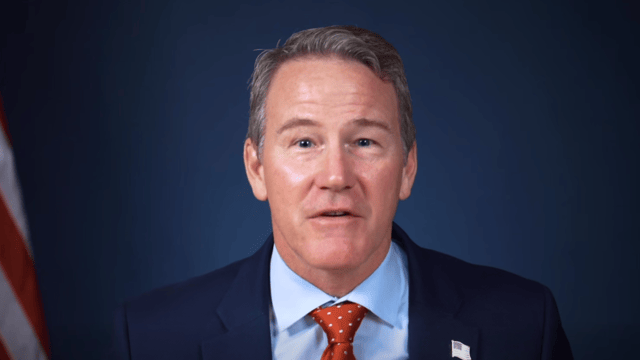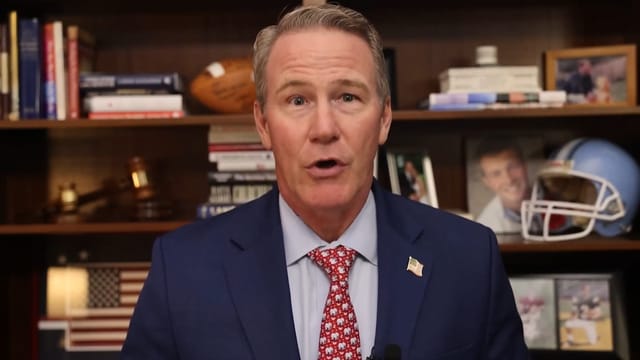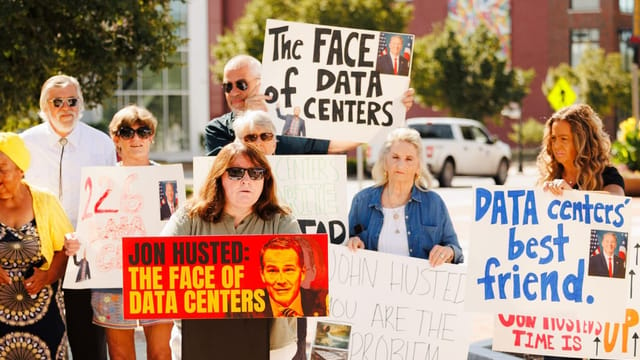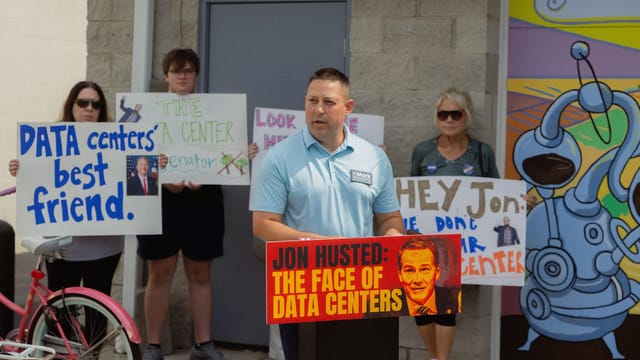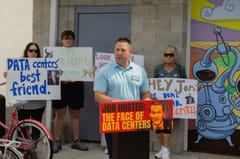
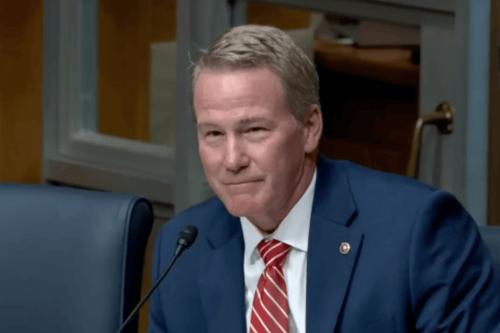

In July, Ohio Republican Sen. Jon Husted introduced the Ratepayer Protection Act, a bill that he says will help protect consumers from the potential harms of large-scale data centers. Critics say the measure has the support of AI companies, including several donors to Husted’s reelection campaign, because it does not go far enough in protecting those consumers.
Husted, who was appointed by Republican Gov. Mike DeWine to the Senate when J.D. Vance left to become vice president, faces former Democratic Sen. Sherrod Brown in the Nov. 3 election.
As Ohio’s lieutenant governor from 2019 to 2025, Husted oversaw deregulation efforts and supported tax incentives that helped spur data center construction in Ohio, which, according to the Pew Research Center, is among the states with the most data center construction in the country.
Husted said on introducing the bill that it would protect small businesses and families from having to pay more for electricity that would be used by data centers. “If America wants to lead the world in AI and strengthen our national security, we have to build the energy infrastructure to support it,” he said in a press release. “But we must do that without passing the costs on to working families and small businesses. The Ratepayer Protection Act would keep America globally competitive while protecting Ohioans and Americans from higher electricity bills.”
According to Husted’s press release, “The Ratepayer Protection Act would require states to consider establishing standards for states and Public Utility Commissions when connecting large electricity users—such as data centers—to the grid.” States already have the authority to adopt laws regulating the development of data centers, and Husted’s bill would not require them to do so.
Husted’s bill has been endorsed by some of the largest tech companies. A Microsoft executive told Politico in June that the bill is “an important step to help ensure American families are protected from rising electricity costs as demand for energy continues to grow.” Google told the outlet that it was “a positive step toward ensuring that all data center operators follow Google’s lead and safeguard Americans from costs associated with development.” An Amazon data center official told Politico it supports the idea of the bill.
However, Food & Water Watch, a nonprofit that opposes AI data centers, has criticized Husted’s bill as a scam that would not actually protect ratepayers. “The truth is, this bill will help protect utility company profits and has no guarantees of any savings for the public,” it said in a Sept. 25 post.
According to Federal Election Commission records, Husted’s 2026 Senate campaign has received $10,000 from Google’s corporate PAC, $6,500 from Amazon’s, and $3,500 from Microsoft’s. None of the companies immediately responded to requests for comment for this story.
Kent Smith, the top Democrat on the Ohio state Senate Energy Committee, told the Ohio Independent, “It doesn’t strike me that this would meaningfully protect the public from the true costs that the data centers bring to communities and bring to ratepayers.” Asked what would be a more useful federal approach to the issue, he pointed to a stronger bill that would mandate that data centers foot the bill for higher energy costs, transmission infrastructure, and water usage and that they protect water quality.
“Federal legislation oftentimes is the floor, the minimum standards. But the Ratepayer Protection plan doesn’t even establish that,” he said. “It’s a showhorse, not a workhorse.”
Asked to comment for this story, a Husted spokesperson replied in an email, “We are not going to lend credibility to the premise of your inquiries.”