Ohio Republicans are turning on one another after losing the governor’s race, a U.S. Senate seat and their supermajority in the Ohio House, with a fight over Speaker Matt Huffman’s leadership now drawing open attacks between conservative activists and incumbent lawmakers.
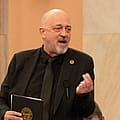
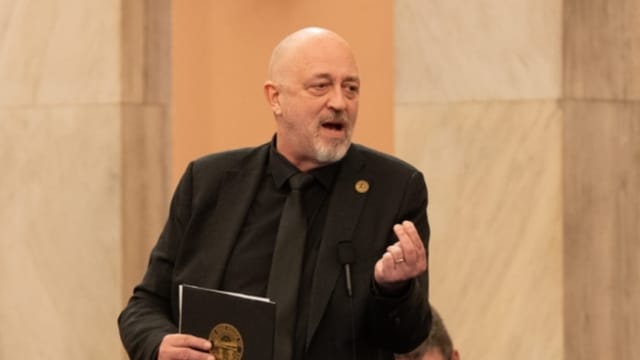
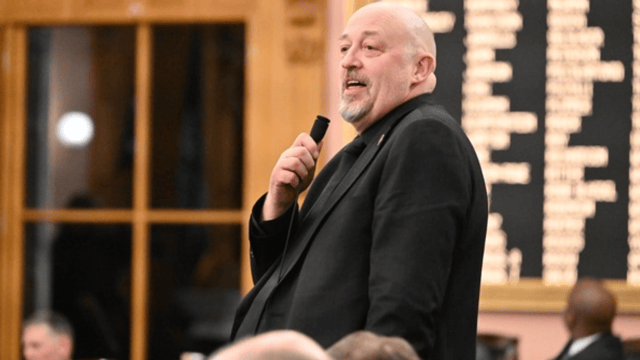
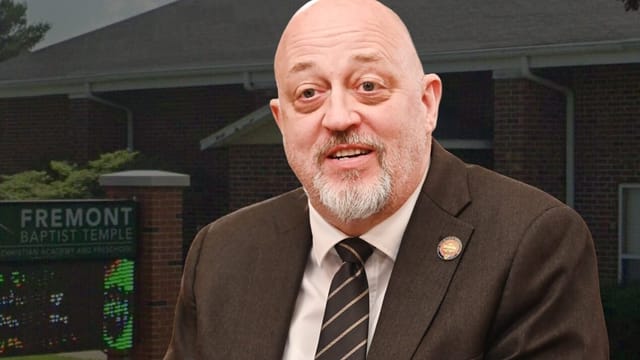
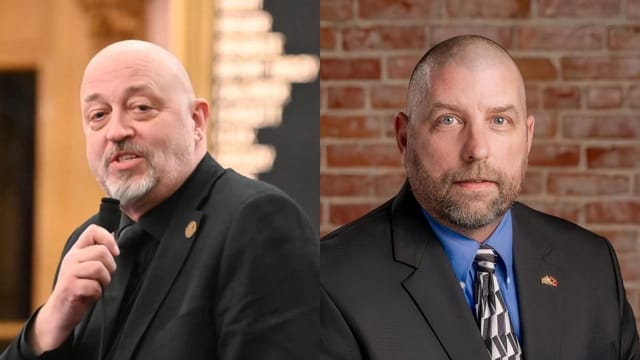
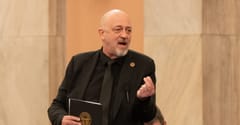
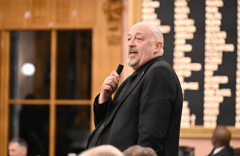
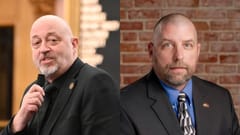
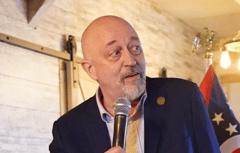
State Rep. Gary Click, R-Vickery, entered the dispute Friday by mocking Marcell Strbich, a retired Air Force lieutenant colonel and former Republican secretary of state candidate who called for Huffman’s removal following the election losses.
“Try winning an election before pretending to be an expert,” Click wrote on X.
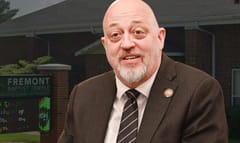
Eric Watson, the Republican who came within 600 votes of defeating Click in May, fired back, accusing the incumbent of following Huffman’s political direction, benefiting from establishment campaign support and disregarding constituents on data-center legislation. Watson defeated Click outright among Seneca County Republican primary voters before losing the two-county contest.
“Representative Gary Click will you ever learn to stand up for the majority of constituents?” Watson wrote Friday on his campaign Facebook page.
“You have aligned with everything that Speaker of the House Matt Huffman wanted you to, and now you’re bashing a former Lt Colonel 48 hrs after Veterans Day that understands far more about the Constitution, than you ever may.”
The confrontation is the latest public rupture among Ohio Republicans following the Nov. 3 election, as Huffman faces opposition from within his own party ahead of a leadership vote next week.
Republicans blame Huffman for election losses
Strbich’s criticism began Friday morning with a post demanding a change in House leadership. He accused Huffman of supporting $600 million in public funding for a new Cleveland Browns stadium, spending millions against Republican candidates in primary elections and allowing conservative legislation to die.
“After losing 12 seats in the Ohio House and a disastrous election outcome for Republicans, How many reasons do we need to CHANGE THE SPEAKER?” Strbich wrote.
Republicans entered the election controlling 65 of Ohio’s 99 House seats. As of Friday, Democrats had captured eight Republican-held districts, with four additional races still uncalled, according to unofficial election results. The Republican majority survived, but the party fell below the 60 seats needed to override a governor’s veto without Democratic support. Strbich’s claim of 12 lost seats included races that had not been decided.
The legislative losses followed Democrat Amy Acton’s defeat of Republican Vivek Ramaswamy for governor and former Democratic U.S. Sen. Sherrod Brown’s victory over Republican incumbent Jon Husted. The results ended nearly two decades of Republican control of the governor’s office and left the incoming Democratic administration facing a Republican legislature without its previous veto-proof House majority.
Strbich’s criticism reflects a broader Republican challenge to Huffman that extends into the House caucus itself.
State Rep. Ron Ferguson, R-Wintersville, has accused Huffman of working against Republican incumbents in primary elections and failing to protect the party’s legislative seats in November. Ferguson told News 5 Cleveland that Republican leadership had backed challengers to sitting lawmakers, including himself and former Speaker Jason Stephens.
Asked who should lead the House, Ferguson answered: “Anybody but the guy that is now.”
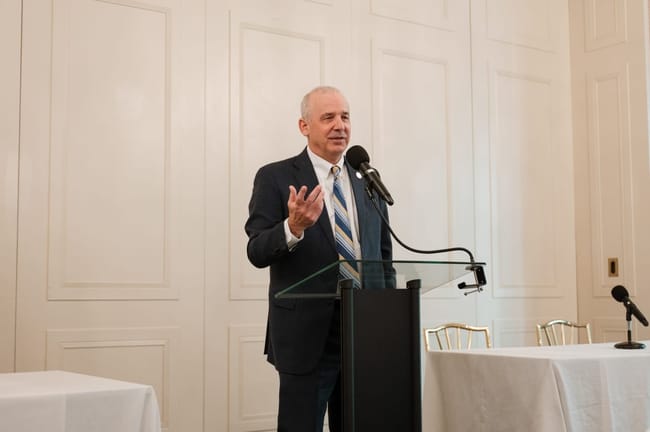
Huffman, a Lima Republican who became speaker in January 2025, has rejected suggestions that his leadership is seriously threatened. Speaking to reporters Tuesday, he said he had personally contacted approximately 80% of his Republican caucus and secured their support.
“There’s probably about ten or 12 who want to have other conversations. I’m sure there are going to be two or three people who don’t want to vote for me,” Huffman said, according to the Statehouse News Bureau. “But I don’t think it’s close.”
Stephens, who became speaker in 2023 with Democratic votes and support from a minority of House Republicans, has signaled interest in potentially reclaiming the position. The Republican caucus is expected to choose its leadership nominee next week, with the full House formally electing a speaker when the new General Assembly convenes in January.
Click’s primary opponent reopens their bitter feud
For Click, Friday’s confrontation brought renewed attention to a Republican primary in which nearly half of his party’s voters attempted to remove him from office.
Watson, a first-time candidate from the Tiffin area, defeated Click in Seneca County by 3,228 votes to 2,724, carrying the county with 54.23% of the Republican primary vote, according to the official May 5 canvass. Click survived through his stronger performance in Sandusky County, where he won 4,160 to 3,056. The certified districtwide result was 6,884 votes for Click and 6,284 for Watson.
Click subsequently defeated Democrat Aaron W. Jones in the November general election, securing a fourth term representing Seneca and Sandusky counties.
Watson’s Friday criticism centered on the political assistance Click received during the primary and his relationship with Huffman.
“You don’t have much room to speak as far as winning elections as you had full establishment endorsement during a Primary election from your friend Speaker Matt Huffman!” Watson wrote.
He accused Huffman of helping organize fundraisers for Click that involved the Ohio House Republican Organization, the political committee supporting Republican House candidates. Watson further alleged that Republican leadership intervened in primary contests throughout Ohio to protect established officeholders against grassroots challengers.
Click’s financial relationship with the House Republican campaign organization is documented. Campaign-finance records previously examined by TiffinOhio.net showed that Click’s campaign transferred $45,000 to the Ohio House Republican Organizational Committee during the primary period. The committee subsequently reported providing $38,611.62 in support to Click’s campaign.
Click reported $69,461.37 in contributions through primary day, compared with $17,488.05 in contributions reported by Watson. Their reported campaign expenditures were $53,662.58 and $42,128.99, respectively. Watson also contributed $21,000 of his own money to finance his challenge.
The financial records establish the campaign organization’s substantial involvement in Click’s primary effort. Watson’s additional allegation that Huffman personally helped arrange particular fundraisers is separate from those documented transactions.
The relationship between Click and Watson had already deteriorated well before Friday’s exchange.
In October, TiffinOhio.net published a recording in which Click said he might have voted for Democrat Aaron Jones rather than Watson if Watson had won the Republican nomination.
“If it was between Eric and Aaron, I might have voted for Aaron,” Click said in the recording, laughing, “because Eric’s a nut.”
Click then added: “Don’t you repeat that.”
Watson had already refused to endorse Click following their primary, citing disagreements over data centers and government overreach. His latest statement continued that conflict after Click’s general election victory.
Data-center fight exposes deeper Republican divisions
Watson devoted much of his response to Click’s legislative record, particularly the growing controversy over data-center development across Ohio.
He criticized Click and state Rep. Kellie Deeter, R-Norwalk, for cosponsoring and voting for House Bill 116, the Ohio Blockchain Basics Act, which addresses cryptocurrency mining, taxation and the regulation of digital assets. The legislation passed the House in 2025 and remains in a Senate committee.
Watson argued that the legislation could undermine local authority over cryptocurrency mining operations and accused Click and Deeter of supporting an industry-friendly approach while residents were demanding stronger controls on data-center development.
He also attacked House Bill 646, legislation Click and Deeter introduced in January to create a Data Center Study Commission. Watson criticized the original study-commission approach as inadequate and said residents had sought a moratorium on new development.
The House passed HB 646 in March, after which the Senate substantially rewrote it to establish broader regulations covering electricity costs, tax incentives, water use and environmental requirements. The Senate reported the revised legislation in June but later returned it to committee. It has not become law.
Watson contrasted those proposals with House Bill 983, the Data Center Accountability and Citizen Protection Act, sponsored by Republican Reps. Jennifer Gross and Michelle Teska. The legislation would require local voter approval for covered data-center projects and impose requirements addressing electricity generation, water use, environmental protections and financial accountability.
Click is not among the bill’s listed cosponsors. The proposal remains in the House Energy Committee.
“As of now you both have not declared support for HB 983 Data Center Accountability and Citizen Protection Act,” Watson wrote, referring to Click and Deeter.
The dispute comes as Ohio voters have demonstrated substantial opposition to large data-center projects. In the Nov. 3 election, communities across the state approved restrictions on the facilities or rejected development proposals, including voters in Upper Sandusky, Defiance and Oregon. Voters in Monroeville overwhelmingly rejected an advisory ballot measure supporting data-center development.
Those results have given renewed prominence to local-control questions that Watson raised during his unsuccessful campaign against Click.
House leadership vote approaches amid Republican backlash
The internal Republican struggle is unfolding as lawmakers prepare for a major shift in state government under Acton, who will take office in January.
Huffman has maintained that Republicans retain substantial legislative authority despite their House losses. At the same time, some members are openly challenging his handling of the election and the Republican primaries that preceded it.
The divisions carry particular consequences for Huffman’s bid to retain the speakership. A fracture within the Republican caucus could allow Democrats to influence the final leadership vote, as they did in 2023 when Stephens defeated the Republican caucus’s preferred candidate with Democratic support.
Friday’s exchange demonstrated how those Statehouse divisions have reached the local level. Click’s attempt to discredit Strbich over his election record drew an immediate response from the Republican challenger who had nearly ended Click’s legislative career six months earlier.
Watson closed his lengthy Facebook post by turning Click’s own criticism back on him.
“IN HINDSIGHT REPRESENTATIVE CLICK, JUST BECAUSE YOU BARELY WON A PRIMARY ELECTION TO AN OUTSIDER DOES NOT MAKE YOU AN EXPERT!”