SANDUSKY, Ohio — The Erie County Board of Elections deadlocked 2-2 on Friday over whether to certify Caleb Stidham as the Republican nominee for Ohio House District 89, pushing the decision to Ohio Secretary of State Frank LaRose, whose ruling under state law is final.
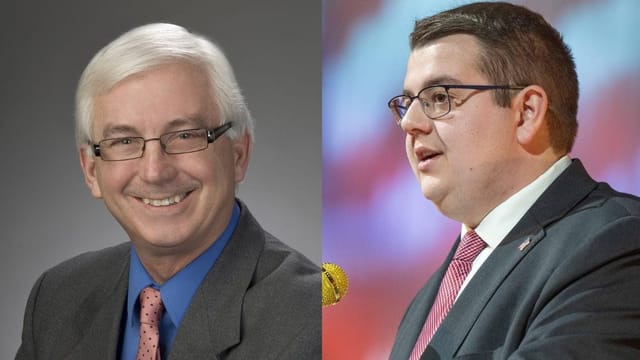
Board Chairman Edward J. Leonard, a Democrat, said he and fellow Democratic member MaryAnn Groot voted against certification because the Republican district committee that selected Stidham on Aug. 10 should have met in public, and because Stidham, who had applied for the vacancy himself, should have stepped away from the deliberations and the vote.
“After reviewing the circumstances of the Republican District Committee meeting at which Caleb Stidham was selected, I have concluded that the meeting was not conducted in accordance with Ohio law,” Leonard wrote in a position statement he read to the board before the vote and provided to TiffinOhio.net. “The meeting should have been an open public meeting. Additionally, because under Ohio law the committee members were public officials for this purpose, Caleb Stidham should have recused himself from deliberations and voting during the meeting.”
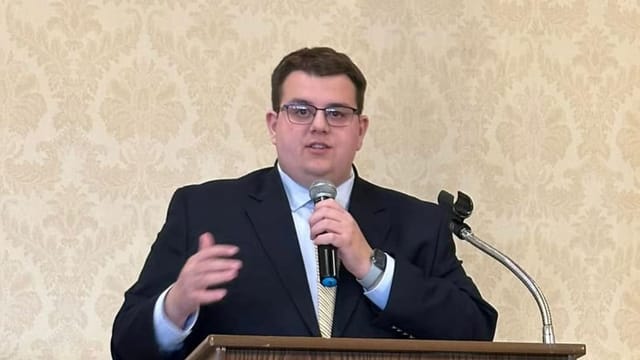
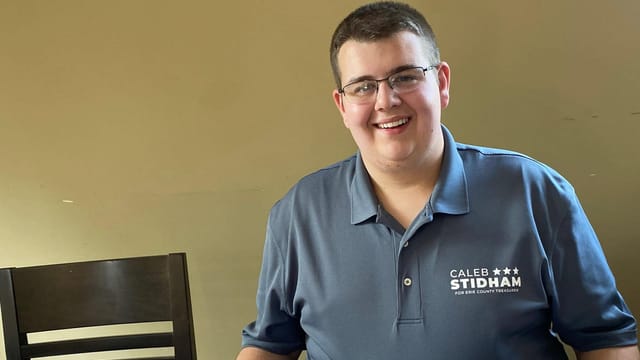
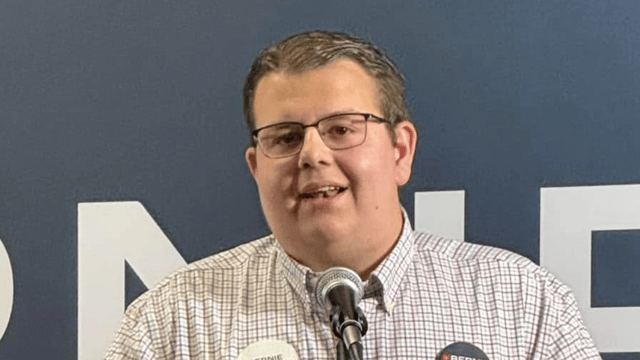
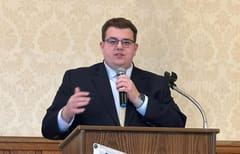
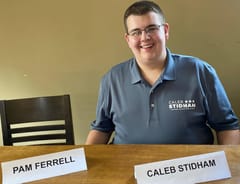
Stidham, the Erie County treasurer and chairman of the Erie County Republican Party, has publicly rejected the conflict-of-interest criticism. “There seems to be some confusion; there is no conflict of interest because I did not lead or chair the meeting that selected me as the candidate,” he told NBC4 in Columbus this week, before the board voted.
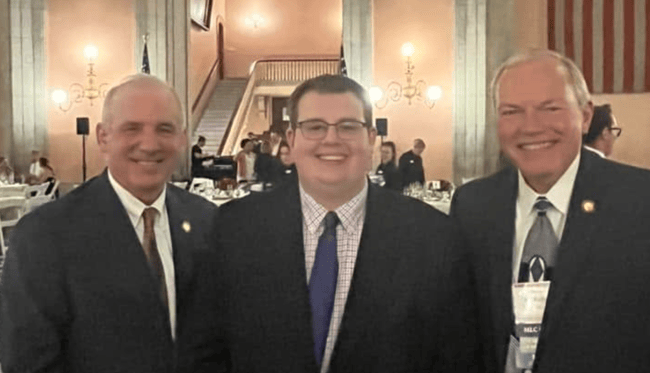
Stidham’s statement addressed who ran the meeting, not who voted in it. One of the six committee members, Ottawa County Republican Party Secretary Toni DeLuca, says he did both deliberate and vote.
“The Chair of Erie County, Caleb Stidham, was asked to leave when other candidates spoke,” DeLuca wrote in a letter released to the public. “However, he joined the committee for deliberations. I found it odd that a candidate for a position was given the right to deliberate on other candidates.” The committee took a voice vote, she wrote, and it was 4-2.
DeLuca wrote that Huron County Chairman Sven Stahl was chosen to chair the meeting because Stidham was a candidate, and that Stidham ran things until the session began. She described a process she found lopsided: “It is a flawed process that allows a candidate to vote for himself on a committee of 6 people.”
The board’s two Republican members, John C. Adams and Gary L. Smith, voted to certify. Leonard said in an interview that they took the position that the board’s job did not extend to the question he was raising — that the certificate had been notarized and filed on time, and that this was the limit of what the board should weigh.
Leonard said he put two questions to his colleagues before the vote. He asked whether it was correct that the committee meeting had not been an open public meeting, and he said Adams answered that it was not. He then asked whether the committee’s vote had been 4-2, and said Adams confirmed that as well.
What happens next
Ohio law gives the tie to the state’s chief elections officer. Under section 3501.11 of the Ohio Revised Code, when a county board splits and cannot reach a decision, the director or the chairperson must submit the matter to the secretary of state within 14 days. The secretary “shall summarily decide the question,” the statute says, “and the secretary of state’s decision shall be final.”
That puts the outside deadline at Aug. 28. Leonard said the board is moving faster than that. Director Alexander W. Jones asked at the meeting that the matter be expedited because of ballot preparation, Leonard said, and both sides agreed to have their written position statements to Jones by 9 a.m. Friday, Aug. 21, so he can forward them to the secretary of state that day.
Under the state’s election official manual, Leonard said, the members on each side of a tie write their own statement, and those statements, any evidence, and the minutes of the meeting where the tie occurred go to the secretary of state together. Leonard said his submission will be longer than the statement he read Friday, with full case citations added.
He described the choice in front of LaRose as binary: side with the two Republican members and certify Stidham, or side with the two Democrats, in which case Stidham would not be certified to the ballot. Asked what remedy would follow if the certification fails, Leonard said he was not aware of one and that it would take more research on his part.
Leonard also said he is not aware of anyone having filed a complaint with the Ohio Ethics Commission over the committee vote, or planning to, and that he believes he may have been the first person to raise the issue. On the notice question, he said he is accepting the certification’s statement that the required notice was sent.
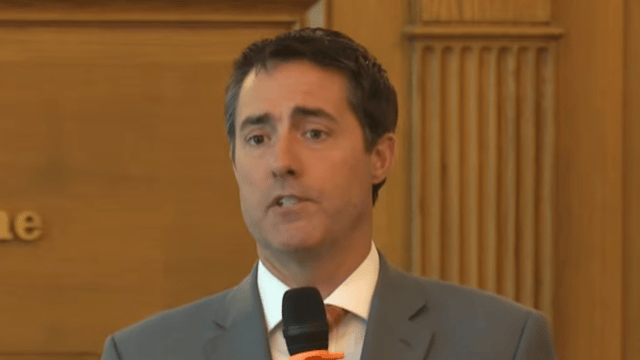
LaRose, a Republican, is not a neutral bystander in this year’s election. He is term-limited as secretary of state and is his party’s nominee for state auditor on the same Nov. 3 ballot the Erie board was voting on Friday.
How the seat came open
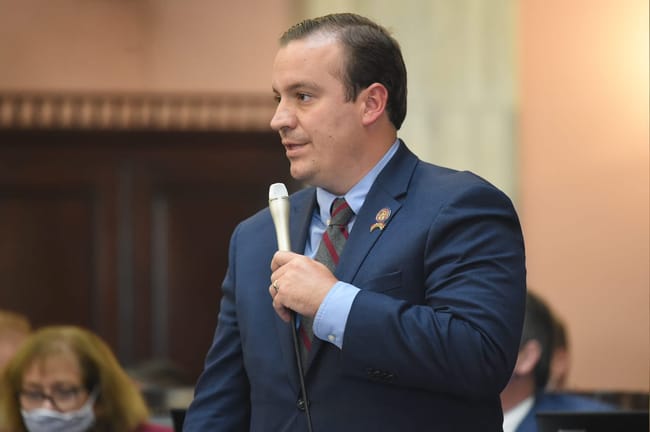
The vacancy dates to Aug. 4, when state Rep. D.J. Swearingen, R-Huron, delivered a letter to the Erie County board withdrawing from the November ballot after four terms, saying he was being considered for a new role and that continuing his campaign would not have been fair to voters.
Because House District 89 covers Erie, Ottawa and Huron counties — more than one county but fewer than all of them — state law handed the replacement decision to a six-member district committee made up of the chairperson and secretary of each county Republican central committee in the district. The statute requires the chairperson of the most populous county, which is Erie, to call the meeting and give members at least two days’ notice of its time, place and purpose. That chairperson is Stidham.
The committee met the afternoon of Aug. 10, hours before a 4 p.m. statutory deadline. Stidham was one of three applicants and one of six people entitled to vote. Republicans in the district, including Ron Coop and former state Rep. Steve Kraus, objected publicly before the committee met, calling the process rigged.
Leonard’s argument
Ohio’s Open Meetings Act generally does not reach political parties, which courts have described as voluntary associations governed by their own rules. Leonard’s statement turns on an exception: that a party committee performing a function assigned to it by statute is acting as a public body, and its members as public officials, for that purpose.
“Filling a vacancy created by the withdrawal of a candidate who has already been chosen by voters at a primary election is not a purely internal party matter, but is rather a public governmental function,” Leonard wrote. “The district committee is given the authority by statute to direct the board of elections who to put on the ballot in place of the withdrawn candidate.”
He pointed to the notice requirement in the vacancy statute as evidence that lawmakers intended an open meeting. “The fact that the statute dictates that notice of the time, place and purpose of the meeting be given is indicative of the fact that the meeting should be open,” he wrote. “The legislature would not require notice be given for a meeting that is not open to the public.”
Leonard drew a line between that and ordinary party housekeeping. “Examples of purely internal party matters include appointing members to central committee vacancies, selecting chairs, vice chairs and executive committee members, adopting by-laws, and endorsing candidates,” he wrote. He also noted that the same certification-under-oath process governs party central committees filling vacancies in countywide elected offices, which must be done in open session.
On the recusal question, Leonard wrote: “Based upon publicly reported accounts of the meeting, the vote on the certification of Caleb Stidham was 4-2 which would indicate that Caleb Stidham participated in the vote for his own certification in violation of Ohio Ethics rules.”
The tally was 4-2, and Stidham cast one of the votes. The breakdown was not available on Aug. 10, when the committee acted. Ohio’s vacancy statute contains no recusal requirement for a district committee member who is also an applicant, and it does not say who runs the meeting once it has been called.
DeLuca, who cast one of the two votes against, wrote that she is “confident the decision was made before we met, making the entire process meaningless,” and called for a new procedure. “This process was terribly flawed, and did not seem fair,” she wrote.
Leonard closed his statement to the board this way: “For these reasons, I will not be voting in favor of certifying Caleb Stidham to the ballot.”
The race
The Democratic nominee in House District 89 is Easton Retzke of Sandusky, who won his party’s nomination in the May 5 primary. Swearingen was unopposed for the Republican nomination in that primary and appeared on the ballot as DJ Swearingen.
The general election is Nov. 3.