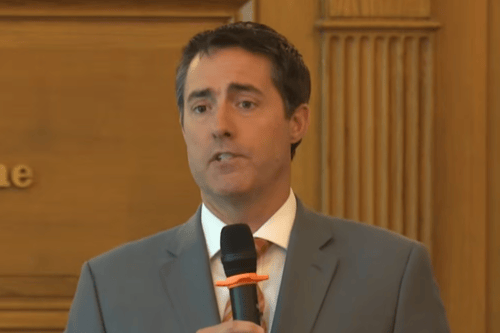
SANDUSKY, Ohio — Ohio Secretary of State Frank LaRose is scheduled to headline an Erie County Republican fundraiser Wednesday night supporting local GOP candidates — on the same day his office is collecting the final written arguments in a ballot dispute LaRose himself must decide involving the chairman of the Erie County Republican Party.
An invitation obtained by TiffinOhio.net advertises LaRose as the featured guest at the Erie County Republican Women’s Club’s “America’s 250th Birthday Bash” Wednesday evening at the Sandusky Yacht Club.
The invitation says the event is being held “in support of our Erie County candidates.” Admission is $50 per person, with sponsorship packages ranging from $250 to $1,000.
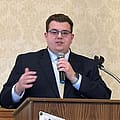
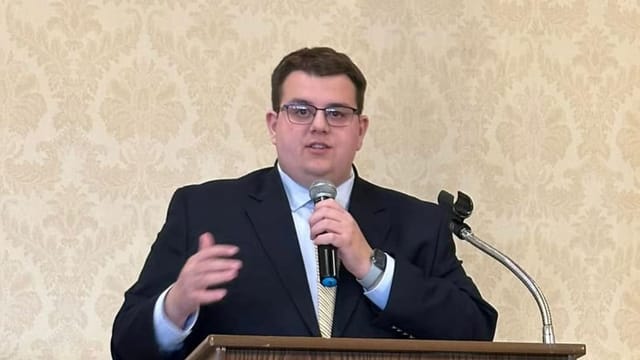
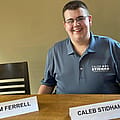
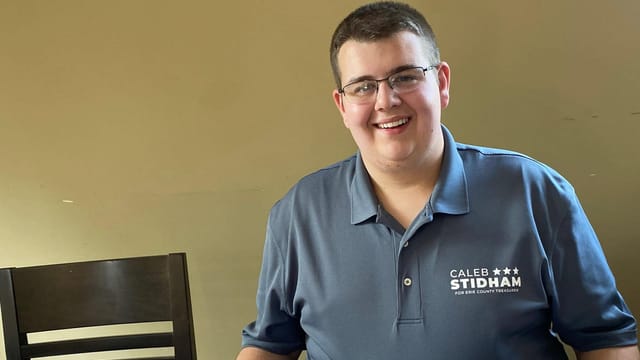
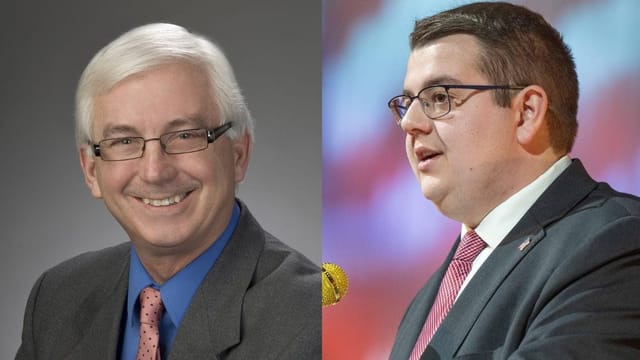
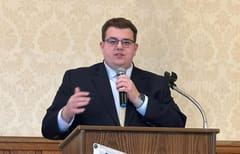
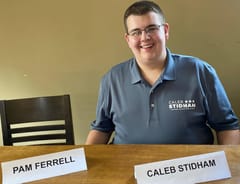
One of Erie County’s most prominent Republican candidates is Caleb Stidham — the Erie County treasurer, chairman of the Erie County Republican Party and the man a six-member GOP committee selected Aug. 10 to replace outgoing state Rep. D.J. Swearingen as the Republican candidate for Ohio House District 89.
Whether Stidham actually makes the November ballot is now up to LaRose.
The Erie County Board of Elections deadlocked 2-2 Friday over whether to certify Stidham, after Democratic members Edward J. Leonard and MaryAnn Groot argued that the closed-door meeting that selected him violated Ohio’s Open Meetings Act and that Stidham should not have been permitted to deliberate and vote on his own nomination.
Republican board members John C. Adams and Gary L. Smith voted to certify him.
Under Ohio Revised Code 3501.11(X), unresolved ties at county boards of elections are submitted to the secretary of state, who “shall summarily decide the question.” The secretary’s decision is final.
That places LaRose in the position of appearing Wednesday night as the featured guest at a Republican political fundraiser in Stidham’s home county while his office is actively considering whether Stidham will appear on the ballot.
LaRose’s office asked for the memos Wednesday
Leonard told TiffinOhio.net that LaRose’s general counsel contacted Erie County Board of Elections Director Alexander W. Jones earlier this week and asked the board members to submit their written position statements by the end of Wednesday.
The board had initially agreed after Friday’s deadlock to have the arguments submitted by 9 a.m. Aug. 21.
The Republican members submitted a two-page letter dated Aug. 18 asking LaRose to certify Stidham.
Leonard and Groot responded Wednesday with an 11-page memorandum asking LaRose to do the opposite.
The result is that the competing arguments in one of the most contentious Republican nomination fights in Ohio are arriving at LaRose’s office the same day he is scheduled to appear at a political fundraiser in the county at the center of the dispute.
LaRose is himself the Republican nominee for Ohio auditor this November. He is seeking another statewide office after two terms as secretary of state.
Fundraiser explicitly supports Erie County candidates

The fundraiser invitation does not identify individual candidates who will receive proceeds or explain how the money raised will be distributed.
But its stated political purpose is explicit: the event is being held “in support of our Erie County candidates.”
Stidham is both chairman of the county Republican organization and the party committee’s selected House District 89 candidate. The Erie County Republican Party’s own website currently lists him as its chairman and as chairman of its executive committee.
The organizational ties extend to the fundraiser’s host. Public promotion for the event identifies Melissa Pelletier as president of the Erie County Republican Women’s Club. The county Republican Party lists Pelletier as its secretary.
The Women’s Club and the Erie County Republican Party are separate Republican organizations, but the fundraiser is expressly promoting Erie County candidates and is led by a county party officer.
Stidham therefore stands to benefit politically from an event organized to support the county’s Republican candidates while the featured guest — LaRose — holds the final statutory authority over whether Stidham can become the certified Republican candidate for House District 89.
Republicans: Certify Stidham
Adams and Smith’s memo asks LaRose to reject the objections raised by Leonard and Groot and resolve the tie in favor of Stidham.
The Republican members argue that Ohio’s Open Meetings Act does not apply to a political party committee replacing a candidate under R.C. 3513.31.
Ohio courts have held that political party committees can become public bodies when state law authorizes them to fill an actual vacancy in public office. Adams and Smith argue that replacing a candidate on the ballot is fundamentally different because the committee is not appointing anyone to public office.
“Candidate replacement is fundamentally different,” they wrote.
Their memo also argues that the elections board is not the proper forum to adjudicate an alleged Open Meetings Act violation and says any such dispute should instead be brought in court.
Adams and Smith separately reject the argument that Stidham was prohibited from voting for himself.
“There is no legal foundation for the claim that a member of a district committee is conflicted from voting for him or herself,” they wrote.
The Republicans asked LaRose to reject what they called “dubious allegations of violations of laws that do not apply to this candidate-selection process” and certify Stidham.
Democrats: A secret vote to put a candidate on the ballot
Leonard and Groot’s filing presents the dispute very differently.
They tell LaRose that the question before him is whether to certify “a replacement nominee who voted for himself in a 4-2 vote at a secret, closed door meeting of the selection committee.”
The Democratic members argue that replacing a nominee already selected by voters in a primary is not merely an internal Republican Party matter.
State law dictated who sat on the six-member committee, who called it, how much notice members received, the vote required to select a replacement and the requirement that the result be certified in writing and under oath to election officials.
Leonard and Groot argue that those statutory powers transformed the committee into a public body for that limited purpose, just as Ohio courts have done when political committees exercise state-granted authority to fill vacancies in elected offices.
“Filling a vacancy on the ballot is not a ‘purely internal party affair,’” they wrote.
If the committee was acting as a public body, Leonard and Groot argue, the meeting should have been open and Stidham should have recused himself from deliberations and voting on his own candidacy.
Groot says she was turned away
Groot also submitted an affidavit describing what happened when she tried to attend the Aug. 10 meeting.
She said she arrived at the county administrative building that houses the elections board at the scheduled meeting time and told the two Republican elections board members present that she believed the district committee meeting was required to be open.
“I was told by the two Republican board members that the meeting was a closed meeting, not an open meeting,” Groot wrote.
She said she was directed to a nearby room to wait for the result.
There is no dispute in the competing filings that the meeting was closed. The legal disagreement is over whether Ohio law required it to be open.
Stidham voted in the meeting that selected him

Stidham was one of three Republicans seeking the nomination — and one of the six people given the power to decide who received it.
As TiffinOhio.net reported after the Aug. 10 selection meeting, Stidham left the room while the other candidates made their cases but returned for the committee’s deliberations and participated in the vote.
Stidham won 4-2.
Republicans have since openly fractured over the result. GOP consultant Jon Paul Morrow said Stidham should have abstained and warned the nomination could cost Republicans the district.
Former state Rep. Steve Kraus escalated that fight Tuesday, launching a write-in campaign against Stidham and urging Republicans to ask LaRose not to certify him.
Stidham has defended the process, arguing previously that he did not chair or lead the committee meeting because he was a candidate. Huron County Republican Chairman Sven Stahl presided instead.
Leonard and Groot say that does not resolve the conflict question. Their memo argues that if the committee was a public body, Stidham’s status as an ordinary voting member rather than chairman would not permit him to participate in a decision involving his own candidacy.
One decision, two roles
The legal question now belongs to LaRose.
Adams and Smith say the Republican committee was entitled to meet privately, Stidham was entitled to vote and the elections board had no authority to reject the nomination over the objections raised.
Leonard and Groot say the committee exercised a state-created public function, illegally closed its doors and allowed Stidham to participate in selecting himself.
Ohio law makes LaRose the final decision-maker on that dispute.
And Wednesday evening, while those arguments are being submitted to his office, LaRose is scheduled to take the stage at the Sandusky Yacht Club as the featured guest of a Republican fundraiser whose invitation says exactly who the night is intended to support:
“Our Erie County candidates.”