
After leading the Ohio Secretary of State’s Office since 2019, Republican Frank LaRose is setting his sights on a new statewide executive office in the 2026 Election: Auditor of State.
In announcing his campaign for state auditor, LaRose said that he plans to bring the same “focus on transparency, efficiency, and accountability” he says he has as Secretary of State to the auditor’s office.
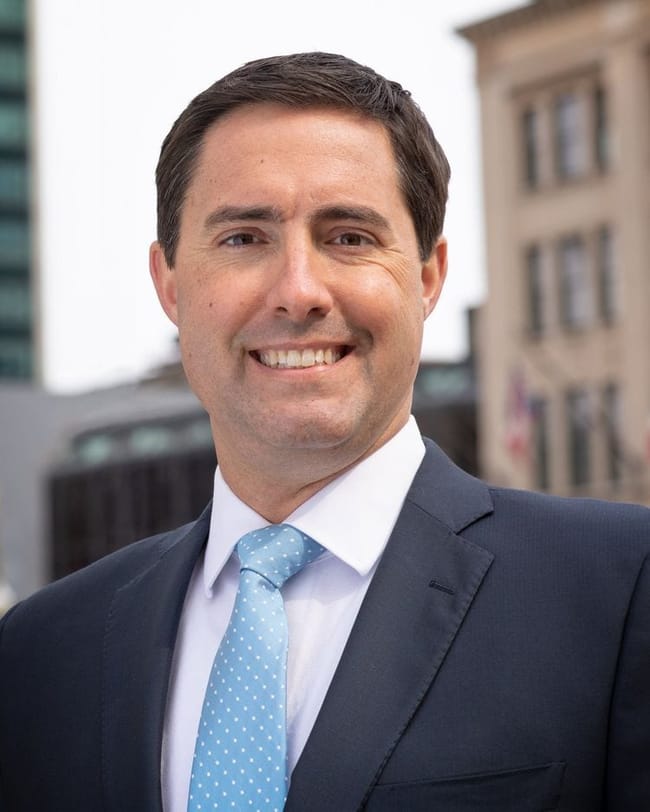
The Ohio Capital Journal made multiple requests for an interview with the Republican former state senator and current secretary of state. Requests made both through his campaign website and directly to a campaign communications representative went unanswered.
During campaigns for reelection to his secretary of state seat, LaRose touted the support of President Donald Trump, and he currently has the endorsement of the Ohio Republican Party in his bid for auditor of state.
LaRose attempted to gain a seat in the U.S. Senate in 2024, but came in third in a Republican primary, behind fellow former state senator Matt Dolan, and the winner, now-Ohio U.S. Sen. Bernie Moreno.
The auditor of state is an elected statewide executive office that works as a check for local governments, like cities, schools, public libraries, and state boards and commissions.
Performance audits are regularly conducted by the auditor of state to ensure local entities are maintaining clean financial books, to investigate potential fraud, and to assist governments in coming back from financial issues.
The state auditor also sits on the Ohio Redistricting Commission alongside the governor and secretary of state, as well as four lawmakers including one member from each party from each chamber of the legislature.
LaRose will face Maple Heights Mayor Annette Blackwell in the Nov. 3 general election. Blackwell had a career in banking before she became mayor in 2014. Amid her tenure as mayor, she helped bring the city out of fiscal emergency, working closely with the auditor’s office as she did so.
LaRose credits the leader of his Boy Scout troop as the first inspiration in his life of service, a military veteran who led LaRose to join the U.S. Army. Because of his military service, LaRose didn’t go to college until later in life, but he sees that as a positive.
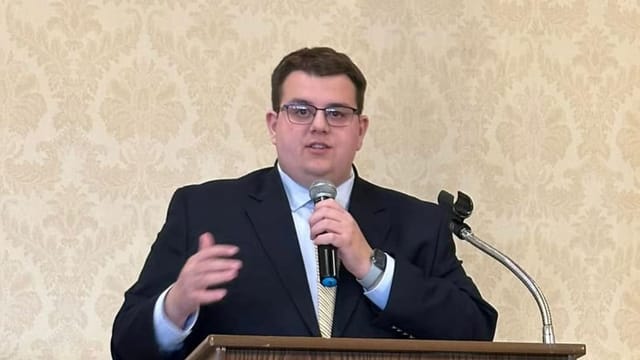
“I guess I’m glad I knew myself well enough at that point to know that I maybe wouldn’t have been the most serious student at 18 years old, but I was a serious student when I did finally go to college in my late 20s,” LaRose told a gathering of the Akron Press Club in May.
His run for the auditor’s office comes at a time when he says government agencies and other entities need to work on regaining the public’s confidence.
“Trust is at an all-time low in institutions of all kinds: the government, the churches, the press, businesses, civic organizations,” LaRose said in his press club speech. “People are not as trusting of those institutions as they once were, and in some ways that’s well-founded.”
But in other ways, he said that lack of trust is held up by a “chaotic information ecosystem,” where access to information, true or false, good or bad, is always available in bulk.
“We’ve got more access to information than we’ve ever had … but in so many ways are more misinformed than we’ve ever been,” the secretary of state said in May.
The auditor’s role is to “make sure that taxpayers are empowered with accurate information about how their local, county, and state government entities are operating,” according to LaRose.
The secretary supports efforts to battle fraud, specifically pointing to allegations of Medicaid fraud and other topics that have come up in the headlines over the past year.
The auditor’s office wouldn’t be investigating individuals for certain fraud crimes, but instead is tasked with “going after public officials that are engaging in fraud,” as LaRose put it to the press club.
Other agencies like the Ohio Attorney General’s Office look into individual allegations of fraud, and the legislature and the governor’s office need to work together to maintain enforcement models that prevent fraud.
“There’s a whole-of-government approach, if you will, that needs to be taken as it relates to dealing with this,” LaRose said.
As secretary of state, LaRose made headlines as a member of the Ohio Redistricting Commission, which spent the better part of four years attempting to redraw Statehouse and congressional district lines, with multiple maps rejected by the Ohio Supreme Court as unconstitutional.
Part of his role as chief elections officer is to head up the Ohio Ballot Board, which saw contentious hearings and criticism over board-approved ballot language for a constitutional amendment on abortion rights, and a proposed amendment to reform the redistricting commission, with critics saying the ballot board was putting its thumb on the scale with biased and confusing language.
LaRose led the charge to attempt to change the threshold for voters to pass constitutional amendments from a simple majority to 60%, but the proposal was rejected by Ohio voters.
LaRose also supported legislation last year to remove the absentee ballot grace period in Ohio and invalidate ballots that arrive to their boards of election after Election Day.
As secretary of state, he has pledged to crack down on voter fraud, creating an “Election Integrity Unit.” At the same time, he has made it clear in various public comments and numbers from his office that even potential cases of voter fraud, let alone actual proven cases, are rare in Ohio. In 2024, an audit LaRose did of noncitizen voter registration rolled in naturalized citizens, causing confusion for those citizens who had taken the necessary steps to be registered.
Addressing the issue at the Akron Press Club, LaRose said voter fraud is “exceedingly rare, but it’s impactful when it does happen.”
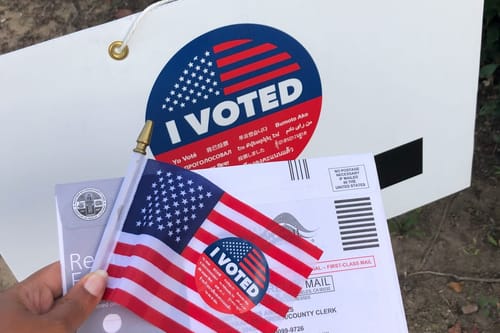
The general election in Ohio is Nov. 3, with early voting scheduled from Oct. 6 and Nov. 1. The voter registration deadline for the November election is Oct. 5, and requests for absentee ballots must be received by the boards of elections by Oct. 27.
Absentee ballots must be postmarked by Nov. 2, received in a dropbox by Nov. 3, or received by the boards of elections by Nov. 7.
This story is republished from the Ohio Capital Journal under a Creative Commons license. View the original article.