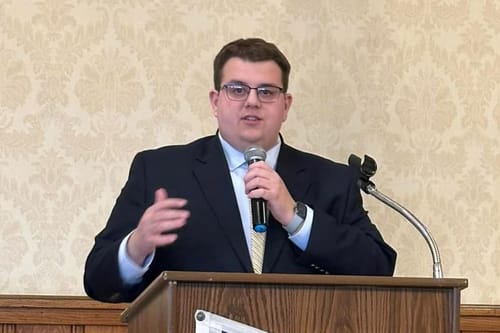
COLUMBUS, Ohio — The Ohio Supreme Court has allowed Republican Caleb Stidham to remain on the November ballot for Ohio House District 89 without deciding whether the closed-door meeting that produced his nomination violated state law, even as the court confirmed that Republican officials excluded the public and turned away a member of the Erie County Board of Elections who attempted to attend.
In a 37-page decision issued Thursday and announced Friday, the justices unanimously denied a request to remove Stidham from the ballot but divided sharply over the legal reasoning. Three justices relied on the challenger’s delay in filing suit, three would have dismissed the case because they believed he lacked standing, and Chief Justice Sharon Kennedy concluded that the challenger had not established a legal right to the requested relief.
The result leaves Stidham’s candidacy intact ahead of the Nov. 3 election while failing to produce a controlling ruling on whether the Republican committee was subject to Ohio’s Open Meetings Act when it selected him. The dispute arose after Republican officials used a process established by state election law to fill a vacancy on the ballot, then conducted the selection meeting without allowing the public inside.
Attorneys Gina R. Grandillo and Christopher E. Liebold, who represented Erie County voter Carl Koebel in the challenge, criticized the decision Friday, arguing that the court should have resolved the legality of the nomination process rather than denying relief without establishing whether the public had a right to observe it.
“We are disappointed in the Court’s decision because we believe this case presented an important opportunity to protect transparency in Ohio’s elections,” Grandillo said in a statement. “When political officials exercise authority granted to them by Ohio law, the public deserves to know that the process is lawful and accountable.”
Republican officials barred the public from nomination meeting
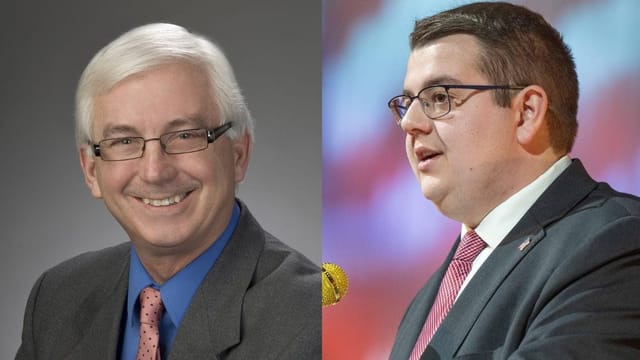
The dispute began after state Rep. D.J. Swearingen, who had won the Republican primary for the 89th House District, withdrew his candidacy on Aug. 4. His departure triggered a replacement process under Ohio election law, which authorizes a district committee composed of party officials from the counties within the district to select a new nominee.
On Aug. 10, Republican officials from Erie, Ottawa and Huron counties met to choose Swearingen’s replacement. The meeting was closed to the public. According to the Supreme Court’s findings, a member of the Erie County Board of Elections attempted to attend but was denied entry.
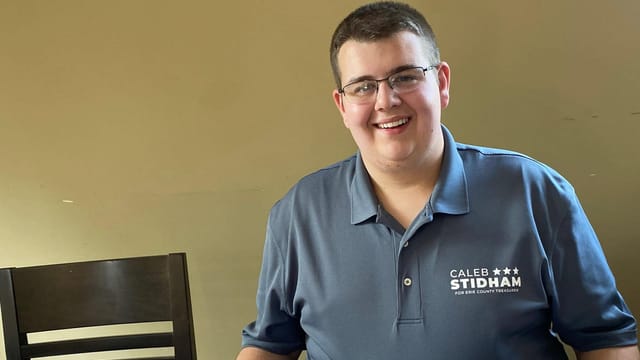
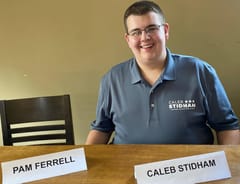
The committee selected Stidham, then chairman of the Erie County Republican Party and himself a member of the committee responsible for choosing the nominee.
Four days later, the Erie County Board of Elections divided 2-2 over whether to certify his candidacy. The two members who voted against certification objected to the closed meeting and to Stidham’s participation in voting on his own selection, according to the court’s opinion.
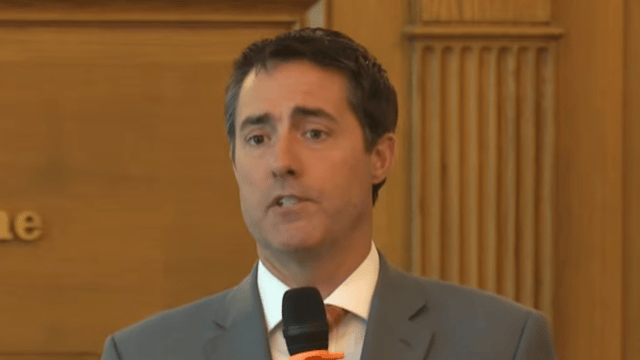
Ohio Secretary of State Frank LaRose broke the tie on Aug. 20, siding with the certification of Stidham and placing him on the general-election ballot.
Koebel filed his lawsuit on Sept. 14, challenging the certification and arguing that the committee was required to comply with Ohio’s Open Meetings Act. The law generally requires public bodies to conduct official business in meetings open to the public. The central dispute was whether that requirement extends to a political party committee exercising statutory authority to select a replacement candidate.
Three justices rejected the case over a 25-day delay
Rather than decide that question, the court’s principal opinion denied Koebel’s requested writ of mandamus under the doctrine of laches, which permits courts to reject claims when unreasonable delays prejudice the opposing parties.
Justices Patrick Fischer, Jennifer Brunner and Megan Shanahan joined that reasoning, finding that Koebel waited too long after LaRose’s Aug. 20 certification decision to bring his challenge.
The opinion cited the preparations election officials had already undertaken. The Erie County Board of Elections mailed 33 absentee ballots to military and overseas voters on Sept. 18, tested voting machines on Sept. 21 and submitted an order for 36,450 printed ballots on Sept. 23. The justices concluded that the 25-day delay prejudiced election officials and that an earlier lawsuit might have allowed the court to act before critical ballot deadlines.
“Because we deny the writ based on laches, we do not address the merits of Koebel’s claim,” the opinion stated.
Kennedy expressly disagreed with that reasoning. In a separate opinion, the chief justice concluded that election officials and Stidham had failed to demonstrate the material prejudice required to bar Koebel’s lawsuit. She noted that granting relief would not necessarily have required election officials to reprint ballots; the court could instead have ordered that votes for Stidham not be counted.
“The disagreement among the justices matters,” Liebold said in Friday’s statement. “The principal opinion treated the timing of the lawsuit as dispositive. Chief Justice Kennedy concluded that the necessary material prejudice had not been shown. That is a meaningful disagreement about whether the Court should have reached the substance of this dispute.”
Justices also divided over voters’ right to challenge elections
Kennedy nevertheless agreed that Koebel was not entitled to have Stidham removed from the ballot. She concluded that he had not established a clear legal right to the relief he sought or a corresponding legal duty requiring LaRose and the Board of Elections to provide it.
Her analysis distinguished the committee’s nomination of a candidate from a political party committee’s appointment of someone directly to a vacant public office. Kennedy reasoned that the election statute governing replacement nominees did not expressly require an open meeting and that LaRose’s duty when breaking the Board of Elections tie did not include investigating the committee’s proceedings.
That reasoning differed from the principal opinion, which declined to consider the merits of Koebel’s Open Meetings Act argument. Kennedy’s separate opinion did not establish a controlling interpretation of the Act’s applicability to district nomination committees.
Justices Patrick DeWine, Joseph Deters and Daniel Hawkins took a third approach. They agreed that Stidham should remain on the ballot but would have dismissed Koebel’s case because, in their view, he had not demonstrated the particularized injury necessary to bring the lawsuit.
Four justices rejected that position. Fischer, Brunner, Shanahan and Kennedy recognized Koebel’s standing as a qualified elector seeking to compel election officials to perform their legal duties.
Brunner devoted a separate opinion to defending that principle, warning that adopting DeWine’s interpretation could undermine nearly 150 years of precedent allowing voters to seek judicial enforcement of election laws. She criticized his approach as potentially restricting election-related activity protected by the First Amendment.
For Koebel’s attorneys, the disagreement over standing represented another significant aspect of the decision. Grandillo said her client deserved recognition for challenging the nomination process rather than accepting the certification without question.
“Carl Koebel remained faithful to his belief that election officials must be accountable to the people they serve,” she said. “He had the courage to challenge a process that raised serious transparency concerns, even when that meant taking on established political officials.”
Transparency dispute remains unresolved
Grandillo and Liebold maintained that the lawsuit concerned the public’s right to observe a legally prescribed process, not a demand that outsiders control the Republican Party’s selection of its candidate.
“This was not about allowing outsiders to choose a political party’s candidate,” Liebold said. “It was about whether the public could observe a selection process created and governed by Ohio law.”
The distinction is central to the case. Ohio election law explicitly establishes the mechanism for replacing a withdrawn nominee, including which party officials participate and how they certify the replacement. Whether that statutory role transforms the committee into a public body subject to open-meeting requirements was the question Koebel asked the justices to resolve.
The court’s ruling establishes that Stidham will remain on the November ballot. It does not establish that closing the nomination meeting to the public complied with the Open Meetings Act.
“We brought this case because we believe transparency is not optional when public authority is being exercised,” Liebold said. “That principle should apply consistently, regardless of the political party involved.”
House District 89 includes Erie and Ottawa counties and portions of Huron County. Voters there will decide the seat on Nov. 3 with Stidham’s name on the ballot, while the legal question surrounding the meeting that selected him remains unresolved by the Supreme Court’s controlling judgment.