
PORT CLINTON, Ohio — Six people will decide who appears on the November ballot as the Republican candidate to represent 175,000 residents of Erie, Ottawa and Huron counties. They have until 4 p.m. Monday. One of the six wants the job for himself — and two of the most powerful Republicans in Columbus are quietly working to get it for him, according to a person familiar with the discussions.
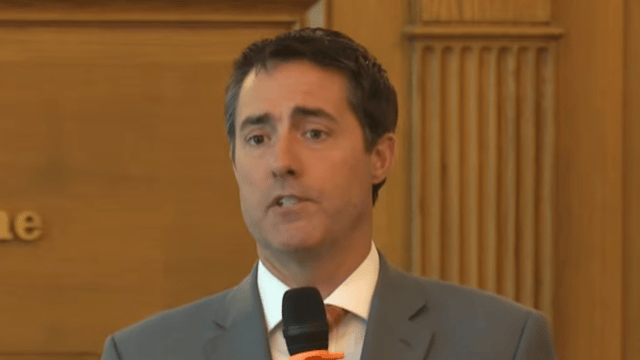
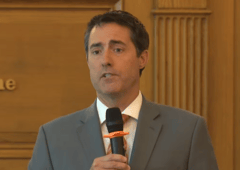
State Rep. D.J. Swearingen, R-Huron, delivered a letter to the Erie County Board of Elections on Tuesday, Aug. 4, withdrawing his candidacy for a fourth term in Ohio House District 89. Swearingen, who has held the seat since 2019, told the Ohio Capital Journal he is being considered for a new role that appears to involve the federal government, and that pursuing it while asking voters for another term would not have been fair to them.
His exit handed the choice of a replacement to a body most voters in the district have never heard of.
How six people came to hold the pen
Because House District 89 spans more than one county but fewer than all of them, section 3513.31 of the Ohio Revised Code hands the decision to a district committee made up of the chairperson and the secretary of each county Republican central committee in the district. Erie, Ottawa and Huron each get two seats. Six votes total.
The math is worth sitting with. Erie County had 75,622 residents at the 2020 census. Ottawa had 40,364. Under this statute, they carry equal weight. A majority of the members present can name the nominee, which means as few as four people showing up and three of them agreeing could settle who appears on the ballot for a district of roughly 175,000 people.
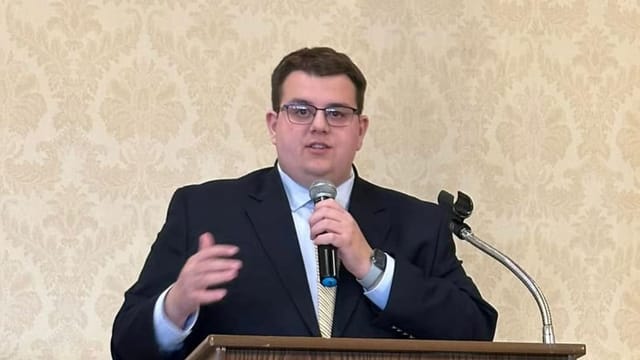
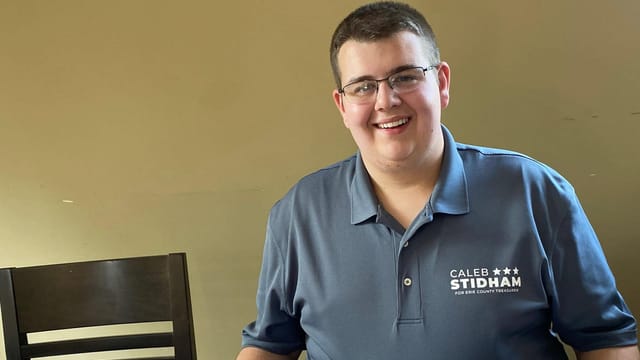
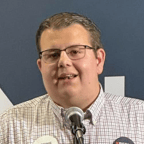
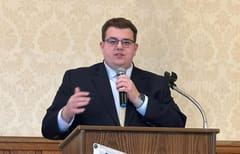
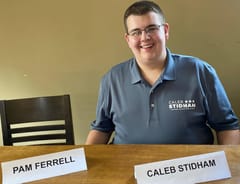
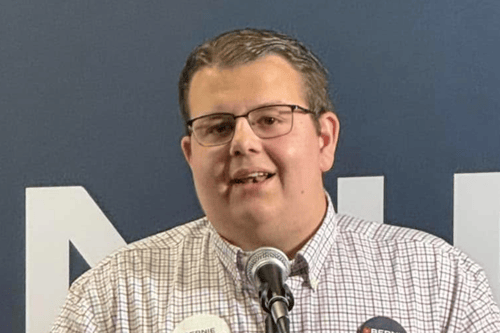
The law also designates who convenes the meeting: the chairperson of the county central committee in the most populous county in the district. That is Erie County. And the chairman of the Erie County Republican Party is 29-year-old Caleb Stidham, who is also the sitting Erie County treasurer.
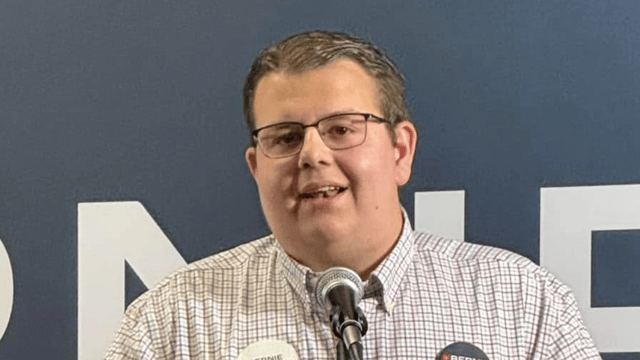
Stidham is one of the people applying for the seat.
Three applicants, one of them a voter
The Huron County Republican Party said in a public post that members met at noon Friday, Aug. 7, and heard from Swearingen and from three people willing to be placed on the ballot: Ottawa County Clerk of Courts Christopher Enoch, an attorney and volunteer firefighter and EMT; Stidham; and Ottawa County Auditor Jennifer Widmer. Each was given five minutes, followed by questions.
Of the three, only Stidham holds one of the six votes.
Enoch serves as vice chairman of the Ottawa County Republican Party, but the statute seats only the chair and the secretary — in Ottawa’s case, Chairman Jill Stinebaugh and Secretary Toni DeLuca. Widmer is a former Ottawa County Republican treasurer and holds no current office in the party. Neither will be in the room as a voting member. Stidham will.
Nothing about that is illegal. The statute assigns the convening role to the Erie chairman by population, not by choice, and it contains no recusal requirement. Ohio law is silent on whether a committee member may vote on his own application.
Who will actually preside Monday is unsettled. The Huron County party’s post said its central committee chair, Sven Stahl, and secretary, Mary Ann Lamb, will chair the meeting. Critics writing online have described Stidham as chairman of the committee. The statute says only that the Erie chairman calls the meeting and that “the chairperson and secretary of the meeting” certify the result to the Erie County Board of Elections — leaving the choice of who runs it to the committee itself.
The deadline is real, and it is Monday
Under the statute, the certification must reach the board of elections in the most populous county in the district no later than 4 p.m. on the 86th day before the general election. For the Nov. 3 general, that day is Sunday, Aug. 9. Because state offices are closed, the deadline rolls to Monday, Aug. 10 — a date the Ohio Secretary of State’s 2026 elections calendar lists explicitly.
The meeting is set for Monday afternoon, hours before the certification is due.
If the committee does not certify a name in time, Republicans have no candidate on the November ballot in a district Swearingen carried with 58% of the vote in 2024. The Democratic nominee, 21-year-old political newcomer Easton Retzke, would face no Republican opponent.
A second problem hiding inside the first
Two of the three applicants are already on the Nov. 3 ballot for county office. Widmer is the Republican nominee for Ottawa County auditor against Democrat Michelle Kreager. Enoch is the Republican nominee for the unexpired term as Ottawa County clerk of courts.
Ohio law does not let them do both. Under R.C. 3513.052, no person may seek a state office and a county office at the same election, including by being named to fill a vacancy. The Secretary of State’s candidate guide describes one exception: a timely withdrawal, which for these purposes means withdrawing before the vacancy-filling deadline itself. If either is selected Monday, they would have to abandon their county race — and Ottawa County Republicans would have to fill that ballot vacancy under the same 4 p.m. clock.
Stidham faces no such constraint. His treasurer’s term runs through December 2028, and he is not on this year’s ballot.
Conservatives are calling for a recusal
The scheduling and Stidham’s dual role have drawn public objections from the party’s right flank.
Conservative activist Cal Kildow wrote that “Ohio House District 89’s representation is in the process of being stolen from its constituents,” arguing that the meeting was pushed from Saturday to Monday afternoon to allow additional votes to be gathered, and that Stidham should not be running the process while asking the committee to put his own name on the ballot. Kildow endorsed Widmer.
Mark Pukita, a Dublin technology entrepreneur who ran in the 2022 Republican U.S. Senate primary, made a narrower version of the same argument. He wrote that the meeting was originally scheduled for Saturday and was moved because the Erie County party secretary was out of town, and that the effect was to preserve both of Erie County’s votes. Pukita was explicit about the limits of his complaint: “Is any of this illegal? No.” He added that it “creates the appearance of a glaring conflict of interest,” and said the obvious course would have been for Stidham to step aside once he became a candidate.
In the comment threads under those posts, other Republicans called on Stidham to recuse himself. Defenders responded that the process is spelled out in statute and is being followed.
Stephanie Stock, president of Ohio Advocates for Medical Freedom, an anti-vaccine-mandate group, went further, telling supporters to email the committee’s members and urging them to back Widmer, Enoch or former state Rep. Steve Kraus instead. Stock’s group has a direct stake: Swearingen is a joint sponsor of House Bill 12, the Jeff, Dave, and Angie Patient Right to Try Act, which was referred to the House Health Committee in January 2025 and has not reached the floor. Stock’s post also asserted that Huffman is working to install Stidham. Her post offered no evidence for that claim, and it is separate from what TiffinOhio.net was told independently by a person familiar with the discussions.
Kraus held the 89th District seat for seven months in 2015 and was removed after a jury convicted him of theft, a fifth-degree felony carrying an elderly-victim specification. He was acquitted of breaking and entering. A court later sealed the conviction, and the Ohio Supreme Court cleared him to appear on the 2024 primary ballot, where Swearingen defeated him. Neither Kraus nor anyone else has confirmed he applied for the current vacancy; the Huron County party’s account named three applicants, and he was not among them.
The county next door already answered this question
Northwest Ohio Republicans faced an almost identical conflict four months ago and resolved it differently.
In April, the Sandusky County Republican Party Central Committee appointed its own chairman, Justin Smith, to a vacant county commissioner seat. Smith was barred from chairing that meeting because he was one of the candidates. Vice Chairman Ben Decker presided as acting chair specifically to avoid a conflict of interest. Smith won on the third ballot and now faces voters in November for a seat he holds by party appointment.
That arrangement was not required by statute either. It was a choice.
The Statehouse has a preference
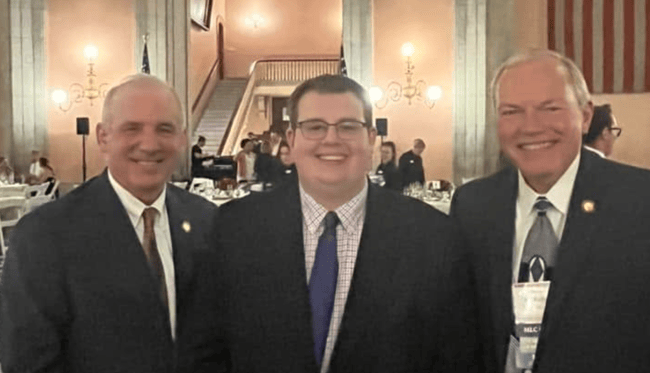
Speaker of the House Matt Huffman and state Sen. Bill Reineke are privately urging committee members to back Stidham, according to a person familiar with the discussions who spoke to TiffinOhio.net on the condition of anonymity.
Reineke’s interest is not hard to trace. Stidham ran his 2020 Ohio Senate primary campaign against conservative activist Melissa Ackison — a race so vicious that pundits at the time called it the nastiest legislative primary in Ohio history.
Stidham was the public face of the attacks. He called Ackison’s candidacy “a sham from the very beginning” and issued a run of press releases targeting her surveying company, which had been fined $4,000 by a state licensing board. The campaign bought the domain MelissaAckison.com to host a site calling her “shameful” and “deceitful,” and circulated a photo labeling her supporters “REAL Democrats, REAL Criminals, FAKE Conservatives.” Stidham also announced that the campaign had turned over to authorities a secretly recorded audio clip from an Ackison strategy meeting; Ackison said the recording came from a woman the Reineke team had planted inside her campaign, calling it “completely criminal and disgusting.”
Ackison, for her part, called Reineke a “spoiled brat” and Stidham an “inept buffoon.” In a Facebook post attacking the campaign, she also mocked Stidham’s appearance, describing him as a campaign manager who “walks around with food smeared all over his shirt at every event.” She publicly accused him of making false and malicious statements about her; no record of a lawsuit against Stidham could be found. Reineke won the primary.
Six years later, Reineke is the sole declared candidate to become president of the Ohio Senate. Jerry Cirino, the Senate Finance chairman, abandoned his own bid in May and told Gongwer News Service he lacked the support of his Republican colleagues. Barring a challenger, Reineke takes the chamber’s top job when the next General Assembly convenes in January, replacing Rob McColley, who is term-limited and is running for lieutenant governor on Ramaswamy’s ticket. Reineke’s Senate district covers Seneca and Sandusky counties.
Stidham has also been among the more visible county chairs backing Ramaswamy for governor, hosting what the Erie County party called its largest event ever at a Sandusky resort.
None of that is disqualifying, and none of it is secret. What makes it matter is the arithmetic. Statehouse leaders have no vote on this committee. They do not need one. Persuading three of six county officers is a far smaller task than persuading a district of 175,000 people — and one of the six is the candidate.
The Democrat already has a campaign
Whoever the six certify Monday will step into a general election already under way.
Easton Retzke, the Democratic nominee, is a 21-year-old lifelong Sandusky resident and an Ohio State political science graduate who won his party’s nomination in the May primary. He has campaigned on public school funding and opposition to Ohio’s private school voucher expansion, on utility rates and the tax treatment of data centers, and on overhauling JobsOhio. He has been endorsed by the Ohio Federation of Teachers and by the UAW’s Tri-County CAP Council.
The district’s recent history is not encouraging for him. Swearingen took 58% of the vote in 2024. In 2022 he defeated Jim Obergefell — the Sandusky native and named plaintiff in the U.S. Supreme Court case that legalized same-sex marriage nationwide, who came into the race with national name recognition and national fundraising.
What has changed is the calendar. Retzke has spent the summer campaigning as a nominee. The Republican who emerges from Monday’s meeting will have roughly 12 weeks to assemble a general election campaign, without having faced a single voter in the district — and, if the objections of the last several days are any measure, without the united support of the party that picked him.
What voters get to decide
Whoever the six certify Monday will appear on the ballot as the Republican nominee and, in a district that has not elected a Democrat to this seat in years, is the heavy favorite to win in November. Voters in Erie, Ottawa and Huron counties will get a say in the general election. They will have no say in the choice that effectively makes it — and neither will the Republicans among them who turned out to vote in May’s primary.
Swearingen, announcing his exit, framed his own decision around exactly that principle. Voters of the district, he said, “deserve to have a voice in voting for a Republican nominee” who will serve a full term.
Six people will make that choice for them Monday afternoon.