Democrat Amy Acton said Wednesday she would sign three executive orders on her first day as governor aimed at the state’s appointment, contracting and campaign disclosure practices — the machinery at the center of Ohio’s largest corruption scandal.
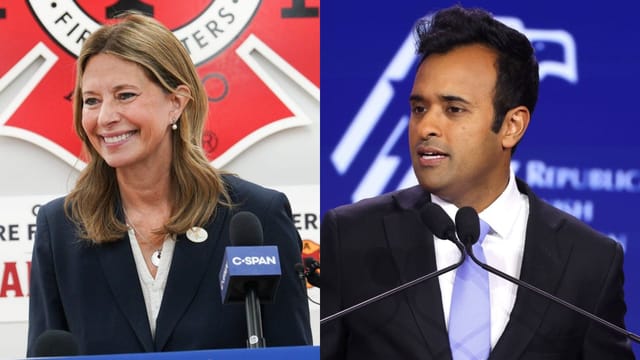
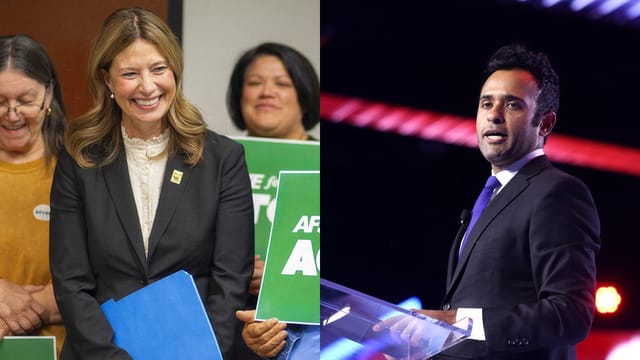
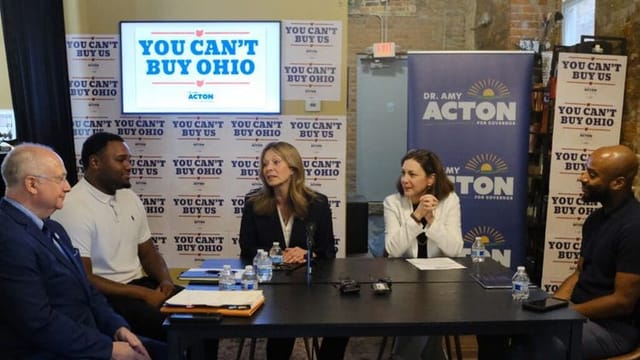
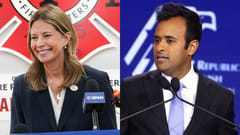
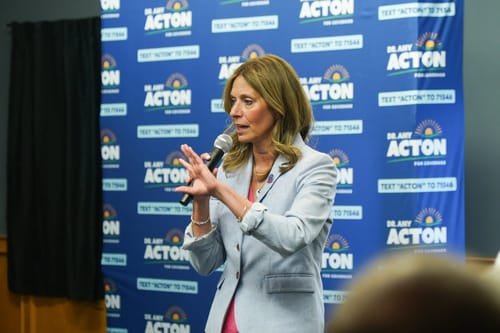
Acton, a physician and former director of the Ohio Department of Health, presented the plan to reporters at a Columbus-area coffee shop and released it the same day, on her campaign website. She faces Republican Vivek Ramaswamy in the Nov. 3 general election.
“When I am governor, hard-working Ohioans will stop footing the bill for the cost of corruption in our state,” Acton said in the release. “It is time to put the needs of working families over the wants of billionaires, corporations and special interests.”
What the three orders would do
The first would create an anti-corruption task force to take public input, conduct audits and interview stakeholders, with recommendations due within her first 100 days.
The second targets what the campaign calls a broken appointment process. It would bar lobbyists, lawyers and consultants who have represented, been employed by or been paid by any organization regulated by an Ohio regulatory entity in the previous three years from serving on that same regulatory entity. Anyone seeking such a post would have to disclose the related relationships and payments. Appointees would sign an ethics pledge committing to a three-year cooling-off period barring them from working for an organization they regulated, and would face conflict-of-interest rules requiring public recusal.
“We believe that you can’t be sitting regulating something, and then flip over to the industry side, and then flip back over into the regulating side,” Acton told the Dayton Daily News at the event.
The third would require state contractors and advocacy organizations that spend on political campaigns to disclose their donors publicly, require any company bidding on a contract above $50,000 to disclose beneficial ownership, shareholders holding 10% or more equity and political contributions including gifts to PACs, and create a public database listing state contracts, winning bidders, bid windows and award amounts.
The reach of all three is bounded. The release states the directives apply to activity within the constitutional and statutory authority of the governor’s office, and says Acton would “encourage” other officeholders with appointment authority to adopt the same standards. Broader change would require the legislature. Anti-corruption bills introduced by Ohio Democrats since the scandal broke have not advanced in the Republican-controlled General Assembly, the Associated Press reported last year; GOP legislative leaders have said amending federal campaign finance law is outside their authority.
Why the appointment power matters
The governor appoints all five members of the Public Utilities Commission of Ohio, the body that sets the electric rates paid in Tiffin, Fostoria, Fremont and every other Ohio community, and that sets terms for the data centers now moving into the state. Both candidates have released competing data center plans ahead of that appointment power.
The last time that power drew national attention, it produced Sam Randazzo. Gov. Mike DeWine appointed Randazzo — a Columbus energy lawyer who had represented Industrial Energy Users-Ohio since 1992 and previously worked as a PUCO staff attorney and an assistant attorney general — as PUCO chairman in February 2019. He resigned in November 2020, days after federal agents searched his home. FirstEnergy later admitted paying Randazzo a $4.3 million bribe in exchange for regulatory favors. He was charged federally and by the state, pleaded not guilty and died before he could stand trial.
House Bill 6, the 2019 nuclear bailout law at the center of the scheme, was passed after FirstEnergy funneled roughly $60 million through dark money groups to install Larry Householder as House speaker and defeat a repeal effort. Householder, a Republican, is serving 20 years in federal prison. Former Ohio Republican Party chair Matt Borges was also convicted. FirstEnergy agreed to pay $230 million to avoid prosecution and a separate $100 million civil penalty to the Securities and Exchange Commission. Two former executives have been reindicted on state charges after their first trial ended in a hung jury.
Acton said the scandal has cost Ohio ratepayers more than $2 billion. The AP has described the scheme’s prospective price tag to consumers as exceeding $2 billion, calling it the largest infrastructure scandal in U.S. history. Ohio electric customers paid more than $500 million in coal plant subsidies added to the bill before that provision’s repeal took effect in August 2025, at a rate of $445,679 a day. In November 2025, state regulators ordered FirstEnergy to pay roughly $250 million for violations tied to the scandal, most of it refunded or credited to customers.
Her opponent
Ramaswamy has directed most of his own comments about corruption in state government toward Medicaid fraud, the Statehouse News Bureau reported. In May he pledged to target waste and abuse in the program, focusing on home health care providers.
Federal filings show five billionaires supplied roughly $37 million — more than 88% of the total — to V-PAC: Victors, Not Victims, the super PAC backing Ramaswamy.
Acton has built the rest of her campaign around household costs and tax credits. On Wednesday she tied the two together.
“We need a good statehouse,” Acton said. “We need good elected officials who want to work on the problems of our everyday lives. 95% of what I hear about no one disagrees on—no one disagrees on it. They just want us to get to work solving it. And so it is time for this corruption and this power and this stuff to end. And good people on both sides of the aisle who want to do this work. I welcome that work.”