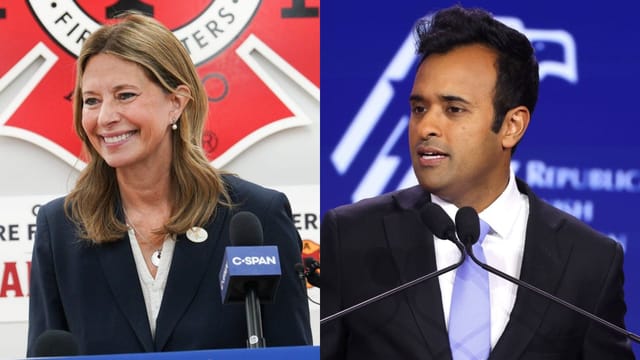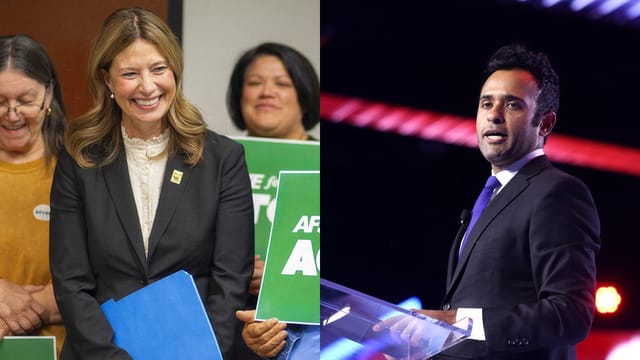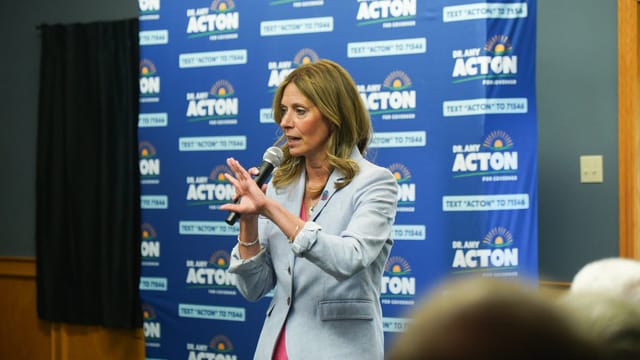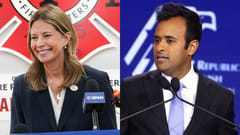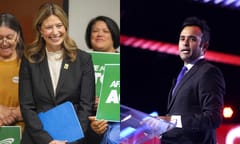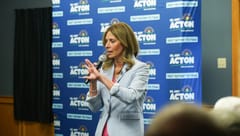
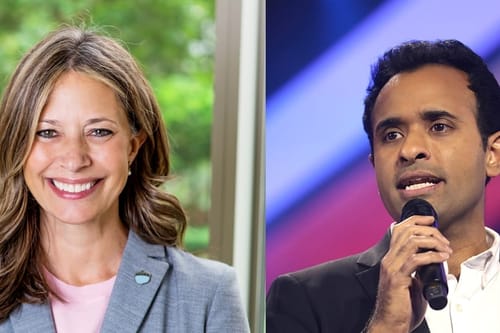

Ohio’s candidates for governor differ greatly when it comes to fracking in the state.
Ohio Democratic candidate Dr. Amy Acton recently announced she would impose a “three-year moratorium on issuing additional permits for the drilling of wastewater injection wells and on the further injection of fracking wastewater in Washington County while the state conducts a thorough investigation on the impacts of wastewater migration.”
Ohio Libertarian candidate Don Kissick also supports a temporary pause on more wastewater injection activity in Washington County while the state conducts an investigation.
“That should include aggressive groundwater and drinking-water monitoring, transparency around migration data, and accountability when an operator causes contamination or damage,” Kissick’s running mate James Mills said in an email.
“Washington County residents should not have to choose between supporting an important local industry and confidence in the safety of their drinking water.”
Washington County residents have been raising concerns that injection wells leaking brine waste could contaminate Marietta’s drinking water. Fracking is the process of injecting liquid into the ground at a high pressure to extract oil or gas.
“To take a break and have a study done is in the interest of everybody in this county, not Democrats, not Republicans, everyone alike, and so it’s a bipartisan issue down here, and it’s a reasonable ask,” said Marietta City Council President Susan Vessels.
“We’re asking for the simple rule: don’t allow oil field waste injection near public drinking water aquifers. So that should be simple.”
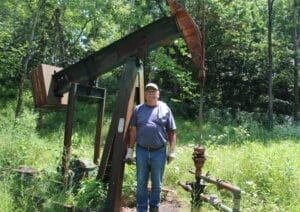
Vessels, who is a Republican, endorsed Acton.
“It’s very encouraging that her campaign heard about this problem, and studied it, and then thought that it was something that they could help with,” she said.
In making her announcement, Acton said that in Washington County, injection wells are leaking fracking wastewater, flooding conventional oil and gas wells, leaving folks without heat, destroying local businesses, and potentially contaminating Marietta’s drinking water.
“This poses a serious threat to the safety and quality of life of Washington County residents,” Acton said. “That is why I support imposing a three-year moratorium on issuing additional permits for the drilling of wastewater injection wells and on the further injection of fracking wastewater in Washington County while the state conducts a thorough investigation on the impacts of wastewater migration.”
She said Ohioans deserve reliable heat, clean water, and to feel safe and secure in their community.
“I will always put the health and safety of Ohio families and communities above corporations and special interests,” she said.
Ohio Republican candidate Vivek Ramaswamy’s campaign did not respond to questions sent by the Ohio Capital Journal. He has consistently expressed his support for oil and gas extraction in the past.
“Yeah, this isn’t that complicated, guys. Unlock American energy, drill, frack, burn coal, embrace nuclear,” he said during a 2024 Presidential debate.
While Ramaswamy has declined to respond to the Capital Journal and other local Ohio media about the issues of fracking and fracking waste injection, his campaign did provide comment to the New York Times on Acton’s proposal.
“A campaign spokesman for Republican gubernatorial candidate Vivek Ramaswamy said Dr. Acton’s position is ‘hollow and can’t withstand scrutiny,’” the Times reported.
Washington County has 17 injection wells with permits to inject, but only six are active, Vessels said.
Ohio Oil and Gas Association President Rob Brundrett said a moratorium is not a solution.
“Science, facts, and sound regulation, not politics and campaign rhetoric, are what will ensure both safe operations and a strong future for Ohio’s oil and natural gas industry,” he said in a statement.
“The path forward is to allow Ohio’s regulatory process to work as designed while protecting the conventional production and supporting infrastructure that provide significant benefits to communities across our state.”
Acton wants to end fracking under Ohio’s state parks and wildlife areas.
“She believes that we can invest in a robust energy plan for Ohio without sacrificing Ohio’s forests, wildlife, or treasured natural resources — which is why she does not support fracking beneath Ohio state parks or wildlife areas,” according to her campaign.
Ramaswamy said it was “good news” when the state approved to frack more than 15,000 acres of Ohio’s public land over the summer.
“Energy abundance is the foundation of a manufacturing boom in Ohio,” he said in a June 30 post on X. “We have unparalleled natural resources & now it’s time to get the red tape out of the way.”
Ohio law allows the Ohio Department of Natural Resources to lease Ohio state parks and public lands for fracking.
Since this law took effect in 2023, fracking has been approved in Salt Fork State Park in Guernsey County, Egypt Valley Wildlife Area in Belmont and Guernsey counties, Jockey Hollow Wildlife Area in Harrison County, Leesville Wildlife Area in Carroll County, and Keen Wildlife Area in Harrison County.
Ohio law requires at least 30% of the money goes towards improvements at the state parks where drilling is happening.
“It’s great for nature. It’s great for our ability to enjoy our natural gifts, enjoy our state parks, while also enjoying the fruits of the natural resources that are underneath them,” Ramaswamy said in a June 7 video posted to Facebook.
Kissick opposes fracking in state parks.
“They belong to the people of Ohio, and the short-term revenue from extraction does not fully account for the value of preserving an irreplaceable public asset for future generations,” Mills said in an email.
Kissick is in favor of fracking on private property “where property rights are respected and strong environmental and safety standards are met,” Mills said in an email.
Follow Ohio Capital Journal Reporter Megan Henry on X or on Bluesky.
This story is republished from the Ohio Capital Journal under a Creative Commons license. View the original article.