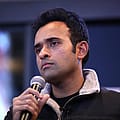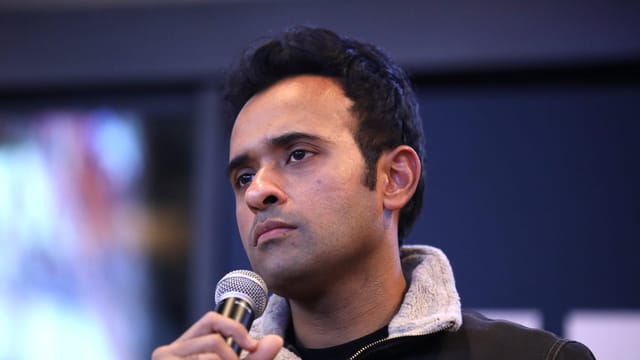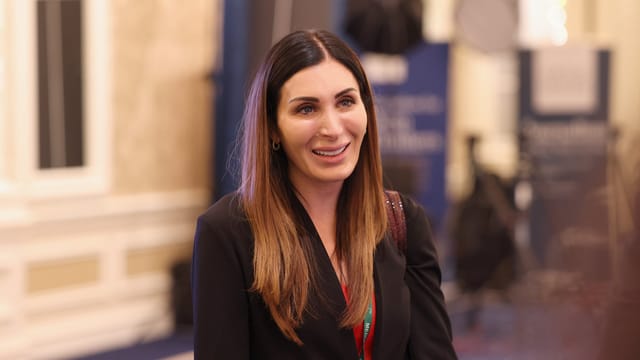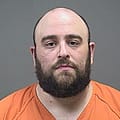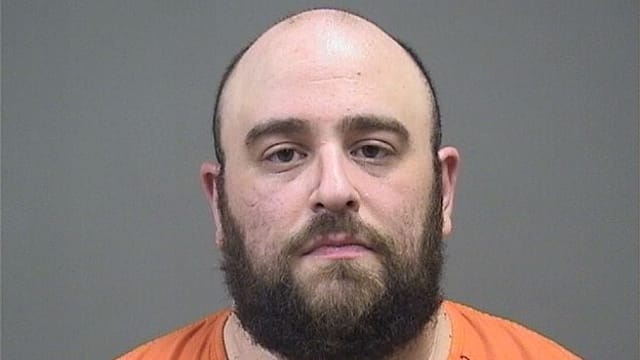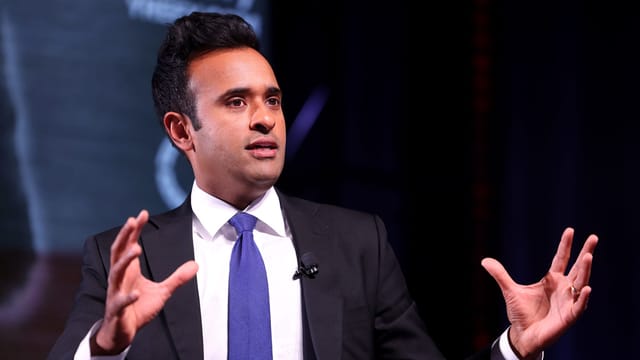

A Cincinnati private equity founder who served federal prison time for buying his daughter a fraudulent ACT score has contributed $10,000 to Vivek Ramaswamy’s campaign for Ohio governor.
Mark Hauser gave the money on May 6 to the campaign committee of Ramaswamy and his running mate, Ohio Senate President Rob McColley, according to Ohio Secretary of State campaign finance records. The filing lists Hauser at a Cincinnati business address and identifies his occupation as managing partner of Hauser Private Equity. The contribution appears on the ticket’s post-primary report.
Hauser founded Hauser Private Equity, which operates out of Cincinnati and Los Angeles, and serves as chairman of HAUSER Inc., the Cincinnati-based national insurance brokerage he built from a small local agency.
He is also, by his own admission in federal court, a participant in Operation Varsity Blues — the college admissions scandal that swept up dozens of wealthy parents, including Hollywood actors, who paid to cheat their children into selective universities.
Hauser pleaded guilty in September 2020 to one count of conspiracy to commit mail fraud and honest services mail fraud. On May 27, 2021, a federal judge in Boston sentenced him to two months in prison, three years of supervised release, a $250,000 fine and 300 hours of community service, according to the U.S. Attorney’s Office for the District of Massachusetts.
Prosecutors said Hauser agreed with admissions consultant William “Rick” Singer to pay $40,000 to cheat on his daughter’s ACT. A co-conspirator traveled to Houston, posed as the proctor for the exam, and corrected her answers after she finished.
A donation that lands against the candidate’s own message
Ramaswamy has built his political identity on the argument that Americans should rise or fall on individual merit rather than on race-conscious policy or institutional advantage. During his 2024 presidential run he pledged to end federally mandated affirmative action. He has campaigned against diversity, equity and inclusion programs and against what he calls woke ideology in schools and business.
At his campaign launch in Cincinnati, Ramaswamy said he would lead Ohio to be a state “where we embrace capitalism and meritocracy” and promised that Ohio would become the first state in the country to put every public school teacher, principal, superintendent and administrator on merit-based pay.
The federal case against Hauser described conduct at the opposite end of that principle: a parent with substantial means paying to manufacture an academic credential his child had not earned, inside a system already tilted toward families like his.
The money race
The Hauser contribution appears on the same post-primary report that showed roughly $116,000 flowing to Ramaswamy from founders of World Liberty Financial, the Trump family’s cryptocurrency venture, and their associates — nearly all of it on primary day or the morning after. TiffinOhio.net reported on that cluster of maximum-legal donations last month. Hauser’s $10,000 falls under the $16,615 individual maximum.
Ramaswamy holds a commanding financial position heading into the November 3 general election against Democrat Amy Acton, the former state health director. He has loaned his campaign $25 million of his own money, roughly 83% of what the campaign raised this year, and the contest is on pace to be the most expensive governor’s race in Ohio history.
His campaign finance reporting has also drawn scrutiny. The Ohio Capital Journal reported last month that the campaign has run more than half a million dollars through a credit card while disclosing only the monthly bill rather than the individual purchases state law requires. State Sen. Kent Smith, a Euclid Democrat, has since filed a complaint with the Secretary of State’s office over the reporting. A campaign spokesperson has said the Ramaswamy-McColley operation complies with Ohio campaign finance law.
The campaign has previously declined to address a contribution that drew attention. In February, TiffinOhio.net reported that Ramaswamy’s campaign had accepted a $500 donation from Richard Iott, a former northwest Ohio congressional candidate whose 2010 House bid collapsed after photographs surfaced of him in a Nazi SS uniform. The campaign issued no statement and gave no indication it would return the money.
For a candidate asking Ohio voters to accept that merit alone should decide who gets ahead, the Hauser contribution puts a name and a dollar figure on the question of who is helping fund that argument.
Ramaswamy’s campaign did not return requests for comment.