

Republican gubernatorial candidate Vivek Ramaswamy’s campaign says Democratic nominee Amy Acton was “spewing lies” when she recalled that COVID-19’s mortality rate reached 50% early in the 2020 pandemic and fell to about 5% by that June. But the medical record from 2020 supports the arc Acton described — for the patients she was talking about. Early studies put intensive-care death rates at or near 50%, and mortality among hospitalized patients dropped below 5% by June.
The exchange, first reported by Fox News, turns on a single word — “mortality” — and on which patients it counts.
What Acton said
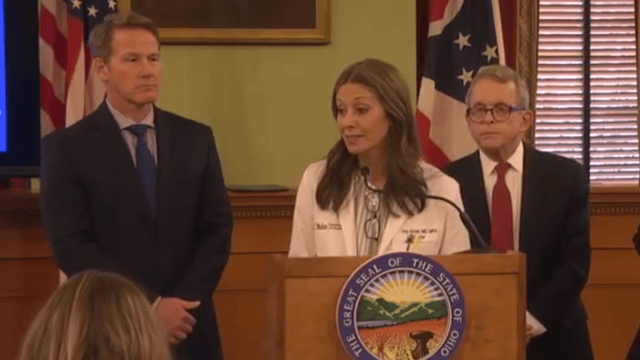
On a podcast appearance in September 2025, Acton, the former director of the Ohio Department of Health, cited the numbers as evidence that Ohio’s early response saved lives.
“In those early days, the mortality rate was 50%. I started with that in March. By June, when we reopened, it was because we took swift, decisive action. The mortality rate had gone down to 5%. We learned how to save lives,” Acton said.
Asked about the figure, Acton’s office told Fox News she had been referring to death rates in hospitals — not the share of everyone who caught the virus.
Why the charge depends on the denominator
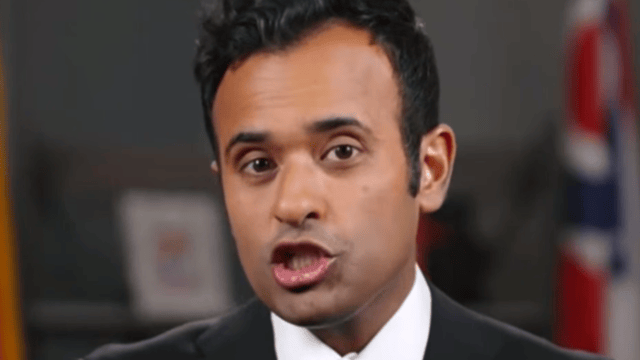
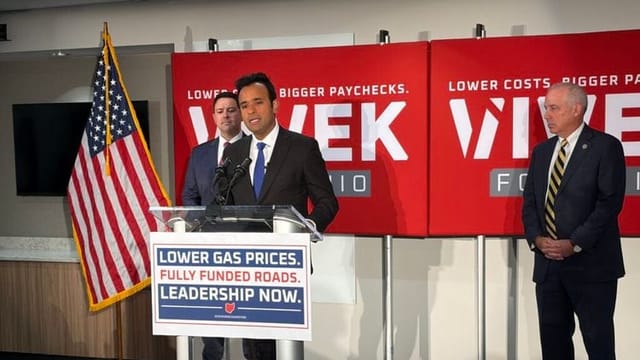
A spokesperson for Ramaswamy, who was living in New York City during the pandemic, said the claim rewrote the pandemic’s history.
“Liberal Amy Acton is desperately trying to rewrite history, spewing lies in a futile attempt to justify her disastrous decision-making during COVID,” Connie Luck said. “But her outrageous claims only confirm what we already know: she’s an incompetent, failed government bureaucrat who ran our state into the ground and is wholly unqualified to lead Ohio.”
That criticism measures Acton’s numbers against overall COVID-19 mortality — the share of all infected people who died. By that yardstick, the rate was never close to 50%; the virus killed roughly 275,000 Americans in 2020, according to CDC figures cited by Fox, and the overall death rate ran in the single digits. That much is not in dispute. But it is not the population Acton, a physician and the state’s former health director, said she was describing. She was talking about people sick enough to be in a hospital or an intensive-care unit — and for those patients, the record tells a different story.
The 50%: intensive-care patients
When Acton was signing Ohio’s first emergency orders in March 2020, the only U.S. outcome data available came from small hospital case series, and those early reports found ICU death rates at or above 50%.
A case series of 21 critically ill patients at a Washington State hospital, published in JAMA on March 19, 2020, found that 11 of them — 52.4% — had died. Eleven days later, the New England Journal of Medicine published a study of 24 ICU patients across nine Seattle-area hospitals; as of March 23, half had died.
Those figures held up in later, larger analyses. A CDC study published in June 2024, drawing on more than 4.7 million U.S. cases from before vaccines were available, found that 44.2% of patients admitted to an intensive-care unit died. The CDC authors described that result as similar to earlier studies conducted in Seattle, which found 50%, and Washington, which found 52% — the same two March 2020 reports.
The 5%: hospitalized patients by June
Acton’s second number tracks a different but equally documented trend: the sharp drop in deaths among hospitalized COVID-19 patients as clinicians learned to treat the disease.
An analysis prepared for STAT by the nonprofit FAIR Health, based on hospital records for roughly 100 million insured Americans, found that the mortality rate of hospitalized COVID-19 patients fell from 11.4% in March 2020 to below 5% in June — and stayed there, reaching 3.7% by September. Other studies that adjusted for age and underlying health found the same collapse: mortality in one New York hospital system fell from 25.6% in March to 7.6% in August, and survival among ICU patients in an English cohort rose from 58% in late March to 80.4% by the end of June. Researchers have credited wider use of steroids such as dexamethasone, less reliance on early ventilation, and hospitals that were no longer overwhelmed.
One point of precision: Acton’s two numbers do not describe exactly the same group. The 50% reflects intensive-care patients at the pandemic’s outset; the roughly 5% reflects all hospitalized patients by June. Read as a single, unbroken statistic, the “50% down to 5%” compresses two different populations. But each figure is grounded in real data, and the trajectory she described — catastrophic early mortality among the most seriously ill, followed by a steep drop by summer — is exactly what the record shows. Nothing in it is invented.
Acton’s counter
Acton’s campaign used the exchange to point back at Ramaswamy’s own pandemic record. Ramaswamy is the founder of Roivant Sciences, a biotech company whose subsidiary was involved in COVID-19 treatments.
“While Dr. Acton was working hand in hand with Governor DeWine to keep Ohioans safe, Vivek Ramaswamy was calling for mandatory COVID-19 testing, making more than $2 billion off of the COVID vaccine, and recommending segregating Ohioans based on biomarker status,” said Addie Bullock, a spokesperson for Acton’s campaign.
Those points track the public record. Ramaswamy advised Ohio’s 2020 pandemic response under then-Lt. Gov. Jon Husted and backed measures that people close to the DeWine administration considered overreach, including mandatory testing and isolation for select groups, as TiffinOhio.net has reported. Republican Gov. Mike DeWine, who appointed Acton and later endorsed Ramaswamy, has repeatedly said the pandemic closure decisions were his own, not Acton’s — a point he made again when he called an earlier Ramaswamy attack ad inaccurate.
The dispute is the latest turn in a race in which Ramaswamy has made Acton’s pandemic record a centerpiece, a strategy detailed in TiffinOhio.net’s review of Ramaswamy’s record. Acton and Ramaswamy meet in the general election on Nov. 3.