
Data centers have emerged as a central battleground in the 2026 midterm elections. As they have, a Columbus man has spent many months traveling the country learning what the fuss is about: Complaints of noise and pollution, strain on the electricity grid, loss of local control to fabulously wealthy tech giants — and the possibility that a trillion-dollar speculative bubble is about to burst.
In addition, data centers power AI chatbots that have been accused of engaging in sexual conversations with minors and failing to discourage them from suicide. Even among adults, excessive use of chatbots is causing “AI psychosis.”
On the other hand are undeniable benefits. The technology is already enabling tremendous strides in things like medical research and the other sciences. It’s also creating millions of construction jobs, and it’s integrating itself into everyday life in ways that make it more convenient.
But other questions are more ominous.
Who will lose their jobs to artificial intelligence? And how many more will be forced to work as living, breathing AI drones, monitored by GPS and biometric cameras as computers make humans labor right up to the limits of their ability?
As he reported and produced the podcast series “The Data Centers are Coming,” Danny Caine tried to address those questions.
Working with the antimonopoly group the Institute for Local Self Reliance, the former Kansas bookstore owner interviewed people in places like Virginia’s Data Center Alley and Memphis, Tennessee, where Elon Musk is accused of using more than a dozen unpermitted gas-fired generators to power his massive xAI center.
Growing opposition
In those places and hundreds of others, residents fear that their lives are being profoundly altered by projects over which they didn’t get much of a say. That might explain why opposition is growing so fiercely across the political spectrum.
“Data center opposition is a remarkably bipartisan issue,” Caine told the Capital Journal.
An example: In Box Elder County, Utah, 70% of voters went for Donald Trump in 2024, while in Minneapolis, voters went for Kamala Harris by a similar margin.
“Both passed data center moratoriums,” Caine said. “This is everybody. You’ve got farmers out west and you’ve got socialists in New York City organizing on the same issue. I think they’re doing a really good job making sure there’s room for everybody. A part of it is that this is local. It hasn’t been polarized by national political rhetoric like immigration. This is people talking about what gets built in their community and how they should grow economically.”
Caleb Max, president and CEO of industry group the National Artificial Intelligence Association, said it’s a misconception that data centers don’t have to go through the permitting processes that other projects do. He also said communities are given advance warning and a chance to have their say.
“Data centers file the same permits and go through the same county zoning and board processes as any other large development and those processes end in votes by elected local officials,” he said in an email. “Projects have been modified, relocated, and voted down outright across the country, including in Ohio.”
Max cited plans to build an OpenAI data center in Effingham County, Georgia, as an example.
“Before construction began, the company published its commitments, held a public open house where residents questioned engineers directly, and is building a community compact out of that feedback,” he said, later adding, “Was the meeting contentious? Very. That is the process working, not failing.”
However, the public appears to have been informed of the $20 billion project pretty late in the game.
OpenAI got local government officials to sign nondisclosure agreements regarding the project on Feb. 2, WTOC reported. Then, on July 21, they signed a memorandum of understanding and finalized a huge tax break for the project, the TV station reported.
With the county already committed to the project, it was publicly announced on July 22, with construction planned to start before the end of the year.
The open house Max cited was held a day after that, according to the Effingham Herald. Hundreds packed the meeting and are now forming an opposition group — to fight a project their county officials have already bound them to.
In addition, The Current reported that Gov. Brian Kemp met in May with OpenAI and Georgia Power “with no mentions of data center construction on its briefing memo.”
Opposition to such projects appears to be spreading.
An Economist/YouGov poll released last month reported that just 24% of Americans now believe data centers are good versus 47% who say they’re not.
Democrats were most opposed, followed by independents. More Republicans were in favor than opposed, but only by five percentage points, and 29% were undecided.
In addition, Politico polls conducted in January and July found that opinion has been shifting against data centers rapidly, so opposition seems likely to grow.
Tax breaks
One reason why opinion is shifting might have to do with the belated discovery of massive tax breaks that were given in virtual secrecy to companies controlled by some of the world’s richest people.
In June, The Columbus Dispatch wrote that before he left office in 2019, Ohio Gov. John Kasich quietly gave Google, Amazon and Meta huge tax exemptions lasting 40 years.
They were part of $2.3 billion in tax breaks the former governor handed out — supposedly to persuade companies to build in Ohio. However, they’re so desperate to build more “compute,” that Industrial Equipment News reports some are even looking at ways to build data centers in the ocean.
Max, of the Artificial Intelligence Association, agreed that the AI companies don’t need the tax breaks with which Ohio and other states have been so lavish.
“They do not need them,” he said. “Communities offer them because they want to compete for the investment, and Ohio has been good at it. Governor DeWine noted in May that previously exempted projects reported $27.2 billion in capital investment in 2025 alone.”
The investment is huge, but it will create relatively few jobs once construction is completed. Policy Matters Ohio estimates that the Google, Amazon, and Meta subsidies will cost Ohio taxpayers $1 million per permanent job created.
For Caine, news of the Ohio tax breaks came just as he and his team were finishing their podcast series. It might be part of a bonus episode, he said.
“That policy was basically a secret until somebody went and dug it up years later,” he said. “That’s one thing that really upsets people about this. Data centers are bad and people hate them. But they also hate that a lot of this is happening in secret. They don’t have any input. They feel like the first time they hear about this stuff, it’s a done deal.”
Affecting neighbors
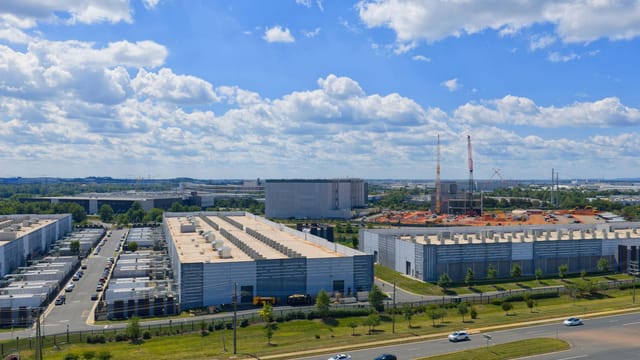
When he traveled to Data Center Alley — a region in Northern Virginia containing about 300 of the facilities — Caine saw the effects they can have on people living close to them. Generators serving some are so loud that residents are spending thousands doing things like installing plexiglass over their windows to dampen the noise.
Caine said such noise forces people indoors — and away from the neighbor-to-neighbor organizing his group advocates.
“One thing that’s really concerning is that if you make the neighborhood environment hostile via noise or pollution or whatever, people connect with each other less,” he said. “You’re driving people inside and away from connecting with each other. Big Tech people might not mind that. Instead of being outside connecting with people, you’re inside looking at your device. So just being outside organizing with your neighbors is a kind of rebellion against what Big Tech wants to build.”
Max, the AI industry spokesman, said focusing solely on those complaints ignores advancements in the industry.
“There is a vacuum mentality here, the assumption that data centers drain the water, the power supply, and the grid, and that often isn’t the case anymore,” he said. “On water, the industry has moved to closed loop cooling that recirculates water in a sealed system rather than evaporating it. New Central Ohio developments use air cooled closed loop chillers, Meta has committed to (be) water positive by 2030, and Amazon has a water neutral pledge.”
Max also touted a pledge by PJM, the electricity grid that serves Ohio and 12 other states, that data centers will pay for any additional generation they’ll require.
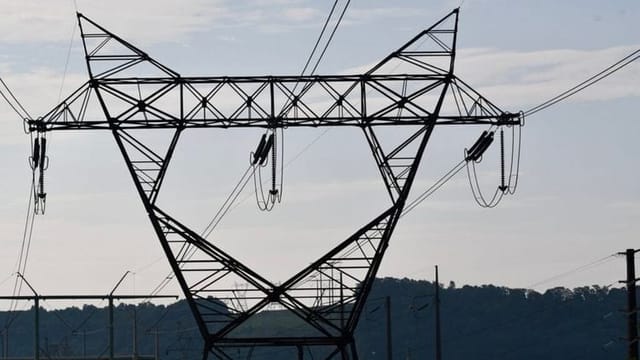
However, the Ohio Manufacturers Association and others are concerned that monopoly utilities are using data centers to inflate demand forecasts to justify construction from which they’ll profit. That can force up rates, and if they overbuild, ratepayers will be stuck holding the bag, critics say.
Many data centers are easing the strain on the electricity grid by generating their own power “behind the meter.”
But that comes with downsides of its own. The great majority burn fossil fuels and generate noise and greenhouse gasses.
And PBS and Floodlight report, they’re going up so fast that they’re overwhelming state and federal regulators that have been systematically starved of resources. In a separate investigation published last week, Floodlight and The Guardian reported that a Microsoft-backed data center in New Jersey fired up dozens of gas-powered generators without getting the required permits — an apparent violation of federal law.
Impact on average people
But perhaps the most important question is what will happen to Americans — especially the most vulnerable — once all these data centers are built and AI takes a central role in the workplace.
Many worry that it will make millions of jobs obsolete. Caine is also worried about the ones that will remain.
One need only look at the lives of the 1 million Americans who work for Amazon to get an idea, he said.
“If you look at Amazon warehouse workers or delivery drivers, they’re completely at the mercy of the machines that control their rates,” he said. “Whether it’s all the biometric cameras in the Amazon vans, or the little GPS handheld things in the warehouse, they exist to make sure the machines keep running. It’s machines first, then humans.”
In other words, Caine is saying a dangerous line is crossed when AI doesn’t just work for people, but people also work for AI.
“When the human loses agency for the sake of the machine, it’s literally dehumanizing,” he said.
This story is republished from the Ohio Capital Journal under a Creative Commons license. View the original article.