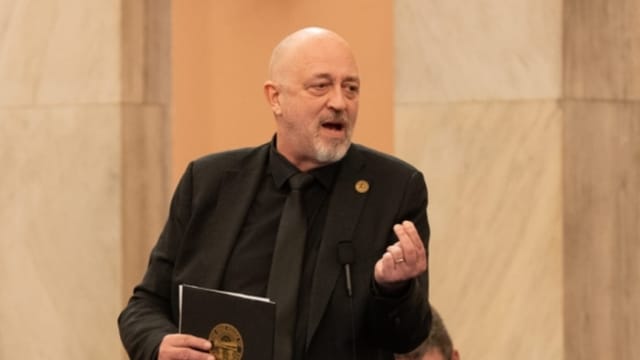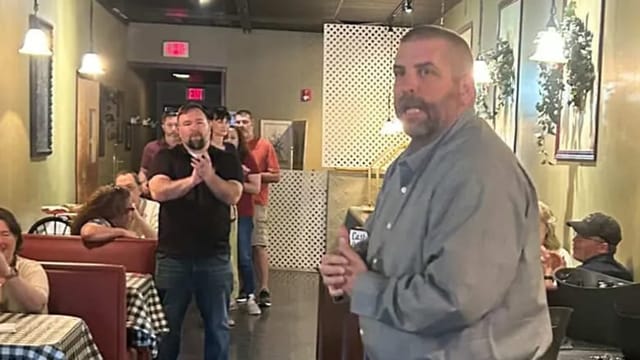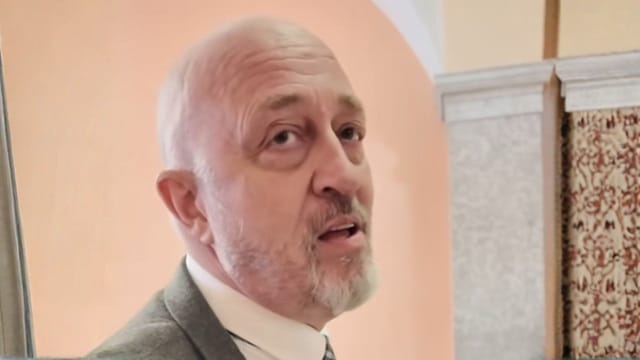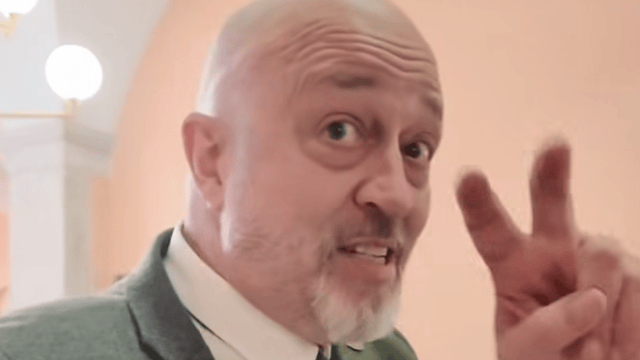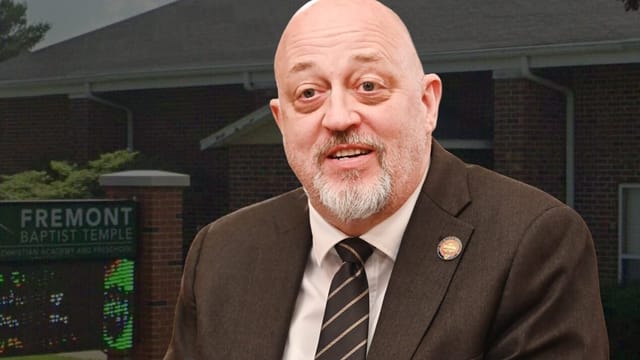
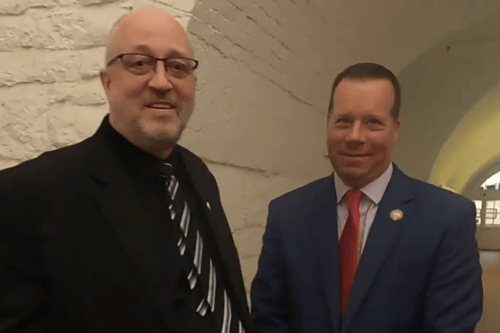
State Rep. Gary Click has spent six years telling Ohio that children need adults to protect them from other adults.
He wrote the law that bans gender-affirming care for minors and named it the Save Adolescents from Experimentation Act. He told a Senate committee that such care is child abuse. He signed onto a bill to ban drag performances where minors might be present, framed by its sponsors as a shield for children. He signed onto another that would put live, state-accessible cameras in every licensed child care center in Ohio. He introduced a bill this year that he says protects families from a government that would take their kids away.
Nearly every major bill of Click’s career carries the same justification: an adult, somewhere, is a danger to a child, and the state must intervene.
Then an adult in his own caucus was accused of exactly that — and Click’s approach changed.
What the record on Rodney Creech actually says
State Rep. Rodney Creech, R-West Alexandria, was investigated by the Ohio Bureau of Criminal Investigation over allegations that he climbed into bed with his minor daughter while wearing only his underwear and having an erection, and that he touched her inappropriately. State investigative records describe the accuser as a minor female relative; she has since spoken publicly, and Creech has answered her on his official Facebook page as his daughter.
He was never charged.
Clark County Prosecutor Daniel Driscoll, a Republican brought in as special prosecutor after the Preble County sheriff and prosecutor both recused themselves over personal relationships with Creech, closed the case in October 2024. Driscoll wrote that Creech’s behavior during the investigation was “concerning and suspicious” but that the evidence fell short of the threshold needed for prosecution. He added that he found the accuser’s statements persuasive but found no independent evidence supporting them.
Creech denies the allegations and has called them demonstrably false. In a recorded March 2024 interview with BCI agents, he told investigators, “No, you know, no sexual — nothing like that. It’s disgusting to even think about.” He acknowledged getting into bed with his daughter in his underwear but denied the sexual nature of the allegations. In a 2025 statement he said, “Like President Trump, I am no stranger to false media attacks.”
None of that is a conviction, and this piece does not treat it as one. But it was enough for the leader of Creech’s own party in the Ohio House. When the BCI file became public in May 2025, Speaker Matt Huffman stripped Creech of all four of his committee assignments, including his chairmanship of the House Agriculture Committee, and asked him to resign.
Creech refused. Nine months later, in February 2026, Huffman put him back on all four committees and signed a letter asking the Ohio Republican Party to endorse his re-election. The party did.
Click never stopped legislating with him
Click has not been accused of any crime, and nothing in the BCI file concerns him. What the public record shows is a working partnership that the allegations did not interrupt.
Ohio House records list both men as cosponsors of House Bill 249, the Indecent Exposure Modernization Act, which its Republican sponsors describe as a measure to keep children away from obscene adult performances and which critics call a public drag ban. The House passed it in March and it now sits in the Senate. During committee testimony, Planned Parenthood of Ohio’s Danielle Firsich pointed at the cosponsor list directly: “You have a man who was just put back on his committees, who was accused of sexual misconduct with a minor, who is a sponsor on this bill.”
Ohio House records also list both men as cosponsors of House Bill 649, the Child Care Fraud Prevention Act, which would require cameras at every entrance, exit and care area of every licensed child care center in Ohio, with live remote access for state officials. When TiffinOhio.net reported on that bill, hundreds of readers across the political spectrum reacted — and a large share of the anger was aimed not at the surveillance mandate but at who had signed it.
Both bills are marketed as child protection. Both carry Click’s name and Creech’s name.
The defense that became a bill
The sharpest overlap is a phrase.
Creech’s daughter spoke publicly about the alleged conduct. On his official Facebook page, Creech dismissed what she said as “textbook parental alienation” and said she was trying to make him look bad. She replied: “You continue to post trying to nail my mother and blame her, instead of taking blame for your own inappropriate actions.” And: “Heaven forbid a child speaks out about something like this, right?!” The comments later disappeared from the page. Creech denied removing them.
Parental alienation is the theory that a child’s allegation against a parent is really the product of manipulation by the other parent. It was developed by a psychiatrist who spent his career testifying, most often for fathers accused of sexually abusing their children. ProPublica has documented how it operates in family court. The 2023 report of the United Nations Special Rapporteur on violence against women called it unfounded and unscientific. Major medical and psychiatric bodies do not recognize it as a diagnosis.
On Feb. 10, 2026, Click introduced House Bill 693, the Affirming Families First Act, with Rep. Josh Williams, R-Sylvania Twp. Among its provisions, the bill would write a statutory definition of parental alienation into Ohio law — describing it as a state in which a minor child, without valid reason, rejects a fit parent or guardian or allies strongly with another person or group who does not have legal custody, sometimes called “chosen family.”
Two honest limits belong here. HB 693 governs child welfare and custody proceedings. It would not have applied to a criminal investigation like the one into Creech, and no version of it would have changed Driscoll’s decision. And Click’s stated purpose for the bill is not Creech at all. It is government overreach against parents who decline to affirm a transgender child’s identity. “It is unconscionable to think that local government entities would flag a parent as being a danger to their son for declining to buy him a dress or call him her,” Click said when he unveiled it. “We will not tolerate such government overreach in the State of Ohio.”
But a definition, once in the Revised Code, is available to everyone who walks into an Ohio family court. And the man who publicly used that exact framework against his own child is the man Click keeps cosponsoring bills with. The bill was referred to the House Judiciary Committee on Feb. 18 and got its first hearing March 11. Six months on, Click has not withdrawn it, amended the definition, or publicly addressed the fact that his closest legislative partner deployed the same concept against a teenager’s account of his conduct.
Pressed on whether a bill shielding non-affirming parents could also shield abusers, Click told the Ohio Capital Journal, “Abuse is abuse.”
The one thing he won’t say
Click is not a quiet politician. He answers his critics quickly and at length. When this outlet reported that his name had come off Vivek Ramaswamy’s endorsements page, the name was back within about two hours and Click told his followers the reports were exaggerated. When the League of Women Voters of the Tiffin Area held a candidates night he skipped, he disputed the account and the League publicly corrected him. TiffinOhio.net has documented a running series of Click claims contradicted by records and named sources.
On Creech, nothing.
No public call for Creech to step down from Click appears in any campaign statement, legislative release, social media post, or news coverage reviewed for this analysis. Ramaswamy’s campaign took Creech’s name off its endorsements page in April and, unlike Click’s, never put it back. Click has said nothing about that either.
Seneca County Democratic Party Chair Gina Grandillo raised it publicly in July, noting that Creech admitted to investigators that he got into bed with his minor daughter, that a Republican speaker stripped his committees and asked him to resign, and that Click has gone on campaigning on child protection without addressing any of it.
Why this lands in Seneca and Sandusky counties
Voters in House District 88 do not cast ballots in Creech’s district. They cast ballots for Click, and this is the last time they will get the chance. He is term-limited after the coming cycle and is seeking a fourth and final two-year term.
They very nearly did not give him a third chance at it. In the May 5 Republican primary, Click beat challenger Eric Watson by 599 votes out of 13,119 cast, holding the seat on the strength of Sandusky County while losing Seneca County outright. Watson declined to endorse him afterward. On Nov. 3 he faces Democrat Aaron Jones, a Tiffin city councilman, Army veteran and production supervisor at Toledo Molding & Die.
Click’s pitch to those voters has never really changed: he is the one standing between Ohio’s children and the adults who would harm them. It is a serious claim, and it deserves to be measured against the whole record — including the part where the adult in question sat two seats over.