When TiffinOhio.net published its report on House Bill 649 — which would place live, state-operated cameras in every licensed child care center in Ohio — the response was immediate and overwhelmingly negative. Hundreds of comments poured in across Facebook and X within hours, with readers from across the political spectrum calling the bill “creepy,” “insane,” and an invasion of children’s privacy.
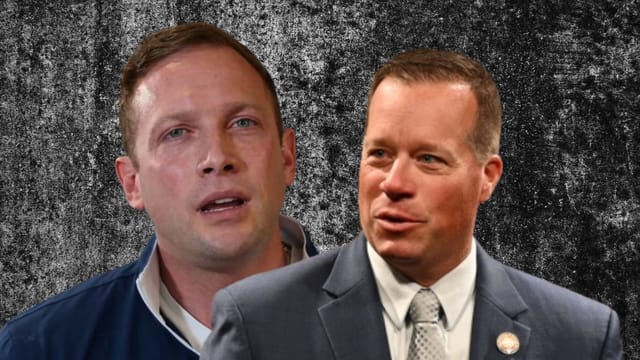
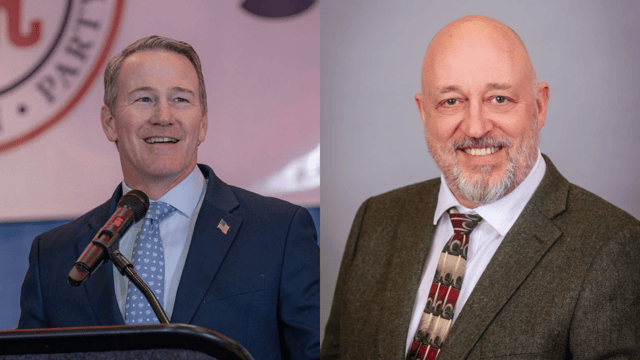
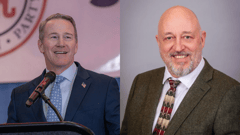
The reaction was not limited to opposition to the surveillance mandate itself. Much of the public fury focused on who signed onto the bill — specifically, two of its 28 Republican cosponsors: State Rep. Gary Click (R-Vickery) and State Rep. Rodney Creech (R-West Alexandria).
What the bill would do
HB 649, sponsored by Reps. Josh Williams (R-Sylvania Township) and D.J. Swearingen (R-Huron), would require every licensed child care center in Ohio to install cameras at every entrance, exit, and general area where children receive care. Footage would be stored for 60 days. Within 12 months of enactment, the Ohio Department of Children and Youth would gain live, remote access to every camera in every center — allowing state employees to watch children in real time.
The bill also creates an online parent portal requiring caretaker parents to check children in and out using PINs or QR codes. If a parent uses a QR code, location data from their phone would be collected. Every attendance record must include a photograph with a clear picture of the child’s caretaker parent’s face. The portal closes at 11:59 p.m. daily, and no backdating is permitted.
A recent analysis from Policy Matters Ohio warned that the most recent version of HB 649 would go even further, requiring the daily use of facial recognition software on babies, toddlers, and young children for attendance verification. The bill does not appropriate funding for providers to comply with the camera mandates.
Both HB 649 and its companion bill, HB 647, were introduced in the wake of a right-wing social media campaign that targeted child care centers — particularly those operated by Somali Americans — with unsubstantiated allegations of widespread fraud. The campaign began in Minnesota in late December 2025, and the Trump administration subsequently froze child care payments to that state.
But the data does not support the premise of systemic fraud in Ohio. The Department of Children and Youth received 124 program integrity referrals in 2025. Only 24 resulted in terminated provider agreements. The remaining 100 found no intent to commit fraud. Governor Mike DeWine, a Republican, publicly defended Ohio’s existing safeguards in January 2026.
‘Creepy’ and ‘insane’
Commenters across platforms zeroed in on the bill’s central contradiction: a party that routinely campaigns on small government and parental rights was proposing one of the most expansive state surveillance mandates in recent Ohio legislative history — aimed at rooms full of children.
“So much for less government,” one commenter wrote. Another called the bill “1984 in full effect.”
A self-identified security engineer called the proposal “insane,” adding: “I guarantee they won’t pay any cost for proper security either.” Others raised concerns about data breaches, hacking, and the potential for footage of children to be misused. “Who exactly is going to be watching the 8,000-plus daycares in Ohio?” one reader asked.
Several commenters who said they work in child care noted that many facilities already have cameras — installed and controlled by the facility itself, with access limited to staff and parents. The objection, they said, was not to cameras in general but to handing live feeds to the state. “Let the child care center put them in themselves and only give access to the parents,” one wrote. “It has a creep vibe to it with the state having access.”
A child care worker said her facility already uses cameras in care areas, including during diaper changes, to protect both children and staff — but emphasized that state-level access was a fundamentally different proposition.
Creech’s background fuels the backlash
If the bill’s substance drew sharp criticism, the involvement of Rep. Rodney Creech made it explosive.
Creech was accused in 2023 by a minor female relative of climbing into bed with her while wearing only his underwear and having an erection, according to Bureau of Criminal Investigation documents obtained by the Statehouse News Bureau. Text messages showed the minor complaining that Creech had been rubbing her legs and grabbing her waist. Creech admitted to investigators he had gotten into bed with the minor in his underwear but denied the sexual nature of the allegations.
Clark County Prosecutor Daniel Driscoll, brought in as a special prosecutor after Creech’s personal friends — the Preble County sheriff and county prosecutor — recused themselves, declined to file charges but wrote that Creech’s behavior was “concerning and suspicious.” Ohio House Speaker Matt Huffman stripped Creech of all four committee assignments in May 2025 and asked him to resign. Creech refused. Huffman later reinstated him and requested that the Ohio Republican Party endorse Creech for re-election — which the party did.
That background dominated the public response. Comment after comment referenced the BCI investigation, with readers questioning why a lawmaker whose conduct toward a minor was described as “concerning and suspicious” by a prosecutor was cosponsoring legislation to install state-operated cameras in rooms where children spend their days.
“The guy who climbed into bed with a child in his underwear wants to watch children in daycares,” one commenter wrote. Others were more blunt. The word most frequently used to describe Creech in the comments — across both platforms and among commenters who appeared to have no prior familiarity with TiffinOhio.net’s coverage — was “pedophile.”
Click’s ‘child protector’ brand takes another hit
Rep. Gary Click drew a different kind of scrutiny. Click has built his legislative identity around the protection of children. He authored House Bill 68, Ohio’s ban on gender-affirming care for minors, which he titled the “Save Adolescents from Experimentation Act.” He has called gender-affirming care “child abuse,” accused the ACLU of suing for “the right to sterilize children,” and co-sponsored HB 704, the “Personhood Act.” He introduced HB 693, which would write “parental alienation” into Ohio’s family law statutes, and is a cosponsor of HB 249, the drag performance ban framed as a child safety measure.
Click is now also a cosponsor of legislation that would place live, state-operated cameras in every room where Ohio children receive care — creating a government surveillance infrastructure that, under the most recent version of the bill, would use facial recognition technology on babies, toddlers, and young children daily.
The same lawmaker who has repeatedly invoked parental rights and warned of government overreach on social issues has signed onto one of the most expansive state surveillance mandates in recent Ohio legislative history. Commenters noticed.
“How can Click keep up on the trans people,” one wrote sarcastically, pointing to what they saw as selective concern for children’s welfare. Others connected Click’s cosponsorship to his broader legislative record, noting the tension between his public brand as a defender of parental rights and his support for a bill that would give the state live video access to children without any mechanism for parents to opt out.
Click also drew attention in committee hearings for pushing an unsubstantiated claim that Franklin County commissioners had blocked child care fraud investigations due to discrimination concerns — a claim that Franklin County Prosecutor Shayla Favor flatly rejected in testimony, telling the committee her office had never received a single child care fraud referral.
Bipartisan opposition
The backlash was not limited to social media. During committee testimony, State Rep. Ashley Bryant Bailey (D-Cincinnati) raised concerns about creating databases of children’s images, telling the Ohio Capital Journal she found it “really unsettling regardless of security assurances.” She added: “We’re in the age of the Epstein files, so anything can happen.”
The Ohio County Prosecutors Association also raised concerns about the bill’s displacement of locally elected county prosecutors in favor of centralized authority in the Attorney General’s office. Policy Matters Ohio called HB 649 expensive for both the state and providers, warning it would divert “scarce public dollars and provider time away from care itself and toward unnecessary surveillance infrastructure.”
Governor DeWine has not endorsed HB 649. The Department of Children and Youth has publicly supported HB 647 but has not extended the same backing to the camera mandate bill.
What’s next
HB 649 remains in the House Children and Human Services Committee. The bill had its fourth hearing the week of March 16, with possible amendments. The Ohio legislature is expected to recess after March before returning following the May 5 primary election.
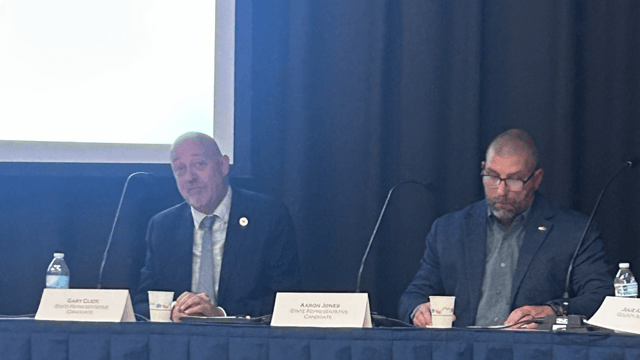
Click faces Republican challenger Eric Watson and Democrat Aaron Jones in the HD-88 race. Creech faces former state Rep. J. Todd Smith and Lew Lainhart in the HD-40 Republican primary. Early in-person voting begins April 7.