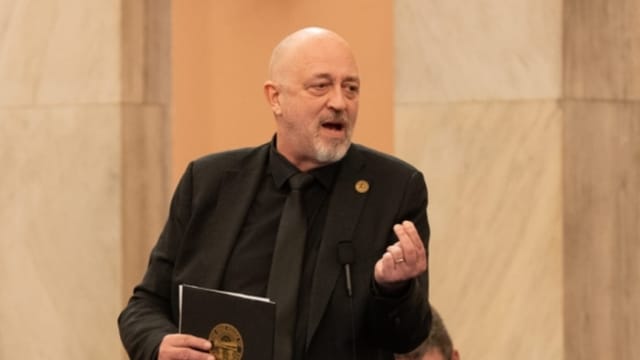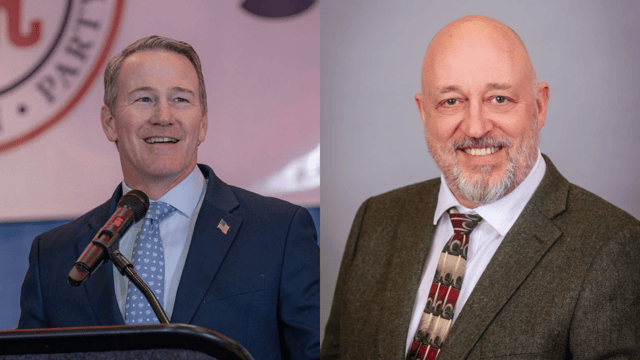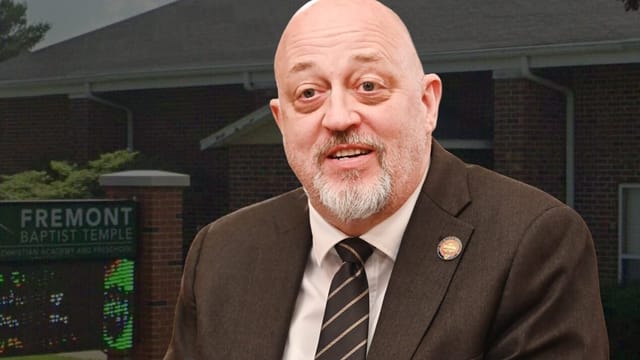
A bill introduced by State Rep. Gary Click (R-Vickery) would write a legal definition of “parental alienation” into Ohio law — and domestic violence researchers say the term has a documented history of being used in custody court to discredit abuse survivors and override findings of child abuse.
House Bill 693, titled the Affirming Families First Act and co-sponsored by Rep. Josh Williams (R-Sylvania Township), was introduced Feb. 10 and was referred to the House Judiciary Committee on Feb. 18; it has not yet received a hearing. The bill focuses primarily on protecting parents who decline to affirm a child’s transgender identity from child abuse investigations and custody consequences. But its definitional framework includes a statutory term that researchers, child welfare advocates, and the United Nations have called an unscientific concept weaponized against abuse survivors in family court.
How the term gets used against abuse survivors
The dynamic playing out in research and family courts also recently surfaced in Ohio in a public Facebook exchange. State Rep. Rodney Creech (R-West Alexandria), used the term last month to dismiss his own daughter’s public statements about alleged inappropriate conduct. When his daughter posted responses to his Facebook page disputing his characterization of family allegations as politically motivated, Creech responded: “Her post is just textbook parental alienation. Just trying to make me look bad.” His daughter replied: “Heaven forbid a child speaks out about something like this, right?!” The exchange comes after a 2023 Bureau of Criminal Investigation probe into allegations involving Creech and a minor family member. The investigation concluded with no criminal charges but findings of “concerning and suspicious” behavior, according to the Dayton Daily News. Creech was not charged and has denied the allegations.
Child welfare and domestic violence researchers have documented a consistent pattern: when a parent alleges abuse in a custody dispute, the other parent raises parental alienation as a counter-claim — and courts frequently side with the alienation claim over the abuse allegation.
Research by Molly Dragiewicz found that when fathers cross-claimed parental alienation in cases where mothers had alleged abuse, mothers were twice as likely to lose custody compared to cases where no alienation claim was made.
A research review published by VAWnet found that custody evaluators who lack an in-depth understanding of domestic violence also tend to label abuse allegations as alienation — a dynamic that researchers say puts protective parents at systematic risk of losing custody.
ProPublica has reported on cases where parental alienation claims were used to override prior findings of abuse, including a Utah case in which siblings who had alleged sexual abuse — a claim substantiated by state authorities — were ordered by a judge into the custody of the father they said had abused them, after the court found the mother had committed parental alienation. The judge’s order did not mention the prior abuse findings.
HB 693 would effectively embed this dynamic directly into Ohio statute. The bill’s definition of parental alienation includes no requirement that a court find manipulation actually occurred before the term can be applied in custody or child welfare proceedings. Under the bill’s framework, a child’s rejection of a parent — including a child’s resistance to contact with a parent they say abused them — could be characterized as parental alienation if the child has allied with a support network outside the home.
What medical and legal authorities say about the term
The bill uses the term “parental alienation” rather than “parental alienation syndrome” — a distinction supporters draw to distance the concept from its most discredited origins. But researchers and legal authorities say the distinction provides little practical protection, as both terms describe the same underlying framework and are applied the same way in custody proceedings.
Parental alienation syndrome is not included in the DSM. Dr. Darrel Regier, vice chair of the DSM-5 task force, said in a formal statement that there was “not sufficient scientific evidence to warrant its inclusion in the DSM.” In an interview, Regier added: “It is not a disorder within one individual. It’s a relationship problem — parent-child or parent-parent. Relationship problems per se are not mental disorders.”
The National Council of Juvenile and Family Court Judges has dismissed parental alienation allegations as failing to meet court evidentiary standards, as have the American Prosecutors’ Research Institute and the National District Attorneys’ Association.
In 2023, UN Special Rapporteur Reem Alsalem submitted a report to the UN Human Rights Council titled “Custody, Violence Against Women and Violence Against Children.” Alsalem described the concept as an “unfounded and unscientific” pseudo-concept that is “highly gendered” and predominantly used against mothers raising abuse allegations, and urged member states to prohibit its use in family law cases.
Dr. Paul Fink, then-president of the Leadership Council on Child Abuse and Interpersonal Violence and a former president of the American Psychiatric Association, called PAS “junk science at its worst,” adding that “science tells us that the most likely reason that a child becomes estranged from a parent is that parent’s own behavior” and that labels like PAS “serve to deflect attention away from those behaviors.”
Fink’s criticism targets the clinical syndrome specifically, but researchers say the behavioral concept codified in HB 693 functions identically in court settings.
Joyanna Silberg, clinical psychologist and executive vice president of the Leadership Council, has described parental alienation allegations as part of a broader pattern in which abusive parents attempt to convince courts, attorneys, custody evaluators, and mental health professionals that their children and ex-spouses are not credible when they raise safety concerns.
The concept’s origins add to the concern. Parental alienation syndrome was developed by Dr. Richard Gardner, a psychiatrist who made a career as a paid expert witness in more than 400 child custody cases, testifying most often on behalf of fathers accused of sexually abusing their children.
What the bill writes into law
Section 3129.10(E) of HB 693 defines “parental alienation” as a condition in which a child, “without a valid reason,” both rejects a fit parent and “allies strongly with another parent or an individual or group of individuals who do not have legal custody or control over the minor, sometimes referred to as ‘chosen family.’”
The inclusion of “chosen family” — language widely associated with LGBTQ+ support networks — means that a child’s outside support system could be cited as evidence of parental alienation in Ohio custody proceedings.
According to the bill’s text, its legislative findings state that “parental alienation is a well-documented cause of emotional distress and trauma in children, and is contrary to the best interest of the child,” and attribute it in part to professionals in legal, educational, and healthcare settings who “act in ways that alienate children from the children’s parents and families, and from the children’s parents’ and families’ sincerely held convictions and religious beliefs.” Those findings directly contradict the positions of major medical and legal authorities on the scientific validity of the term.
Ohio reactions
Equality Ohio executive director Dwayne Steward, himself an adoptive father, said in a statement that the bill “undermines evidence-based child welfare protections and, if passed, this bill would lead to increased trauma, victimization and abuse of Ohio’s kids.” Steward said the bill “would create an irrefutable right to transgender conversion therapy, block judges and child protective services from responding appropriately to abuse involving LGBTQ+ kids, threaten occupational licensure for doctors, teachers, and therapists who use gender-affirming language, and prevent child placement agencies from collecting data to make sure queer kids in the child welfare system are placed in safe homes.” Steward noted that LGBTQ+ youth are disproportionately represented in Ohio’s child welfare system because they have been rejected by their families.
Kaleidoscope Youth Center said in a statement that HB 693 “further restricts the rights of trans and gender-nonconforming youth and the families that support them by appropriating the word ‘affirmation’ to confuse the issue.”
Senate Minority Leader Nickie Antonio (D-Lakewood) told the Statehouse News Bureau: “I’m not quite sure why, but apparently, the two lead sponsors on that bill are obsessed with transgender individuals. They just can’t focus on something other than culture wars.”
Supporters of the bill included Laura Hanford, a senior policy analyst with the Heritage Foundation, which helped draft the legislation. Hanford said the bill addresses “the destruction wrought on families and children by radical gender ideology” and targets the “nooks and crannies of child welfare systems, where ideologues have embedded these dangerous beliefs,” according to the Statehouse News Bureau.
Rev. Dr. Ben Huelskamp, executive director of LOVEBoldly, an LGBTQ+-affirming Christian advocacy group, said in a statement: “This bill is not about protecting families. It’s about authorizing harm. Studies continue to show that transgender youth who are affirmed by adults at home, school, and in their faith communities have lower incidences of mental health concerns and higher levels of empowerment and self-confidence.”
What comes next
HB 693 has 13 co-sponsors (15 total including the 2 primary sponsors). All co-sponsors are from the most conservative wing of the Ohio House Republican caucus and the bill lacks broad GOP caucus support, according to prior TiffinOhio.net analysis. The bill was referred to the House Judiciary Committee on Feb. 18. Click has previously introduced legislation on related topics; some prior proposals were vetoed by former Gov. Mike DeWine.