Two bills advancing through the Ohio House would create one of the most expansive government surveillance systems in the country — aimed not at criminal suspects, but at children in day care.
House Bill 649, dubbed the “Child Care Fraud Prevention Act,” would require every licensed child care center in Ohio to install cameras at every entrance, exit, and general area where children receive care. The footage would be stored for 60 days. Within 12 months of enactment, the Ohio Department of Children and Youth would gain live, remote access to every camera in every center — allowing state employees to watch children in real time from anywhere.
A companion bill, House Bill 647, would give the Ohio Attorney General direct authority to investigate and prosecute child care providers, allow summary license suspensions based on suspected fraud without a completed investigation, and make all department decisions on fund recovery, overpayments, and contract terminations final — with no right of appeal.
Both bills are currently in the House Children and Human Services Committee. HB 649 had its fourth hearing the week of March 16, with possible amendments. HB 647 had its sixth hearing the same week, with a possible substitute bill.
What the bills would do
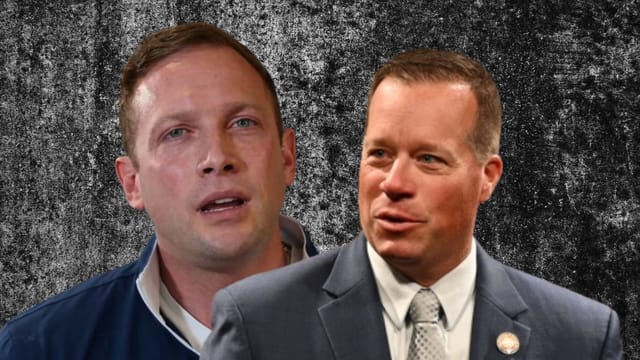
As introduced, HB 649 — sponsored by Reps. Josh Williams (R-Sylvania Township) and D.J. Swearingen (R-Huron) — mandates cameras in all general areas of every child care center, excluding only restrooms, changing rooms, and administrative offices. Each camera system must record every day the center operates and store 60 days of footage, either on-site or digitally.
The bill also creates an online parent portal requiring caretaker parents to check children in and out using PINs or QR codes. If a parent uses a QR code, the bill requires location data from the parent’s phone to be collected. Every attendance record must include a photograph showing “a clear picture of the face of the child’s caretaker parent.” If the photograph does not meet the department’s standard, the record is rejected.
Parents — not providers — would be responsible for logging attendance. The portal closes at 11:59 p.m. daily, and no backdating is permitted.
A recent analysis from Policy Matters Ohio warned that the most recent version of HB 649 would go even further, requiring “the daily use of facial recognition software on babies, toddlers, and young children for attendance verification in publicly funded child care.”
If an inspection or attendance audit turns up suspected fraud, waste, or abuse, HB 649 requires the department to immediately suspend all state payments to that center — before any full investigation or adjudication is completed.
HB 647, sponsored by Reps. Phil Plummer (R-Dayton) and Tom Young (R-Washington Township), takes a different approach to the same goal. It funds enhanced data analytics — $2 million in fiscal year 2026 and $3 million in fiscal year 2027 — to conduct automated attendance reviews across Ohio’s roughly 5,200 child care centers. It adds fraud suspicion as grounds for summary license suspension without a prior hearing. And it grants the Attorney General sweeping new authority to investigate and prosecute child care providers, displacing the role traditionally held by county prosecutors.
HB 647 would also reverse Ohio’s move toward enrollment-based payment for child care providers, deleting a July 2028 deadline to implement the federal standard. And it would make department decisions on overpayment recovery and contract terminations final and unreviewable under Chapter 119 of the Revised Code — meaning providers would lose their right to an administrative appeal.
The bill also slashes the Child Care Cred Program from $10 million to $5 million in fiscal year 2026 and eliminates it entirely in fiscal year 2027.
A solution in search of a problem
Both bills were introduced in the wake of a right-wing social media campaign that targeted child care centers — particularly those operated by Somali Americans — with unsubstantiated allegations of widespread fraud. The campaign, which began in Minnesota in late December 2025 when a YouTuber posted viral videos alleging fraud at Minneapolis day cares, quickly spread to Ohio. Conservative influencers showed up at Columbus-area child care centers operated by Somali Americans and immigrants, prompting at least eight police responses for disturbances, suspicious persons, and harassment.
The Trump administration froze child care payments to Minnesota and threatened other states — actions that Vice President JD Vance amplified by claiming Somali immigrants were defrauding the system. President Trump called Somali immigrants “garbage” in December 2025.
But the data does not support the premise of systemic fraud in Ohio. According to the Department of Children and Youth’s own reporting, the department received 124 program integrity referrals in 2025. Of those, only 24 resulted in terminated provider agreements. A total of $2.5 million in overpayments was identified. The other 100 referrals found no intent to commit fraud — 70 resulted in corrective action such as technical assistance, and 30 were closed with no further action.
Governor Mike DeWine, a Republican, pushed back publicly against the fraud narrative in January 2026, defending the state’s existing safeguards. Ohio already pays child care providers based on attendance — not enrollment — with parents verifying through personal identification numbers, headshots, and location-based QR codes. The department conducted more than 10,000 unannounced health and safety visits at nearly 5,200 facilities statewide in 2025, resulting in 38 closures. Twelve of those closures came from fraud referrals.
Bipartisan concerns about children’s data
The bills have drawn scrutiny from both sides of the aisle. During committee testimony, State Rep. Ashley Bryant Bailey (D-Cincinnati) raised concerns about creating databases of children’s images, telling the Ohio Capital Journal she found it “really unsettling” regardless of security assurances.
Policy Matters Ohio, in testimony opposing HB 649, called the bill expensive for both the state and providers, noting it would divert “scarce public dollars and provider time away from care itself and toward unnecessary surveillance infrastructure, all in response to claims of widespread fraud that have not been substantiated.” The organization also raised governance concerns, arguing the bill displaces the role of locally elected county prosecutors — a position echoed in testimony from the Ohio County Prosecutors Association.
Neither bill appropriates funding for providers to comply with the camera mandates. For small and rural child care centers already operating on thin margins, the cost of installing camera systems with 60-day storage and live-streaming capability represents a significant unfunded mandate.
The cosponsors
HB 649 carries 28 cosponsors — all Republicans. Among them are two names that highlight a tension at the core of the bill’s premise.
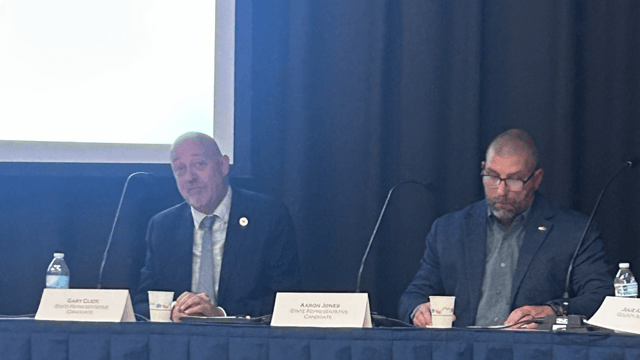
State Rep. Gary Click (R-Vickery), who represents Ohio House District 88, has built his legislative identity around protecting children. Click has been a leading voice on legislation restricting transgender youth from accessing age-appropriate health care and has championed bills regulating drag performances in the name of shielding minors. He has described these efforts as an extension of his values as a pastor and a parent.
Click is now a cosponsor of legislation that would place live, state-operated cameras in every room where Ohio children receive care — creating a government surveillance infrastructure that, under the most recent version of the bill, would use facial recognition technology on babies, toddlers, and young children daily. The same lawmaker who has invoked parental rights and warned of government overreach on social issues has signed onto one of the most expansive state surveillance mandates in recent Ohio legislative history.
Also among the cosponsors is State Rep. Rodney Creech (R-West Alexandria), who represents Ohio House District 40. In 2023, Creech was investigated by the Ohio Bureau of Criminal Investigation after a minor female relative alleged he climbed into bed with her while wearing only his underwear. The special prosecutor who reviewed the case declined to file charges but described Creech’s conduct as “concerning and suspicious.” Ohio House Speaker Matt Huffman stripped Creech of all four committee assignments and asked him to resign — then later requested that the Ohio Republican Party endorse Creech for re-election, which they did.
Other notable cosponsors include House Majority Whip Nick Santucci, and Reps. Angela King, Riordan McClain, and Jean Schmidt.
What’s at stake
Ohio’s publicly funded child care program serves more than 100,000 children per day across roughly 5,200 centers. More than half of the program’s total funding comes from federal sources. The system already includes attendance verification through PINs, headshots, and location-based QR codes — safeguards that Governor DeWine has repeatedly defended as robust.
What HB 649 and HB 647 propose goes well beyond addressing fraud. Together, the bills would build a statewide surveillance infrastructure with live camera feeds into rooms where children spend their days, collect biometric and location data from parents as a condition of receiving public benefits, strip providers of due process protections, reverse federal payment standards, slash child care funding, and concentrate prosecution authority in the Attorney General’s office at the expense of local accountability.
The bills remain in committee. The Ohio legislature is expected to continue in session through the end of March before recessing until after the May 5 primary election.