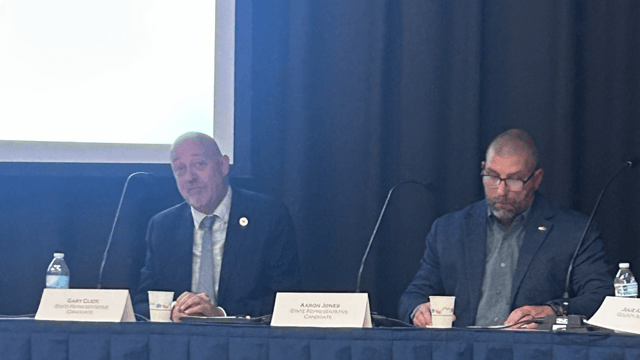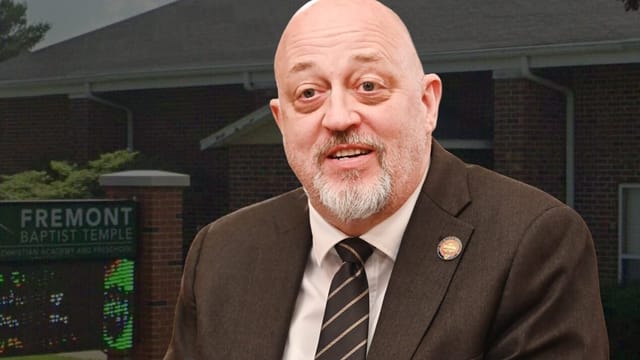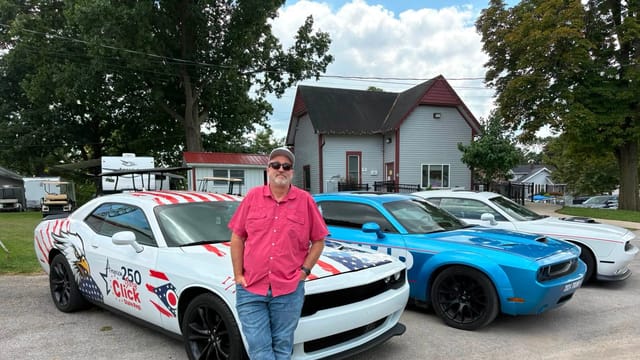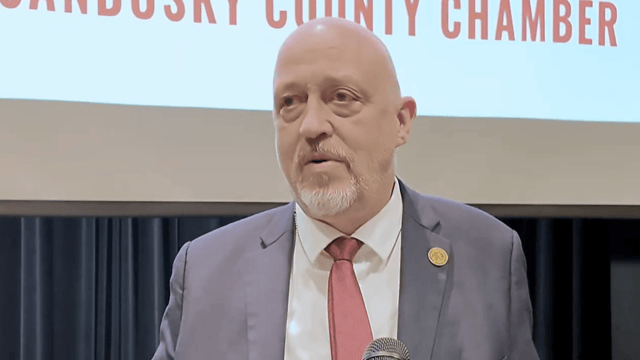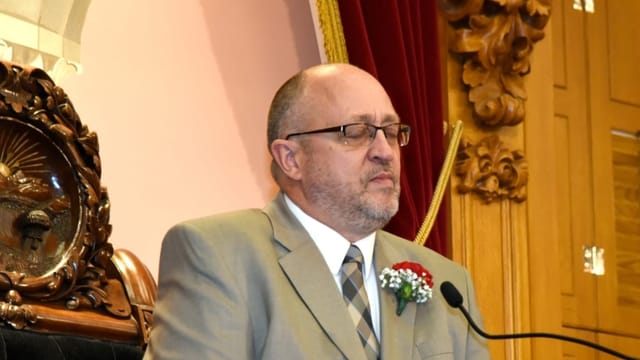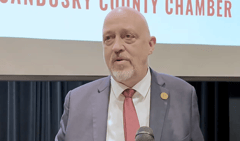

Embattled state Rep. Gary Click survived his Republican primary on Tuesday. He survived it by carrying one county.
The three-term Vickery Republican defeated challenger Eric Watson 52.28% to 47.72% across the two-county 88th District, with 6,859 votes to Watson’s 6,260. But the geography underneath that headline number is the story. According to Decision Desk HQ data with more than 95% of the vote reporting, Click won Sandusky County — his home county — by 15.4 points, with 7,189 votes cast there. In Seneca County, where 5,930 votes were cast, Watson beat Click by 8.5 points. Click’s Sandusky margin alone produced the entire district-wide win.
For an incumbent who has represented both counties since 2021, that split is not a routine home-county effect. It is a Seneca County problem. And the Democratic nominee waiting in November lives in Tiffin.
What the primary actually exposed
Click’s path to renomination was narrower than it should have been for a sitting incumbent in a deep-red district. The shape of that narrowness matters.
Five days before the primary, Ohio Gun Owners downgraded Click from a C-minus to an F, citing what the group described as undisclosed campaign contributions from gun-control lobbyists. Watson held the organization’s top non-incumbent rating. End Abortion Ohio endorsed Watson outright; Click responded by calling the group “clowns” on his official Facebook page and watched the comment thread fill with rebukes from his own supporters. In April, Vivek Ramaswamy’s gubernatorial campaign briefly removed Click from its endorsements page, restoring him within hours of TiffinOhio.net coverage.
None of those individual stories was fatal. Together, they describe a primary in which the activist right, the gun lobby, and at least one statewide GOP campaign were willing — publicly — to put distance between themselves and a sitting Republican representative. The 47.72% Watson received is the receipt for that distance. The Seneca County loss is the receipt for what that distance looked like on the ground.
Watson concedes the office, not the voters
Watson confirmed his loss Tuesday night with a written statement that drew a deliberate line on the central question of the November race.
“Tonight, we proved a lot of people wrong,” Watson said. “Many said this campaign wouldn’t even clear one-third of the vote, but we won Seneca County by a significant margin and built a movement that nobody can ignore. While we came up short tonight, I am incredibly proud of what our team and supporters accomplished in such a short amount of time.”
Watson said he had spoken directly with Click: “Earlier tonight, we called Representative Gary Click to congratulate him on his victory. We had a gracious conversation focused on the people of District 88 and the future of our communities.”
Then the line that mattered: “The topic of endorsements will not be discussed at this time. This is not the last the people of District 88 have seen of Eric Watson.”
That is not the language of a defeated challenger folding into the nominee’s coalition. Watson conceded the office. He did not concede the voters. The roughly 6,260 Republicans who picked him in the primary — gun-rights hardliners, anti-abortion absolutists, opponents of corporate data centers, opponents of digital identification — are now voters Click will have to win back without a public hand from the candidate they preferred. Watson’s statement leaves the door open for that to change. It also leaves the door open for it not to.
Why Seneca County is the story
The second variable is Aaron Jones, and Jones is the variable Click has not faced before.
In 2020, Click won the open seat against Democrat Chris Liebold with 62.9% of the vote. In 2022 and 2024, he defeated Democrat Dianne Selvey, a Whirlpool retiree from Clyde, in two consecutive general elections. Both Liebold and Selvey ran modest campaigns against an incumbent who outspent them and benefited from a deeply Republican district.
Jones is a different kind of candidate. He is a U.S. Army veteran who served four years as an Airborne Infantryman with the 3rd U.S. Infantry Regiment — the Old Guard. He has worked more than 20 years at Toledo Molding & Die in Tiffin, where he is a production supervisor. He was elected to Tiffin City Council in 2024 to represent the 1st Ward. In March, the national veterans organization VoteVets endorsed his campaign. He held his April 16 campaign kickoff at a downtown Tiffin event open to anyone who walked in.
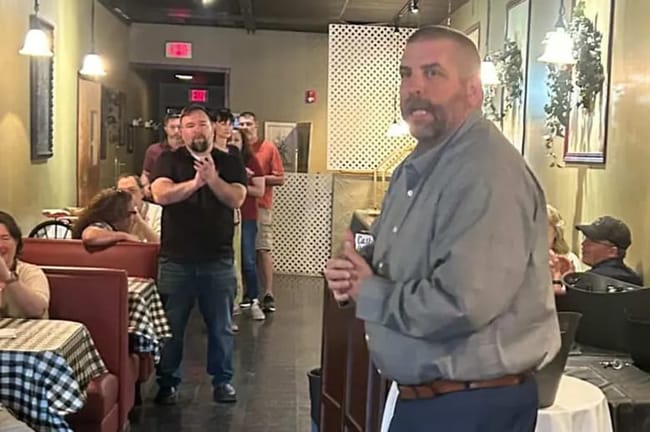
And he lives in Seneca County. He represents Seneca County constituents on Tiffin City Council. His institutional base — Tiffin City Hall, Tiffin’s downtown, the manufacturing workforce at TMD, the local Democratic infrastructure — is concentrated in the same county where Click just lost a Republican primary by 8.5 points.
Republican primary voters are not the November electorate. Seneca County will not vote in November the way it voted Tuesday. But the Seneca County Republicans who turned out — the most reliable Republican voters in the county — preferred a first-time challenger to a three-term incumbent. That is a brand problem in the county where Click’s general-election opponent has spent the last two years building name recognition.
Local issues now have a candidate willing to talk about them
The third structural change is the local terrain.
The Seneca Poultry concentrated animal feeding operation in Bloom Township and the Sunny Farms Landfill near Fostoria — both of which directly intersect with drinking water, agricultural runoff, and the limits of state versus local regulatory authority — have been the dominant constituent issues across the district for over a year. Both are in Seneca County’s backyard. Watson hammered Click on both during the primary. Jones, at a March 19 League of Women Voters forum at Tiffin Middle School that Click did not attend, told voters his hometown’s “only water source” is the Sandusky River and tied state oversight failures directly to a well drilled near a closed landfill.
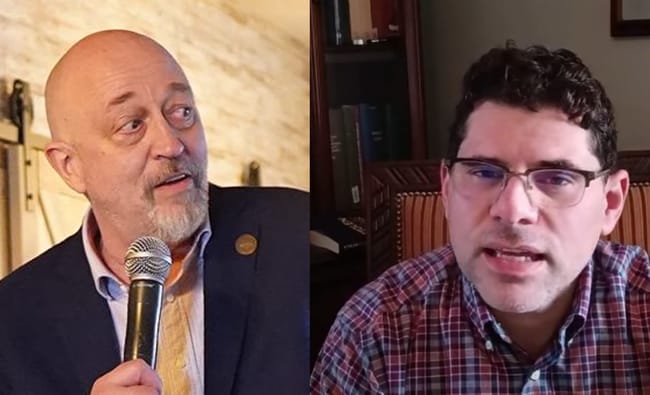
Click skipped that forum, citing an Ohio House session conflict. The House’s published schedule confirms it was in session March 18 — but those sessions begin at 2:00 p.m., and the LWV event was held in the evening. Watson and Jones both showed up. Voters in the room saw the contrast.
For an incumbent who built his legislative profile around statewide social-issue bills — the SAFE Act, the “Personhood Act,” and a string of culture-war proposals — the local issues now driving the race are not on his menu. They are on Jones’s. And the geographic center of those issues is Seneca County.
The structural reality
None of this means Click is favored to lose. District 88 remains Republican-leaning. Donald Trump carried both Sandusky and Seneca counties decisively in 2024. A Democratic upset would still require a swing well outside the historical norm.
What is true is that Click is heading into the general election having lost one of his two counties to a first-time primary challenger, having shed nearly half of his own primary electorate, against a Democrat whose home base is that same county, with local issues he has not previously had to defend, and with a fundraising profile — heavily weighted toward corporate PACs and out-of-district donors — that Jones will be in a position to make a campaign issue.
Whether Click’s narrow primary becomes a leading indicator or a footnote will depend on three things observers can measure between now and November: whether Watson’s voters consolidate or stay home, whether Jones can convert his biographical and institutional advantages into name recognition across both counties, and whether the Seneca Poultry and Sunny Farms files produce additional disclosures that put Click further on the defensive.
What’s no longer true is the assumption that District 88 is a foregone conclusion. Tuesday’s results retired that assumption. The Seneca County map retired it loudly.