Adios, Vivek Ramaswamy. Don’t let the private jet door hit you on the way out.
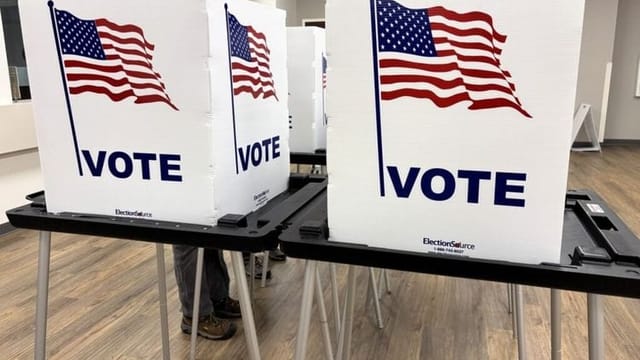
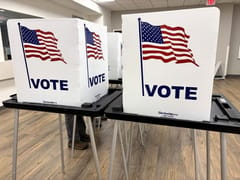
Ohio voters handed Ramaswamy a humiliating defeat Tuesday, rejecting the billionaire Republican by nearly eight percentage points in a state Donald Trump carried by eleven points just two years earlier. For a man who spent much of his campaign projecting an air of political inevitability, the result was devastating. His opponent, Democrat Dr. Amy Acton, will become Ohio’s first elected woman governor and the first Democrat to win the office since 2006.
The unofficial election returns showed Acton winning approximately 52.3% of the vote to Ramaswamy’s 44.4%, a margin of roughly 360,000 votes. The result represents a nearly 19-point reversal in partisan margin from Ohio’s 2024 presidential election. Ramaswamy also performed worse than every other Republican candidate on the statewide ticket, according to election-night reporting by the Ohio Capital Journal.
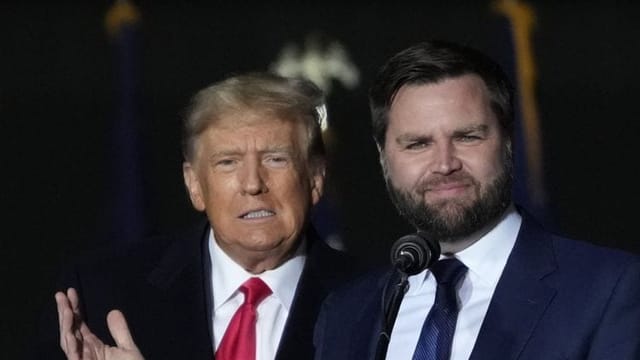
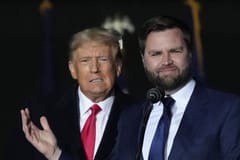
Republicans had cleared a path for him. Trump endorsed him early, Vice President JD Vance campaigned alongside him, and wealthy donors poured extraordinary sums into political efforts supporting his candidacy. Ramaswamy personally loaned his campaign more than $41 million. His final pre-election filing reported $51.1 million in campaign spending over the reporting period, compared with $26.2 million by Acton’s campaign.
Ramaswamy had the political connections and financial resources to build one of the most formidable Republican campaigns Ohio had ever seen. What he built instead was an expensive monument to his own arrogance, poor judgment and apparent inability to recognize when he was destroying his chances of winning.
The attack that defined his campaign
Of all the self-inflicted wounds Ramaswamy suffered, none was more revealing than his decision to turn Amy Acton’s childhood sexual abuse into a campaign weapon.
In April, Ramaswamy posted a video describing Acton as a candidate with no vision for Ohio beyond her ability to “complain about what someone else did to her.” Acton had spoken publicly about surviving sexual abuse and severe neglect as a child. His remark drew condemnation, yet the attacks on her childhood continued throughout the campaign.
Then came October. Ramaswamy’s campaign produced a television advertisement featuring Acton’s estranged mother, Donna Arthur, calling her daughter dishonest and warning Ohioans against electing her governor. The campaign initially announced a $4 million effort to promote the commercial.
The advertisement concealed a devastating history. Arthur lost custody of Acton and her younger brother in 1978 after her husband, Acton’s stepfather, was indicted for raping Acton when she was twelve years old. The couple fled Ohio before he could stand trial. Arthur remained married to him until his death. Acton had been estranged from her mother for nearly fifty years, and contemporaneous records supported the account of her childhood that Ramaswamy sought to discredit.
Ramaswamy’s campaign took a woman who had lost custody of her children amid horrific allegations of abuse and presented her as an authority on her daughter’s honesty. The candidate defended that decision as the facts became public. He continued defending it after Republican Gov. Mike DeWine urged him to remove the advertisement and condemned it as deeply troubling.
Even Ohio Republicans recoiled. DeWine, who had worked closely with Acton during the pandemic and publicly vouched for her honesty, eventually refused to campaign alongside Ramaswamy, although he retained his endorsement. Republican Sen. Jon Husted criticized the commercial as well. Trump and Vance, meanwhile, defended the attack.
Ramaswamy searched the darkest chapter of his opponent’s childhood for something he could use against her. He found her estranged mother, put her accusations on television and stood by the decision even as the circumstances of their estrangement became public. This was the political judgment of a man asking Ohioans to entrust him with the governor’s office.
The political damage became apparent before voters reached the polls. An internal Republican survey obtained by Axios found that Acton’s lead had grown from two points earlier in October to eight points after the advertisement began circulating. The final unofficial election margin was nearly identical.
Ramaswamy was already struggling before the commercial aired. He nevertheless chose to make a deeply personal attack the centerpiece of his closing argument, even as Republican officials warned that the decision could damage his campaign and the rest of their ticket.
A long record of self-inflicted wounds
The final weeks merely brought Ramaswamy’s political instincts into sharper focus. His campaign had been undermining its own credibility for months.
In August, Ramaswamy aired an advertisement featuring Republican activist Linda Caudill blaming Acton for her mother’s death during the COVID-19 pandemic. The commercial failed to disclose that Caudill’s mother lived and died in Kentucky, six weeks after Acton had resigned as Ohio’s health director. The advertisement also failed to identify the nursing home or establish that Ohio’s visitation restrictions governed it. Public records exposed the enormous factual gaps in the campaign’s accusation.
Ramaswamy repeatedly blamed Acton for Ohio’s pandemic shutdowns, even as DeWine, the Republican governor who ordered them, publicly insisted that those decisions were his responsibility. The candidate kept attacking the former health director while the governor who had supervised her disputed the premise of his attacks.
His hypocrisy extended to debates. Ramaswamy attacked Acton for declining to debate him and declared that candidates unwilling to debate could not lead Ohio. Earlier that year, he had refused to debate Republican primary challenger Casey Putsch, who received nearly eighteen percent of the primary vote despite operating with a fraction of Ramaswamy’s financial resources.
There was the gas tax spectacle, too. When Acton called for an emergency suspension of Ohio’s gas tax in September, Ramaswamy announced a substantially similar proposal approximately six and a half hours later. His campaign issued a triumphant announcement proclaiming “Vivek Leads.” The chronology was unmistakable, yet Ramaswamy was already congratulating himself for taking the initiative.
His education proposals reflected the same appetite for sweeping declarations. Ramaswamy had advocated placing cameras inside school classrooms and separately proposed year-round schooling with longer school days, offering no adequate explanation of how financially strained districts would fund the changes. For parents and school officials in communities such as Tiffin, the unanswered questions concerned real operating costs, student privacy and the state’s responsibility to public education.
Meanwhile, Ramaswamy’s campaign reported nearly $870,000 in private-jet expenses. Republican officials had reportedly urged him to stop using the aircraft because of the political damage. He continued flying privately while campaigning on affordability to Ohioans struggling with rising household expenses.
The spending was especially revealing because Ramaswamy’s own wealth had become a defining feature of his candidacy. His campaign could afford enormous advertising expenditures, private aircraft and a statewide political operation that most candidates could scarcely imagine. Yet the candidate repeatedly displayed an astonishing inability to understand how his conduct would look to the working families whose votes he needed.
Ohio delivered its verdict
Tuesday’s Republican losses extended far beyond Ramaswamy. Voters across the country punished the party over the economy and the direction of President Trump’s administration. Acton also ran a formidable campaign, emphasizing affordability and health care while drawing on her experiences growing up in a working-class Ohio family. Her personal story, which Ramaswamy repeatedly sought to discredit, became an important part of her connection with voters.
Ramaswamy’s performance nevertheless stands out. He entered the contest with Trump’s blessing, the support of much of Ohio’s Republican establishment and financial advantages that few statewide candidates have ever enjoyed. He finished election night as the worst-performing Republican on Ohio’s statewide ticket, defeated by a woman whose political career he had spent months trying to destroy.
There is an unmistakable arrogance in believing that an electorate will overlook almost anything if a candidate spends enough money and secures the right endorsements. Ramaswamy appeared to operate under that assumption throughout the campaign. Each controversy brought another justification, another argument that his critics had misunderstood him, another insistence that he knew better.
At his concession speech Tuesday night, Ramaswamy suddenly offered gracious words about Acton. The man whose campaign had featured her estranged mother calling her a liar told supporters he hoped and believed she would bring Ohio together. After months of attacks on her honesty and character, his newfound respect for his opponent arrived only after voters had rendered their judgment.
Ramaswamy will have plenty of opportunities to explain this defeat. He can blame the national political environment, Republican discontent or the difficulties of running against a candidate as personally compelling as Acton. He may even persuade himself that his campaign’s ugliest moments were misunderstood.
The record of his campaign will remain. He chose to defend the advertisement featuring Acton’s estranged mother. He approved a deeply misleading attack involving a Kentucky woman’s death. He demanded standards of his opponent that he had refused to meet himself. He spent extraordinary amounts of money projecting leadership while repeatedly demonstrating deficiencies in political judgment.
And after all of that, the voters of a state Trump carried by eleven points sent him home by nearly eight.
For a man who seemed so certain that Ohio’s governorship was his next step toward political greatness, the humiliation could hardly be more complete.
Again… Adios, Vivek. Don’t let the private jet door hit you on the way out.