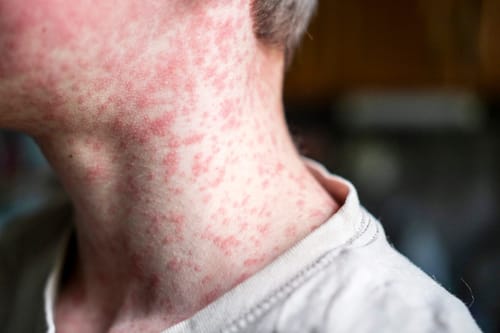

A year ago, I wrote a commentary on the importance of vaccination. Apparently too many people skimmed it because measles is back in Ohio.
According to the Ohio Department of Health, Ohio has had 327 measles cases this year, only 20 of which came from out of state. Compare that to last year’s statewide total and the number of measles cases in the state this year is already seven times as high as it was in 2025. Measles is a serious disease previously eliminated from the United States that can cause pneumonia, hospitalization, and even death among children who contract it.
Measles is also a costly disease that is expensive to treat. Researchers at Johns Hopkins University’s Bloomberg School of Public Health recently conducted a review of 120 studies of the cost of measles outbreaks. They estimated that the average cost of an outbreak was $43,000 per case. Much of that is wrapped up in the cost of initiating a public health response, which they estimate at the cost of about $300,000. Additional cases cost about $16,000 from there in the form of medical treatment and public health costs.
This means Ohio’s outbreaks this year have cost the state economy $5.6 million in a scenario using the fixed- and marginal-cost numbers above and $14 million using the average-cost number, with the latter possibly being closer to the truth since public health efforts have not been centralized in the state. Whatever the exact cost, it’s likely that measles is costing the state economy millions of dollars already.
These dollars mean something. Dollars spent treating measles represent health system capacity not spent treating other diseases, caring for our elderly, or spent on preventive medicine.
One of the tragedies of measles is how preventable it is. Measles had previously been eliminated from the United States due to widespread vaccination. But barriers to access to vaccination and rising vaccine skepticism has led growing numbers of parents to opt their children out of vaccination.
The social problem with flagging vaccination rates is the spillover effects of skipping vaccination. Denying your child vaccination not only puts your child at risk, it also puts their friends at risk. It’s kind of like driving your kids to school while drunk: you are putting your own children at risk while putting other people’s children’s lives at risk, too. And the further a community gets from total vaccination coverage, the more likely they are to experience a costly and potentially deadly measles outbreak.
Local public health officials have some tools at their disposal to encourage vaccination rates. Targeted outreach to communities with flagging vaccination rates could help get more children vaccinated, protecting them and their classmates. Making sure school-based health centers are a place where children can get vaccinated and parents can learn about the benefits of vaccination can increase access to vaccination and increase uptake rates.
Cities and counties can support local health departments by making sure they have the funding needed to run vaccination programs. While vaccination is a low-cost intervention for staving off costly disease, different approaches to encouraging vaccine uptake should be evaluated and effective interventions should be shared widely. Communities across the country are grappling with this problem and if local communities can learn from one another they could find effective ways to encourage vaccination, save money, and save hospital visits and even lives.
Ohio is going to be spending money on measles either way. The question is whether policymakers would rather spend money treating measles or preventing it. Lucky for us, prevention is cheaper and safer than treatment. If we can find effective ways to encourage vaccine uptake, it’s a win-win for Ohio.
This story is republished from the Ohio Capital Journal under a Creative Commons license. View the original article.