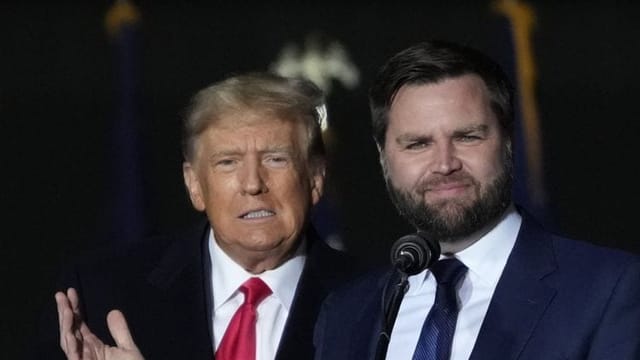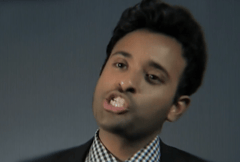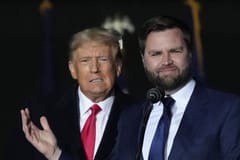
Vivek Ramaswamy’s nearly eight-point defeat in Ohio’s governor’s race was a political humiliation for the wealthy, Trump-endorsed Republican. But the November 3 election also delivered a crushing verdict on the judgment of Ohio’s self-appointed grassroots conservative leaders, who spent months selling Ramaswamy to voters despite a public record that contradicted their own supposed principles.
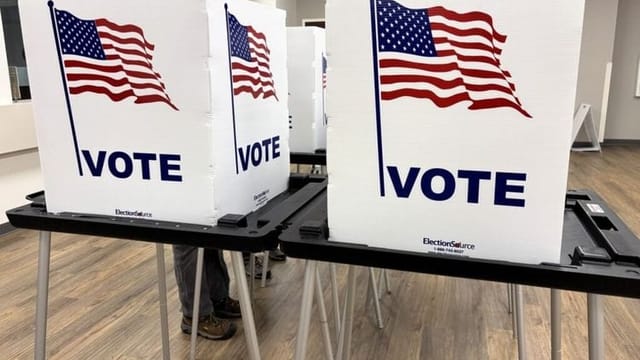
According to unofficial returns, Democrat Amy Acton defeated Ramaswamy 52.3% to 44.4% in a state Donald Trump had carried by more than 11 percentage points just two years earlier. The result exposed the spectacular miscalculation of conservative activists who had promised their followers independence from the Republican establishment and uncompromising accountability for government overreach. When those principles collided with the opportunity to promote Ramaswamy, the principles proved remarkably disposable.
Former secretary of state candidate Marcell Strbich, Ohio Advocates for Medical Freedom president Stephanie Stock and Tea Party leader Tom Zawistowski all placed their reputations behind the Republican nominee. Conservative radio host Jack Windsor continued defending him after the election, attacking Acton for declining to speak with the man whose campaign had weaponized her childhood trauma.
Stephanie Stock’s medical-freedom hypocrisy
Stephanie Stock spent years building her political brand around medical freedom, informed consent and opposition to government mandates. As president of Ohio Advocates for Medical Freedom, she has positioned herself as a fierce critic of politicians who infringed on individual liberties during the COVID-19 pandemic.
Her organization’s November 2026 voter guide awarded Ramaswamy an A while giving Acton an F. Acton’s assessment featured an extensive accounting of her pandemic record, including government restrictions on businesses, schools and personal freedoms. Ramaswamy’s assessment relied on his campaign promises to protect medical choice, omitting his own documented advocacy for mandatory testing and immunity-based restrictions.
In 2020, Ramaswamy advised then-Lt. Gov. Jon Husted during Ohio’s pandemic response. A recording obtained by NBC4 showed Ramaswamy advocating mandatory antibody testing and restrictions that would have kept Americans without demonstrated immunity under stay-at-home orders. In an April 2020 interview, he entertained a national system separating Americans according to biological markers indicating immunity.
TiffinOhio.net previously documented those proposals and their striking similarity to the restrictions Ramaswamy later condemned while campaigning against Acton. Sources familiar with the DeWine administration’s thinking told NBC4 that his proposals went beyond what officials considered acceptable government intervention.
Ramaswamy also founded the healthcare data company Datavant, which later participated in a federally supported COVID-19 medical data initiative. His corporate interests extended into the vaccine industry through Roivant Sciences, the biotechnology company he founded and formerly led.
In March 2026, Roivant announced a settlement worth up to $2.25 billion involving its subsidiary Genevant Sciences, Arbutus Biopharma and Moderna over patented technology used in COVID-19 vaccines. Moderna paid the companies $950 million in July, with another $1.3 billion contingent on the outcome of litigation.
Ramaswamy also had a substantial financial interest in Roivant when the settlement was announced in March. A SEC filing reporting holdings as of March 31 showed he beneficially owned approximately 25.5 million Roivant shares, representing 3.6% of the company.
Stock’s organization omitted that history from its assessment of Ramaswamy while publishing an extensive indictment of Acton’s pandemic record. Stock also hosted Ramaswamy on an August 4 program devoted to medical freedom alongside Republican state Rep. Jennifer Gross.
Stock’s organization scrutinized Acton’s conduct during the pandemic while treating Ramaswamy’s contemporary advocacy and financial interests as irrelevant to his medical-freedom credentials. It judged the Democrat by her history and rewarded the Republican for saying the right things in 2026.
Stock had already suffered a lopsided political defeat of her own, receiving just 34.8% in the May Republican primary for Ohio House District 31 against Mike Kahoe. She then put the credibility of her medical-freedom organization behind another losing candidate. Her willingness to grant Ramaswamy a free pass on the very issues that supposedly define her political mission deserves lasting scrutiny from the people who trusted her judgment.
Marcell Strbich’s convenient embrace of the establishment
Marcell Strbich spent much of 2026 campaigning as an election-integrity outsider willing to challenge Ohio’s entrenched Republican leadership. The retired Air Force lieutenant colonel was defeated decisively in the May Republican primary for secretary of state, receiving 29.8% against Treasurer Robert Sprague’s 70.2%.
The Republican establishment had made its preference unmistakable. In February, the Ohio Republican Party’s State Central Committee voted 52-11 to endorse Sprague over Strbich, effectively throwing the party’s institutional support behind his opponent.
Yet two days before the general election, Strbich published an effusive endorsement of Ramaswamy in The Cincinnati Exchange, portraying the Republican nominee as the champion grassroots conservatives had long awaited.
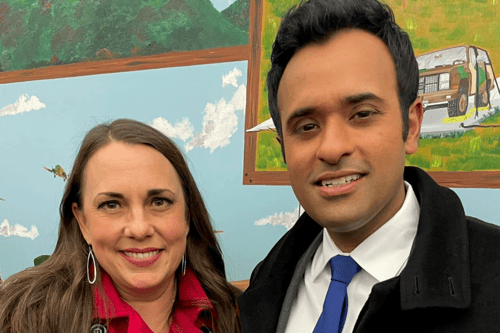
Strbich praised Ramaswamy for consulting him and other conservative activists on property taxes, data centers, election integrity and medical freedom. He celebrated the candidate’s willingness to give grassroots leaders access and influence, declaring that Ramaswamy’s words and actions aligned.
The same Republican Party apparatus that rejected Strbich had endorsed Ramaswamy nearly a year before Republican primary voters had their say. Strbich, having lost his own challenge to the establishment, became an enthusiastic promoter of its preferred gubernatorial nominee.
His column portrayed access to Ramaswamy as a historic victory for grassroots conservatives. But a candidate taking meetings with activists and flattering their priorities is hardly proof that the political establishment has been defeated. Strbich confused being listened to with wielding power, and he spent the campaign’s final days urging voters to make the same mistake.
Tom Zawistowski abandoned his own COVID principles
Tea Party activist Tom Zawistowski offered an explicit demonstration of how easily grassroots principles could be sacrificed for the Republican ticket. His We the People Convention endorsed Ramaswamy for governor, Strbich for secretary of state and Jon Husted for U.S. Senate. In its endorsement of Husted, the organization acknowledged its past disagreements with him over COVID-19, then instructed conservative voters that those objections should have “NO BEARING” on their decisions in 2026.
That declaration came from an organization that had spent years portraying resistance to pandemic-era government overreach as a defining conservative principle. Once the politician responsible for some of those grievances became the Republican nominee, Zawistowski’s organization effectively told its followers to forget about them.
Zawistowski’s own organization credits him with playing a major role in securing Ramaswamy’s unusually early endorsement from the Ohio Republican Party in 2025. Yet in a November 4 post-election interview, Zawistowski blamed establishment Republicans for undermining Ramaswamy and complained that grassroots conservatives had repeatedly supported the party without getting anything in return.
He alleged that insiders associated with Ohio’s Republican establishment had sabotaged Ramaswamy, offering another account in which the grassroots movement had been betrayed by party bosses. His explanation failed to account convincingly for his own role in aggressively elevating the candidate he now believed the establishment had undermined.
Zawistowski helped deliver the endorsement, promoted the nominee and urged conservatives to set aside longstanding objections to Republican politicians. After the defeat, he returned to blaming the political machine. Ohio’s grassroots conservatives deserve something more intellectually honest than another unsubstantiated sabotage claim to explain why their preferred candidate lost.
Jack Windsor’s shameless lecture to an abuse survivor
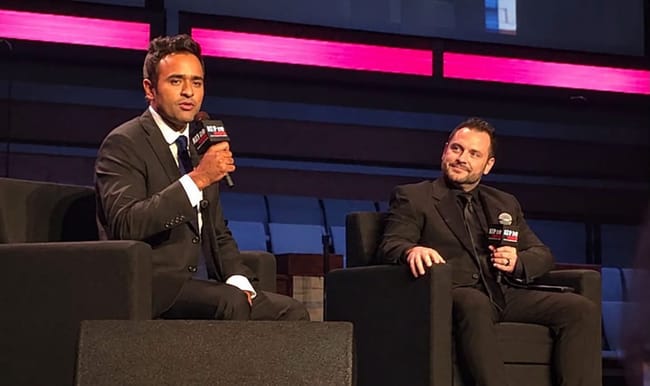
Conservative radio host Jack Windsor managed to make the aftermath of Ramaswamy’s defeat even uglier by attacking Governor-elect Amy Acton for refusing to speak with her defeated opponent.
In a November 5 social media post, Windsor complained that Ramaswamy’s election-night concession call had gone to voicemail. He accused Acton of hypocrisy for promising to work across political divisions while declining to engage with Ramaswamy, suggesting that her behavior exposed dishonesty.
Ramaswamy’s campaign had produced an advertisement featuring Acton’s estranged mother, Donna Arthur, accusing her daughter of lying about her childhood. Acton had been removed from her mother’s custody after her stepfather was charged with raping her as a child. Acton and her brother have described years of severe abuse and neglect, and her brother said their mother remained married to the accused man until his death.
Court documents and contemporaneous reporting corroborated central elements of Acton’s childhood account. Ramaswamy nevertheless gave her estranged mother a statewide political platform to attack her daughter’s credibility.
Acton addressed the concession call in a November 6 CBS Mornings interview, explaining that she had no intention of speaking with Ramaswamy after his campaign’s conduct. She emphasized that political leaders should be held accountable for their words.
In August, TiffinOhio.net reported that Windsor’s former wife had petitioned a Delaware County court for protection in 2018, accusing him of threats, confinement, controlling behavior and physical violence. Windsor subsequently agreed to a domestic violence civil protection order that remained in effect until March 2020.
The court resolved the case by consent without individually adjudicating the allegations. Windsor later claimed that many accusations had been disproven or retracted, but TiffinOhio.net’s examination of the court records found no ruling establishing either claim.
Windsor also personally interviewed Ramaswamy at an October 2 political event in Westerville, weeks after TiffinOhio.net published the details of his domestic violence protection-order case.
Now Windsor, a man who agreed to a court order arising from serious allegations by his former wife, has appointed himself the referee of how an abuse survivor should respond to the politician who used her estranged mother against her. His outrage over a missed telephone call is grotesquely misplaced.
Acton’s promise to work with Ohioans across party lines concerns her responsibilities as governor. Windsor has twisted that commitment into a demand that she extend personal courtesy to the candidate who turned her childhood suffering into campaign ammunition. His insistence that she owes Ramaswamy a conversation says considerably more about Windsor’s judgment than Acton’s character.
The grassroots credibility crisis
Zawistowski now says he is finished supporting Republican politicians who ignore the grassroots. Before delivering another lecture about the failures of the Columbus establishment, he should explain why he worked to secure its early endorsement of Ramaswamy. Strbich and Stock have their own political judgment to answer for. Their followers were promised principled leadership. They got a parade of excuses for a candidate whose contradictions were documented long before Election Day.