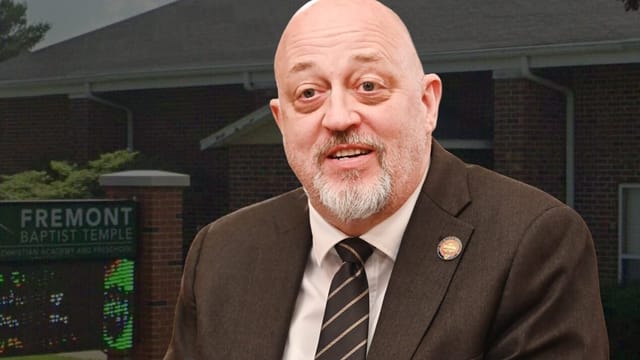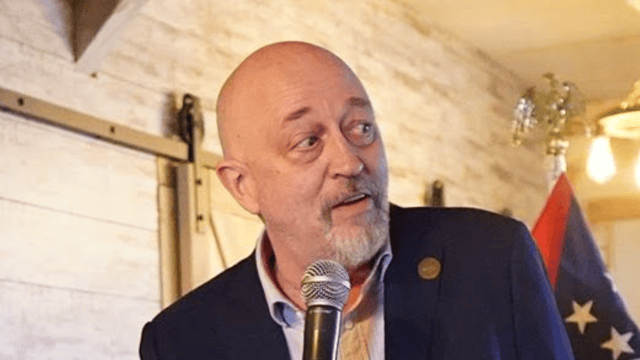
Jack Windsor has built a career telling Ohioans what public officials do when no one is watching. In June 2018, a Delaware County court entered a two-year domestic violence civil protection order against him — and he agreed to it.
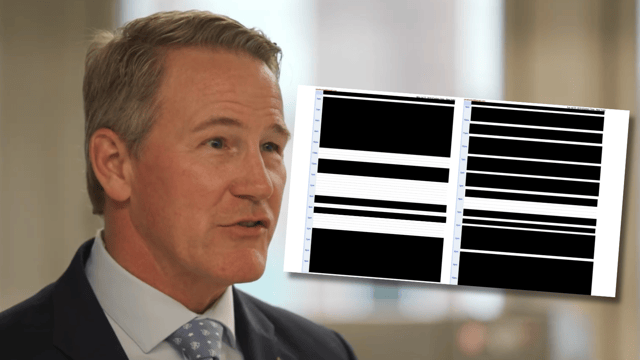
Windsor is the founder and editor-in-chief of a right-wing news website, hosts a weekday program on 98.9 FM The Answer in Columbus and works as an Ohio Statehouse correspondent for WHK AM 1420 in Cleveland. His station biography traces his start in broadcast journalism to WMFD-TV in Mansfield, where he pressed Gov. Mike DeWine, then-Lt. Gov. Jon Husted and then-Health Director Amy Acton over the state’s pandemic response. Two of those three are on Ohio’s ballot in November. Windsor lives in Richland County.
Asked this week about the 2018 case, Windsor said the allegations against him were “proven untrue in court or later retracted.” The Delaware County court file records no such finding. It records the opposite outcome: an agreed order restricting his contact with his former wife that ran until March 1, 2020.
The protection order was first reported in August 2024 by The Rooster, the progressive Ohio newsletter written by D.J. Byrnes, which obtained and published portions of the petition. TiffinOhio.net independently obtained the filing and reviewed the full court dockets in both the protection order case and the divorce.
What the record shows
Windsor’s then-wife filed a petition for a domestic violence civil protection order in the domestic relations division of Delaware County Common Pleas Court on March 1, 2018. A magistrate granted an ex parte order the same day, and the court transmitted notice of it to the national law enforcement database used to flag active protection orders.
The Richland County sheriff’s office served Windsor with the packet on March 5. That same day, an attorney entered an appearance for him and moved to continue the hearing — and Windsor filed for divorce, listing himself as plaintiff in a separate case before the same judge.
The protection order case then stretched across four months. Windsor moved a second time to continue in late April. Each time the hearing slipped, the court’s orders kept the ex parte protection in force. On May 30, a magistrate granted Windsor permission to serve discovery on his wife and, in the same order, directed that he have no contact with her or with anyone else the order protected.
The divorce moved faster. A separation agreement was filed May 21, a hearing was held May 22, and the court entered a decree of divorce on May 24, 2018. The marriage was over.
The protection order case was not. A full hearing went forward on June 27. Two days later, on June 29, 2018, the court entered a consent agreement and domestic violence civil protection order with terms effective until March 1, 2020. The court sent an updated notice to the national database and logged acknowledgments from two sheriff’s offices in July.
The order was entered five weeks after the divorce was final. Windsor was represented by counsel from the first week of the case through its resolution.
What the petition alleged
The petition and its attached narrative describe a marriage that began with an engagement in November 2015 and a wedding in March 2016 — dates confirmed by Delaware County probate records — and that his wife wrote turned controlling within weeks.
She alleged Windsor cut her off from friends and family, required joint email and social media accounts, monitored where she went and whom she spoke to, would not permit her to work, and drained her savings and her 401(k). She wrote that he blocked doorways and confined her to rooms during arguments, sometimes for hours.
A handwritten notation on the narrative reads: “He hit my daughter in the face and lied about it when she told me what happened.” The note is dated to November 2016.
The narrative alleges he threw a dishwasher across a kitchen, punched and damaged her car outside a work Christmas party, and shoved her from behind into a kitchen on Dec. 26, after which she wrote that she called 911 and deputies responded and documented a domestic dispute. She described a January incident in a bedroom, in front of two 5-year-old children, in which she said her hand was cut in two places after she took his phone off a dresser because he was recording. On Feb. 1, 2018, she wrote, officers came to her home and escorted him inside to collect belongings, and wrote up a domestic disturbance.
She alleged that in one three-day stretch he called her 48 times, left eight voicemails and sent 15 emails, and that the contact continued after her attorney asked his to stop. Attached phone records list dozens of calls across February 2018, and a handwritten tally counts daily contacts through January running as high as 51 in a day.
She alleged he contacted her workplace and tried to get her fired by telling a manager the company employed a drug addict. She alleged he told her, “You will be mine forever,” and said more than once that he would kill any man who came between them. She alleged he used a slur to describe her autistic daughter. She wrote that she miscarried during the marriage and that he left her at home alone while it happened and went to watch a football game at a bar.
None of this was adjudicated. A consent agreement resolves a protection order case by agreement rather than by a ruling on the evidence, and the docket contains no findings of fact on any individual allegation. It also contains no dismissal, no withdrawal of the petition and no filing that retracts anything.
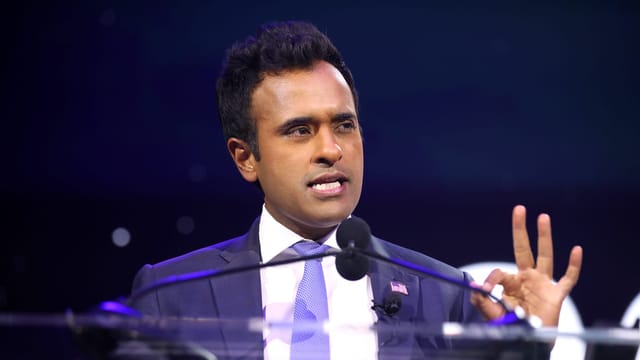
Byrnes, who published the petition in 2024, is a frequent target of Windsor’s coverage and criticism, including over Byrnes’ 2024 prank on Vivek Ramaswamy.
Windsor’s response
TiffinOhio.net sent Windsor a detailed list of the allegations and asked him to address each one, along with the disposition of the case, whether he disputed specific claims, whether any criminal charges followed the incidents described, and whether he had disclosed the matter to his employers. He responded with the following statement: “I’ve never been charged or convicted of a crime beyond traffic violations. Like so many people, I went through a difficult divorce where each of us said things out of frustration. Many things said were proven untrue in court or later retracted. This happened many years ago and it’s unfortunate that this is now the grotesque obsession of online trolls who desperately want to stop me from shining a light on the actual crimes and misdeeds of those who are steadily undermining America and Ohio.”
His account of his criminal history is consistent with the records reviewed for this story. A protection order of this kind is a civil matter, not a criminal charge. Searches of Franklin County Municipal Court and Mansfield Municipal Court, both matching his date of birth, turned up four traffic cases resolved without contest and two old debt-collection suits. No criminal case appeared in either court.
His account of the outcome does not match the file. The court did not find the allegations untrue, and nothing in either docket shows a retraction. The case ended with Windsor agreeing to an order that restricted his contact with his former wife for nearly two more years, entered after the divorce that he says explains it had already concluded.
This is the second time this year that court records have complicated Windsor’s public account of himself. TiffinOhio.net reported in August that his media company owes a former county elections board member $150,000, and that his proposed bankruptcy repayment plan would return roughly five cents on the dollar.